Beach Camping Cost Calculator
Calculate Your Savings
Find out how much you could save by camping on the beach instead of staying in a hotel.
Your Results
Ever walked along a sandy shore at sunset and seen a cluster of tents just beyond the high tide line? You might wonder-why bother? The beach has sun, sea, and sand. Why drag a heavy tent out here when you could just lie on a towel and call it a day? The answer isn’t about comfort. It’s about control.
Protection from the Elements
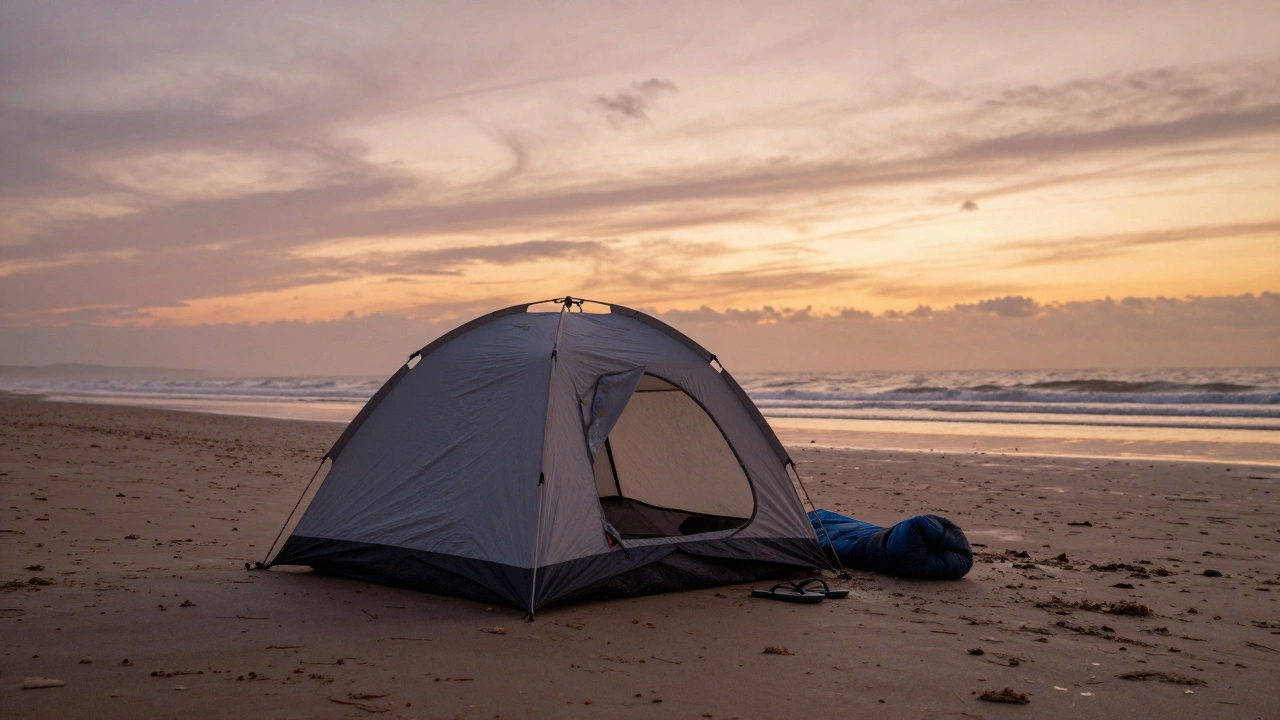
Beaches aren’t just sunshine and ice cream. Wind blows hard off the water-sometimes all night. Rain can roll in without warning, even in summer. A tent isn’t just shelter; it’s a barrier. Without one, you’re exposed to salt spray that coats your sleeping bag, dew that soaks through your mat, and sudden cold snaps that drop the temperature 10 degrees after dark. People who camp on beaches know this. They’ve woken up shivering under a damp towel. They’ve packed up soggy gear because they didn’t plan for wind. A tent, even a basic one, cuts the wind, blocks the spray, and keeps your sleeping space dry.
Privacy and Personal Space
Beaches get crowded. Families spread out with umbrellas and coolers. Tourists snap photos. Dog walkers cut through. At night, the noise doesn’t stop. A tent creates a quiet bubble. It’s not about being antisocial-it’s about having a place to change clothes without an audience, to read without squinting against flashlight beams, or to fall asleep without hearing someone’s Bluetooth speaker blasting pop music from 20 feet away. For couples, parents with young kids, or anyone who values a little peace, a tent is a private zone in a public space.
Storage and Security
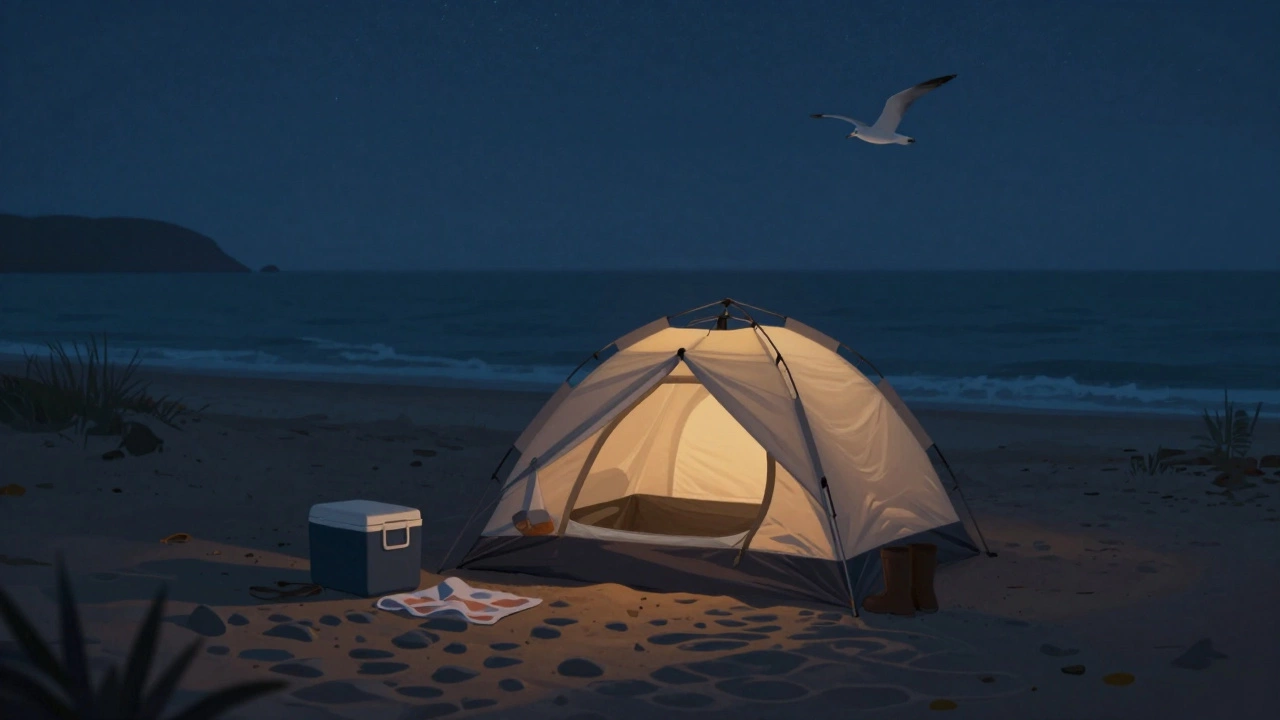
Leaving your phone, wallet, or camera on a towel while you swim is asking for trouble. Beaches are open spaces. People come and go. A tent lets you stash your valuables out of sight. Even if it’s not locked, it’s not lying in plain view. You can tuck your keys inside, keep your charger safe, or store snacks away from seagulls. Some people even use their tents as mini storage lockers for beach gear-towels, sunscreen, flip-flops-so they don’t have to carry everything back and forth.
Extended Stays and Overnight Experiences
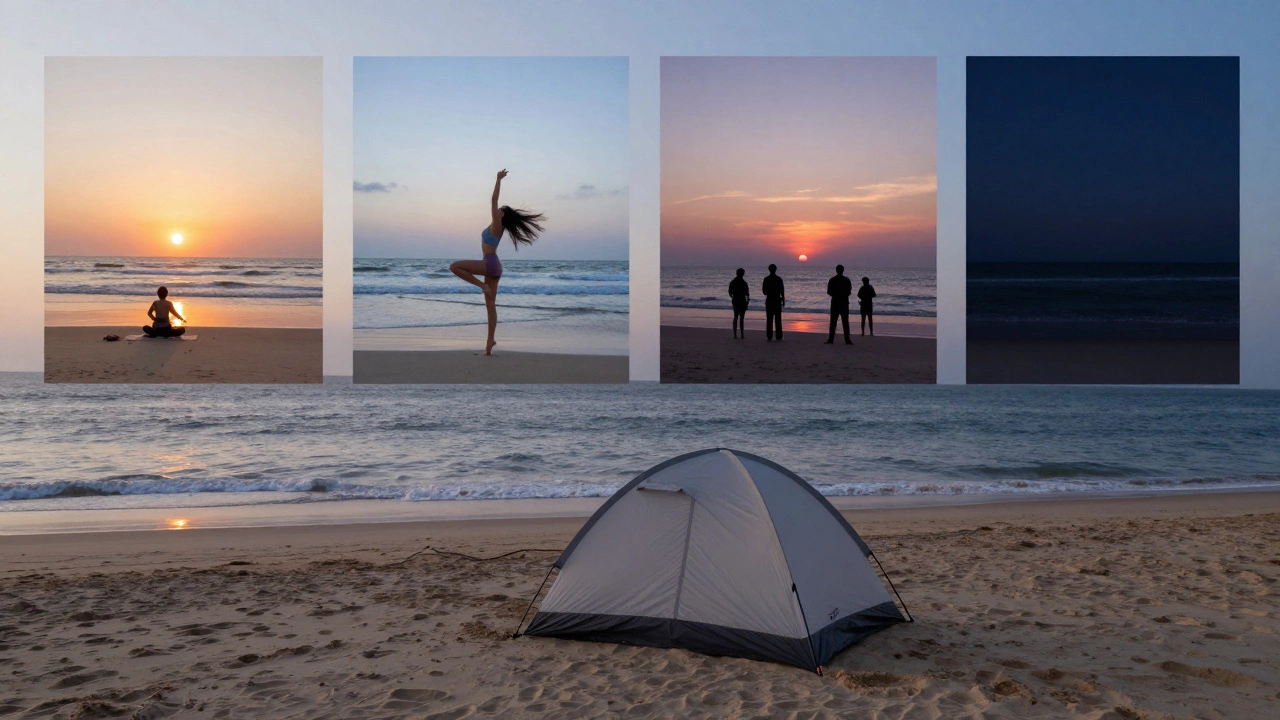
Most people visit the beach for a few hours. But some stay longer. Sunrise yoga. Midnight stargazing. Fishing before dawn. Camping on the beach lets you stretch your time beyond daylight hours. You don’t have to drive back to a hotel or pack up and leave at sunset. You can wake up to the sound of waves, walk barefoot on cool sand at 6 a.m., and catch the first light without rushing. It’s not about luxury-it’s about immersion. You become part of the rhythm of the coast, not just a visitor passing through.
Cost and Accessibility
Hotels near beaches can cost over £150 a night in peak season. Campsites with beach access? Often under £30. And you don’t need a fancy setup. A simple two-person tent, a sleeping bag, and a foam mat are enough. Many coastal areas in the UK, like Cornwall, Pembrokeshire, or the East Coast of Scotland, allow informal beach camping in designated zones. You don’t need a reservation. You just show up, set up away from dunes and wildlife areas, and leave no trace. For budget travelers, students, or families looking to stretch their holiday, it’s one of the cheapest ways to get close to the sea.
Connection to Nature
There’s something about sleeping just feet from the ocean that changes how you experience it. You hear the tide shift. You feel the wind change direction. You notice how the stars look different without city lights. A tent doesn’t isolate you from nature-it puts you right in the middle of it. You wake up to gulls calling, not alarms. You fall asleep to the rhythm of waves, not traffic. That connection is why people return to beach camping year after year. It’s not a vacation. It’s a reset.
What You Need (And What You Don’t)
You don’t need a luxury dome tent or a 10-person family shelter. Most beach campers use lightweight, wind-resistant tents with good ventilation. Look for ones with a full rainfly and sturdy poles. Sand pegs are a must-regular tent pegs won’t hold in loose sand. Bring a groundsheet or tarp under your tent to block moisture. A small stove is optional; many just eat cold snacks. Don’t bring candles or open flames-most beaches ban them. And never camp right at the high tide line. Check local tide charts. Set up at least 20 meters above the waterline. That’s not just smart-it’s often the law.
Where It Works Best in the UK
Some beaches openly welcome campers. Pembrokeshire Coast National Park in Wales has stretches where overnight stays are tolerated if you’re discreet and leave no trace. In Scotland, the beaches around the Isle of Mull and the north coast of Sutherland are popular for wild beach camping. In England, parts of the Northumberland coast and the Lizard Peninsula in Cornwall allow informal camping. Always check local bylaws. Some councils allow it only with a permit. Others don’t care as long as you’re quiet and clean up. The key? Be respectful. Take your trash. Don’t disturb nesting birds. Don’t block access paths. People who camp responsibly keep these spots open for everyone.
The Real Reason
People bring tents to the beach because they want more than a day trip. They want to live in the moment, not just observe it. They want to sleep where the tide meets the land. They want to wake up with salt in their hair and sand in their socks. A tent isn’t a luxury-it’s a tool that turns a visit into an experience. It’s the difference between watching the sunset and being part of it.