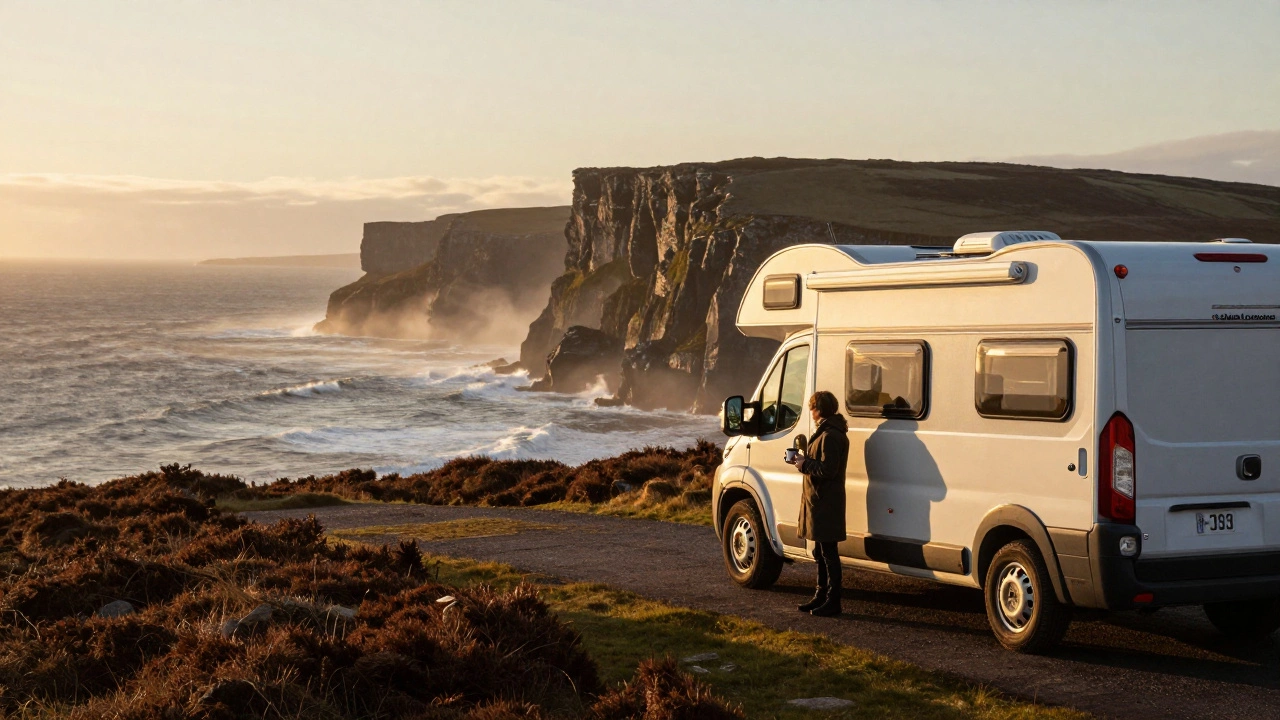
There’s no magic formula for the best place to go in a motorhome-but there are places that make you forget you ever owned a house. The kind of spots where you wake up to mist over a lake, the only sound the rustle of trees and your coffee brewing on the portable stove. These aren’t just campsites. They’re experiences that stick with you long after the engine’s turned off.
Scotland’s North Coast 500: Raw Beauty on Four Wheels
If you want to feel small in the best way possible, drive the North Coast 500. This 516-mile loop around northern Scotland is the most popular motorhome route in the UK-and for good reason. You’ll pass cliffs that drop straight into the North Sea, tiny villages with names like Ullapool and Durness, and beaches so quiet you’ll swear you’re the first person to ever set foot there.
Real travelers don’t rush it. Most people take 5-7 days. Stop at Applecross Pass for the views, then camp at the Beauly Firth Caravan Club Site-it’s got electric hookups, clean showers, and a pub just 200 meters away. Don’t skip the beach at Sandwood Bay. It’s a 4-mile walk from the nearest road, but the turquoise water and white sand make it worth every step.
Winter tip: Some services shut down after October. But if you’re prepared for cold weather, you’ll have the whole route to yourself. And nothing beats sunrise over Loch Assynt with no one else around.
The Lake District: Classic UK Charm, Less Crowded Than You Think
Everyone thinks of the Lake District as packed with tourists in summer. And they’re right-but only if you stick to the main roads. Head east toward Wasdale or west to Ennerdale, and you’ll find quiet corners where motorhomes are the norm, not the exception.
Try the Wastwater Caravan Park near Gosforth. It’s got pitch options for larger rigs, Wi-Fi if you need it, and direct access to England’s deepest lake. The surrounding fells-Scafell Pike, Great Gable-are perfect for short hikes. You don’t need to climb the whole thing. Even a 2-mile walk up to the viewpoint above Wasdale gives you a panorama that’ll make you pause your coffee.
Local secret: Book ahead in summer. But in April or October, you can often turn up and find a free spot. The weather’s cooler, the light’s golden, and the pubs still serve warm pies.
Wales: Coastal Magic and Hidden Valleys
Wales doesn’t get enough credit for motorhome holidays. The coastline alone is worth the trip. The Pembrokeshire Coast Path is a 186-mile trail, but you don’t need to walk it all. Park your motorhome at St. Davids Head Caravan Site, just outside the UK’s smallest city. From there, you can walk to cliffs that overlook seals basking on rocks below.
Or head inland to the Brecon Beacons. The Ystradfellte Caravan and Motorhome Club Site sits right by a waterfall. At night, you hear the water. In the morning, you hike to the top of Pen y Fan-the highest peak in southern Britain. The trails are well-marked, and the views? Unbeatable.
Wales is also one of the few places where wild camping is quietly tolerated if you’re responsible. No fires. No litter. Pack out everything. Do that, and you’ll find yourself sleeping under stars in a valley no map even names.
Northumberland: Empty Skies and Ancient Ruins
If you love history and silence, Northumberland is your spot. The coast here is wild-dunes, cliffs, and beaches that stretch for miles. The Beaches Caravan Park at Bamburgh sits right next to a castle that looks like it came out of a movie. You can walk the beach at sunset and see the North Sea glow gold.
Inside the county, you’ve got Hadrian’s Wall. Park at Walltown Caravan Site, just off the A69. From there, you can walk a 2-mile stretch of the Roman wall with no crowds. The stones are still standing. You can touch them. Imagine soldiers walking these same paths 2,000 years ago.
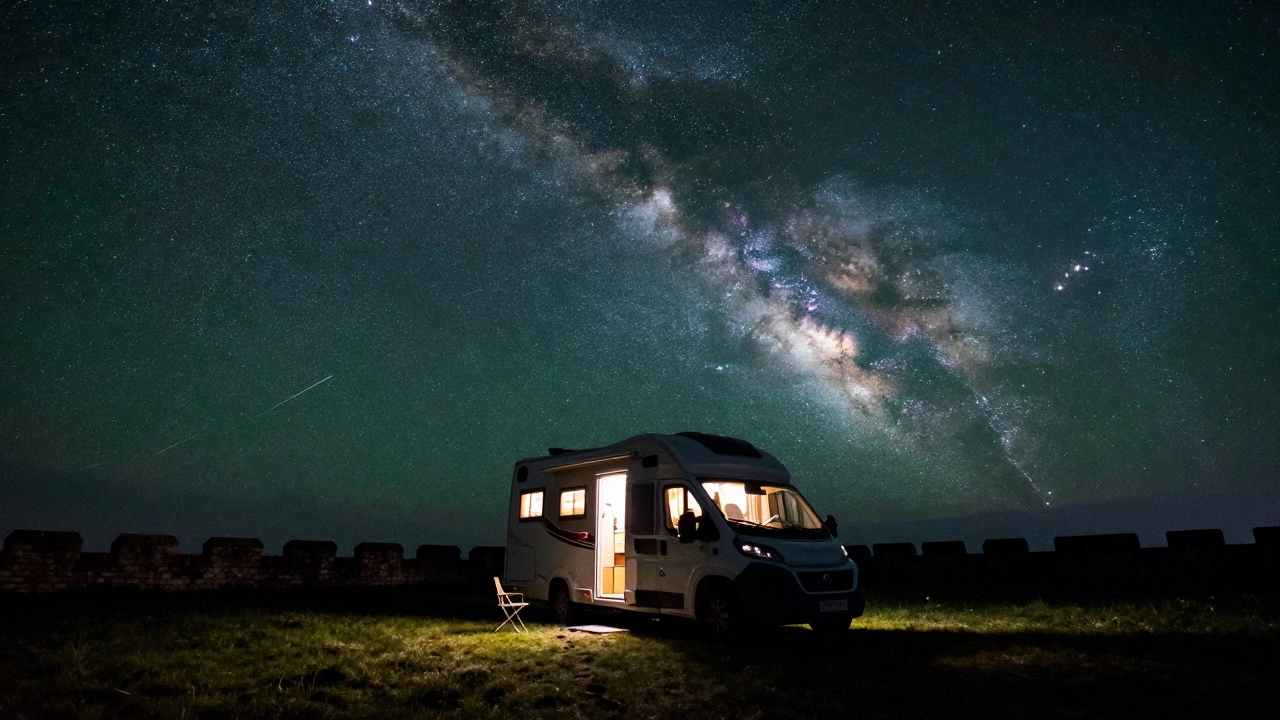
And then there’s the night sky. Northumberland is a Dark Sky Park. On a clear night, you’ll see the Milky Way like you’ve never seen it before. No light pollution. Just stars, silence, and the faint hum of your motorhome’s heater.
Isle of Skye: Otherworldly and Worth the Drive
Skye is the kind of place that looks fake. The Quiraing, the Old Man of Storr, the Fairy Pools-they’re real, but they feel like a dream. The roads are narrow. The weather changes fast. But if you’re in a well-maintained motorhome with good tires, you’ll be fine.
Stay at Portree Caravan Park. It’s the largest site on the island, with good facilities and a handy shop. From there, you can drive to the Trotternish Ridge in 15 minutes. Hike the Quiraing loop-it’s 4.5 miles, but you can turn back anytime. The views from the top? You’ll want to sit there for hours.
Don’t miss the Fairy Pools. The water is icy blue, and the waterfalls are small but stunning. Bring waterproof boots. You’ll want to wade in, even if it’s cold.
Pro tip: Book your pitch in summer. Skye fills up fast. But if you come in May or September, you’ll get the same beauty with half the people.
What Makes a Great Motorhome Destination?
It’s not just about the view. The best places for motorhome travel have a few things in common:
- Easy access for large vehicles-no narrow lanes that end in a dead end
- Basic amenities-water refill, waste disposal, maybe electric hookups
- Scenery that changes daily-mountains, sea, forests, ruins
- Local food-a pub that serves fresh fish, a farm shop with local cheese
- Room to breathe-not packed with other motorhomes
Some sites charge £15 a night. Others cost £40. But the price doesn’t always match the experience. A £20 site with a view of the sea beats a £50 site stuck in a field with no horizon.
When to Go? Timing Matters
Summer (June-August) is busy. You’ll find spots full, especially in Wales and the Lake District. But the days are long. You get more time to explore.
Spring (April-May) and autumn (September-October) are quieter. The weather’s unpredictable, but the colors are stunning. Leaves turn gold. The air smells like damp earth and woodsmoke. And you’ll have your pick of pitches.
Winter? Only if you’re prepared. Some sites close. But places like Northumberland and the Scottish Highlands stay open. The cold is real-but so is the peace. You’ll have entire coastlines to yourself.
What to Pack Beyond the Basics
You’ve got the motorhome. You’ve got the maps. But here’s what most people forget:
- A good pair of walking boots-no matter the season
- A portable power bank for phones and cameras
- Reusable containers for leftovers-no one wants to throw away food on a trip
- A small first-aid kit with blister pads and antiseptic wipes
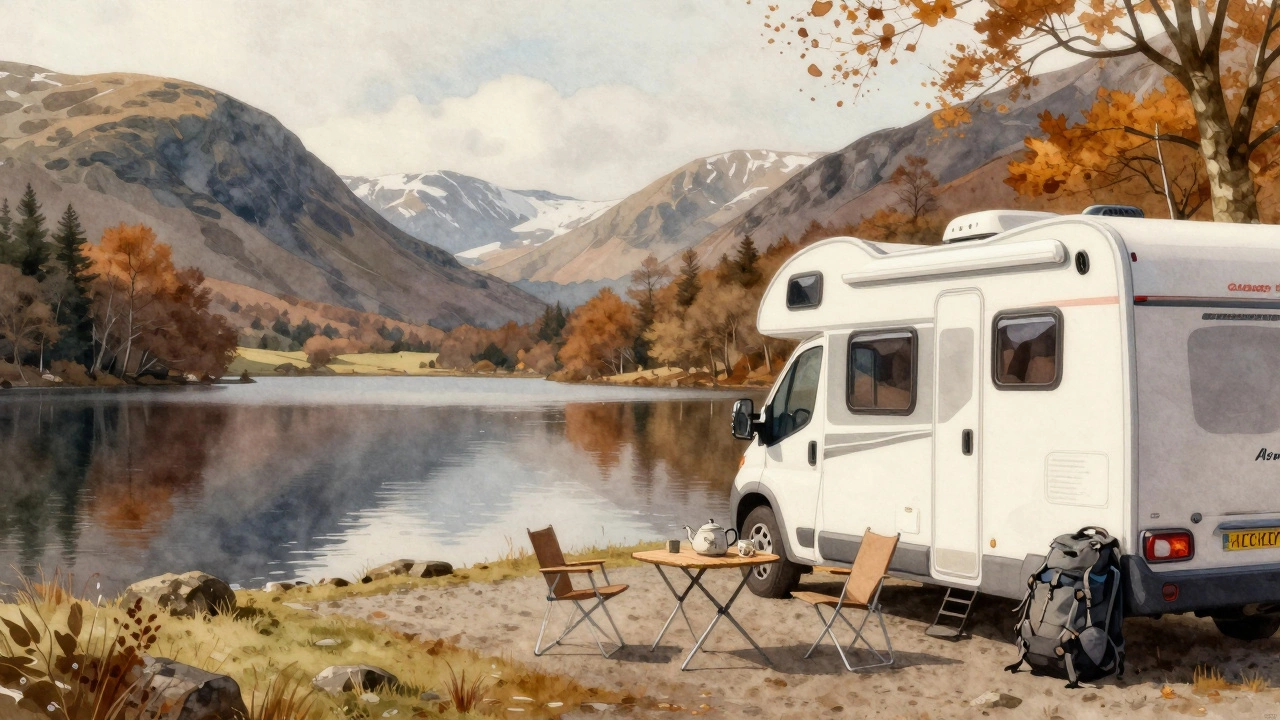
- A foldable table and chairs-great for coffee at sunrise
- A headlamp with red light mode-won’t ruin your night vision
And don’t forget a notebook. Write down the names of the places you stop. The pubs you eat at. The people you meet. Years later, you’ll flip through it and remember exactly how it felt.
Final Thought: It’s Not About the Destination
The best place to go in a motorhome isn’t a spot on a map. It’s the moment you realize you’re not rushing. You’re not checking off a list. You’re just there-watching the sun set behind a hill, listening to the wind, sipping tea from a chipped mug.
That’s what motorhome travel is really about. Not the miles. Not the sites. But the quiet, unexpected joy of being free-on your own schedule, in your own space, surrounded by places that remind you how big the world still is.
Can you wild camp in a motorhome in the UK?
Wild camping in a motorhome is mostly illegal in England and Wales without landowner permission. Scotland is more relaxed under the Scottish Outdoor Access Code, as long as you’re discreet, leave no trace, and avoid protected areas. Always check local rules-some councils allow it in designated zones. Never camp on private land without asking.
What size motorhome is best for UK roads?
A mid-sized motorhome between 5.5 and 6.5 meters long is ideal for UK roads. It’s easier to park, fits on narrow lanes, and can access most campsites. Larger vehicles (over 7 meters) struggle on some Scottish and Welsh routes. Check site restrictions before booking-many have length limits.
Are motorhome sites open year-round?
Most Club and independent sites close between November and March. But some, especially in Northumberland, Scotland, and coastal areas, stay open. Always check the site’s website or call ahead. Winter stays often have reduced services-no showers, limited electric hookups-but they’re quiet and cheap.
How much does it cost to stay at a motorhome site in the UK?
Prices vary widely. Basic sites charge £10-£15 per night. Club and private sites with facilities like showers and hookups cost £20-£35. Luxury sites with pools and spas can hit £50+. In peak season, prices rise. Booking early saves money-and a spot.
Do you need a special license to drive a motorhome in the UK?
No. If you passed your car driving test before January 1997, you can drive any motorhome up to 3,500kg. After that date, you need a Category B license for vehicles under 3,500kg. Larger motorhomes (over 3,500kg) require a Category C1 license. Always check your license details online at GOV.UK.