
RV Loan Calculator
Calculate Your RV Loan
Results
Estimated Monthly Payment:
$0.00
Interest Rate:
6.8%
Loan Term:
15 years
Getting approved for an RV loan isn’t as tough as buying a house, but it’s not as simple as leasing a car either. If you’ve ever looked at a motorhome and thought, "I could live out there," you’ve probably also wondered: "Will they let me borrow the money?" The answer depends on your credit, your income, and what kind of RV you want. It’s not magic. It’s math.
Your Credit Score Is the First Gate
Most lenders require a minimum credit score of 660 to even consider your application. That’s not perfect, but it’s not impossible. If your score is below 600, you’ll likely be turned down or stuck with interest rates over 12%. A score above 700 opens up better terms - sometimes as low as 6.5%. The average approval score in 2025 was 712, according to data from the National RV Dealers Association. That means if you’ve been paying your bills on time for the last two years, you’re already halfway there.
But credit isn’t just about the number. Lenders look at your payment history. Did you miss a car payment last year? Did you carry high balances on credit cards? Even one late payment in the last 12 months can hurt. If you’ve got a clean record, you’re ahead of 40% of applicants.
Income and Debt Ratio Matter More Than You Think
It doesn’t matter how good your credit is if you’re already maxed out on other loans. Lenders use something called the debt-to-income ratio (DTI). They add up all your monthly payments - rent, car loan, student debt, credit cards - and compare it to your gross monthly income. If you make $5,000 a month and owe $2,200 in payments, your DTI is 44%. Most lenders want that under 40%. Some will stretch to 45%, but only if everything else is perfect.
That means if you’re thinking about buying a $100,000 RV, you need to show you can comfortably afford the monthly payment on top of everything else. A $100,000 RV with a 7% interest rate over 15 years costs about $890 a month. Add that to your rent and car payment, and if you’re already at $2,500 in monthly debt, you’re over the limit.
Down Payment: The Real Game-Changer
Here’s the secret most people don’t talk about: putting money down makes approval way easier. If you can put 20% down on an RV, lenders see you as lower risk. That’s because you’ve got skin in the game. You’re not just borrowing - you’re investing.
Many lenders require at least 10% down. But if you can swing 15-20%, you’ll get better rates and higher approval odds. For a $75,000 RV, that’s $7,500 to $15,000. That sounds like a lot, but if you’ve been saving for a trip or selling an old car, it’s doable. One study from 2025 found that applicants who put down 20% or more had a 78% approval rate. Those who put down less than 5%? Only 39% got approved.
Age and Type of RV Affect Your Loan Terms
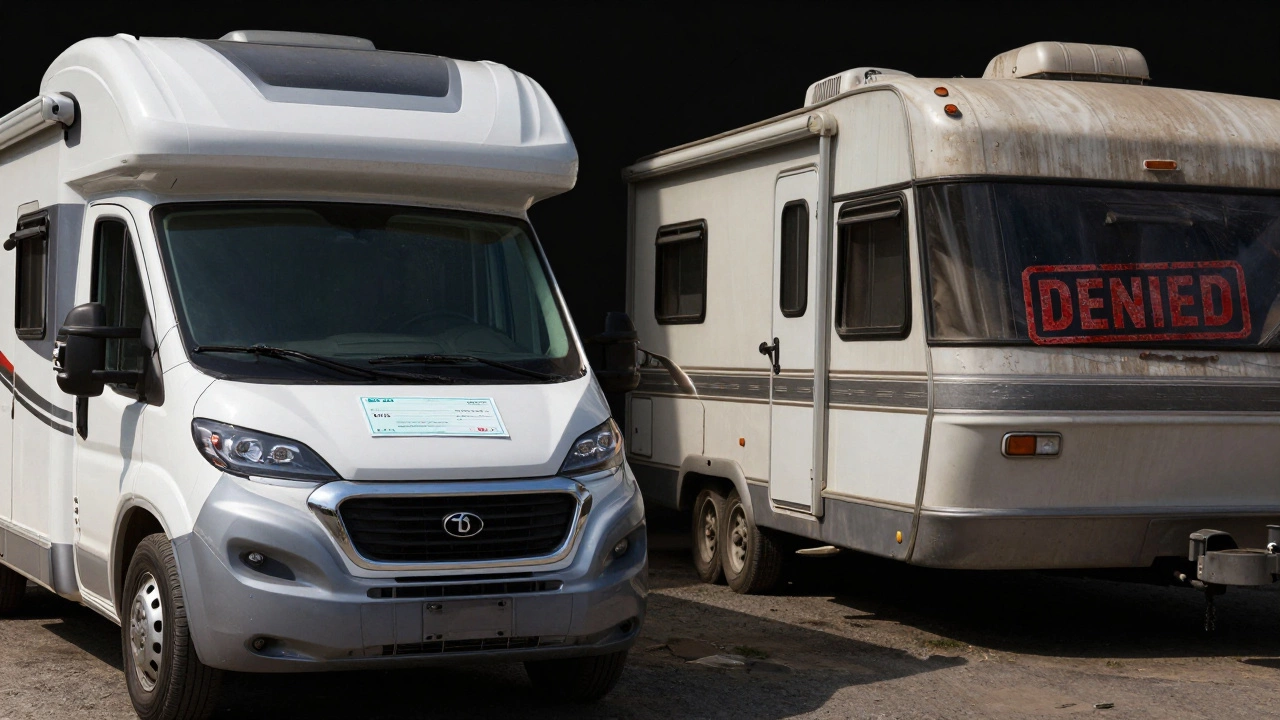
Not all RVs are created equal when it comes to financing. Lenders treat new RVs differently than used ones. A brand-new Class A motorhome? Easy to finance. A 20-year-old fifth wheel with 120,000 miles? Forget it. Most lenders won’t touch RVs older than 10-15 years, no matter how well they’re maintained.
Also, the type of RV matters. Class A motorhomes and travel trailers are the most commonly financed. Pop-up campers and truck campers? Fewer lenders offer loans for those. You might have to go to a credit union or specialty lender, which means longer processing times and higher rates.
Loan terms are also tied to the RV’s value. Lenders usually cap the loan term at 15 years for RVs under $50,000. For luxury models over $150,000, they might stretch to 20 years - but only if you’ve got excellent credit and a low DTI.
Where to Apply: Credit Unions vs. Banks vs. Dealers
You’ve got three main places to get an RV loan: banks, credit unions, and dealerships. Each has pros and cons.
- Banks offer predictable rates but are rigid. They often have strict rules and won’t finance older RVs.
- Credit unions are your best bet if you’re in a pinch. They tend to be more flexible, offer lower rates, and work with buyers who have slightly lower credit scores. Many have RV-specific loan programs.
- Dealerships make it easy - you can apply right at the lot. But they often partner with finance companies that charge higher interest. Watch out for "add-ons" like extended warranties or paint protection - they inflate the loan amount and cost you more in the long run.
One tip: Get pre-approved before you start shopping. That way, you know exactly how much you can borrow and what your rate will be. It also gives you leverage when negotiating with dealers.
What If You Get Denied?
It happens. Maybe your credit score is low. Maybe your income isn’t high enough. Maybe you’re trying to finance a 2008 RV with 150,000 miles. Don’t panic. There are ways to fix it.
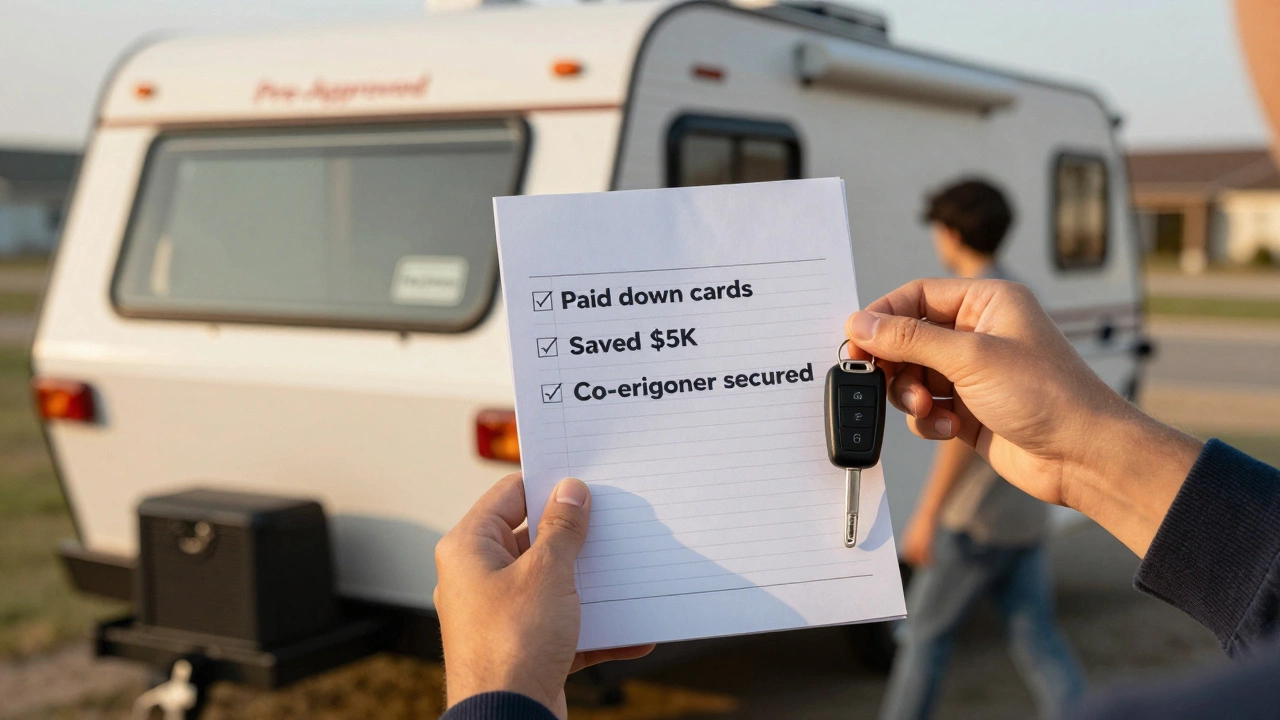
- Wait and rebuild credit. Pay down credit cards. Don’t open new accounts. Keep your utilization under 30%.
- Find a co-signer. Someone with strong credit can help you qualify. But they’re taking on the risk - make sure they understand that.
- Save more for a bigger down payment. Even 10% more down can make the difference between approval and denial.
- Consider a smaller RV. A $40,000 trailer is easier to finance than a $120,000 motorhome. Start small. You can always upgrade later.
One person we talked to applied three times over six months before getting approved. Each time, they improved one thing: paid off a credit card, added a co-signer, saved an extra $5,000. On the fourth try, they got a 6.8% rate on a $65,000 trailer. It took patience. But it worked.
Final Reality Check
Getting approved for an RV loan isn’t about luck. It’s about preparation. If you’ve got decent credit, steady income, and can put down 15% or more, you’re in a strong position. If you’re still paying off student loans, carrying high credit card balances, or trying to finance an old, high-mileage rig, you’ll need to adjust your plan.
Don’t rush into a loan just because you want to hit the road. The RV market is full of people who bought on impulse and ended up stuck with payments they couldn’t afford. The ones who succeed? They planned. They saved. They checked their numbers. And then they bought.
What credit score do I need to get an RV loan?
Most lenders require a minimum credit score of 660. Applicants with scores above 700 get the best rates, often under 7%. The average approved score in 2025 was 712. Scores below 600 rarely get approved unless you have a large down payment or a co-signer.
How much of a down payment is required for an RV loan?
Lenders typically require at least 10% down, but putting down 15-20% significantly improves your chances of approval and lowers your interest rate. For example, a $75,000 RV would need $7,500-$15,000 upfront. Higher down payments reduce lender risk and often cut monthly payments by $200 or more.
Can I get an RV loan with bad credit?
It’s possible, but difficult. You’ll likely need a co-signer, a large down payment (20% or more), or to finance a lower-cost RV. Interest rates could be 12% or higher. Some credit unions specialize in working with borrowers who have lower scores. Avoid dealership financing if your credit is poor - they often charge extra fees and hidden costs.
What types of RVs are hardest to finance?
RVs older than 10-15 years, those with over 100,000 miles, and non-standard models like truck campers or pop-up campers are hardest to finance. Lenders see them as higher risk due to depreciation and repair costs. Class A motorhomes and modern travel trailers are the easiest to get loans for.
Should I get pre-approved before shopping for an RV?
Yes. Pre-approval tells you exactly how much you can borrow and what your interest rate will be. It also gives you negotiating power with dealers. Many lenders offer quick pre-approvals online in under 24 hours. Don’t start looking at RVs without knowing your budget - it saves time and prevents disappointment.