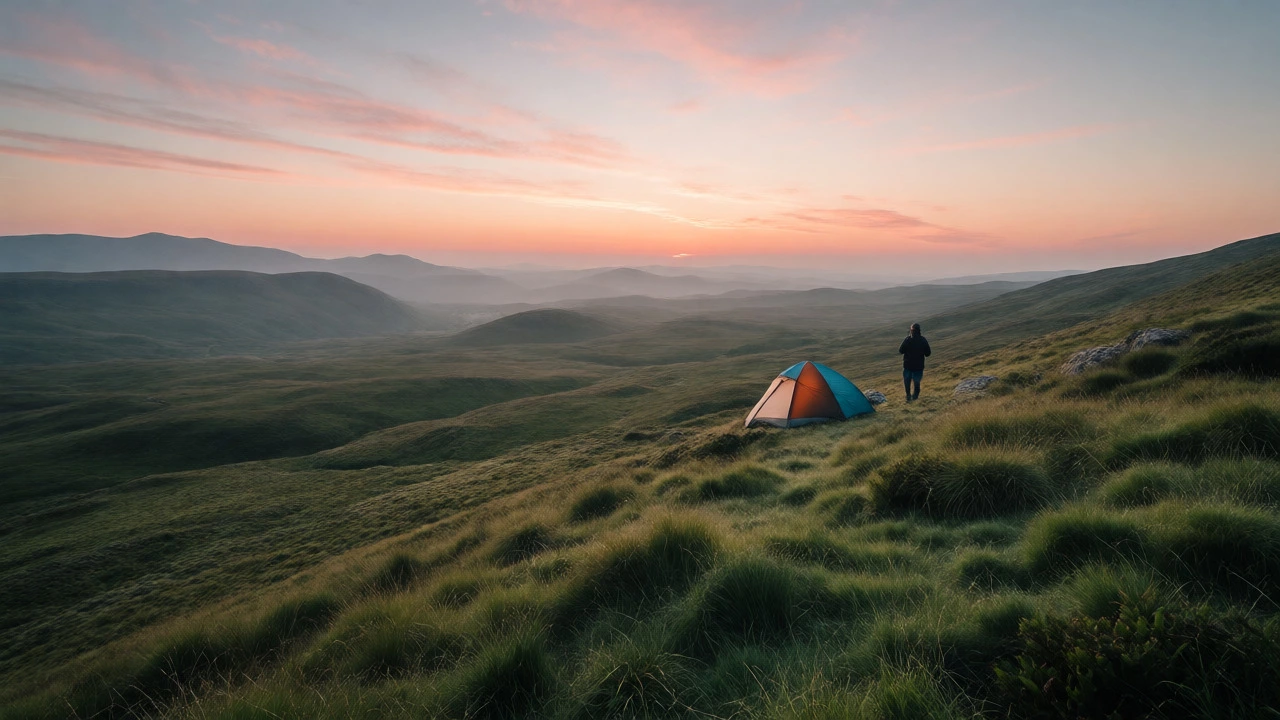
UK Wild Camping Legality Checker
Select your location and scenario to see the current legal status and requirements for wild camping.
You pitch your tent on a hillside, brew some coffee, and watch the sunrise. It feels like freedom. But then you wonder: is this actually legal? You’re not alone. The question is it legal to wild camp in the UK doesn’t have a simple yes or no answer. It depends entirely on where you are and what kind of land you’re standing on.
The rules change drastically once you cross from Scotland into England. In one place, you have strong rights; in another, you’re technically trespassing unless you ask permission. Getting this wrong can lead to awkward conversations with landowners or, worse, fines. Let’s break down exactly where you can sleep under the stars without worrying about getting kicked off the land.
The Great Divide: Scotland vs. Rest of UK
If you want true freedom, head north. Scotland is the only part of the UK where wild camping is broadly legal for most people. This isn’t just a polite nod from authorities; it’s written into law via the Land Reform (Scotland) Act 2003. This act established the "Right to Roam," allowing anyone to walk, cycle, and camp on most unenclosed land.
This means you can pitch a tent in the Highlands, on moorlands, and even near lochs, provided you follow the Scottish Outdoor Access Code. This code isn’t a list of strict prohibitions but a set of responsibilities. You must respect people, care for the environment, and manage your own safety. If you leave no trace and don’t block farm gates, you’re generally within your rights.
| Region | General Legality | Key Requirement | Risk Level |
|---|---|---|---|
| Scotland | Yes, broadly legal | Follow Access Code | Low |
| England & Wales | No, requires permission | Landowner consent | High |
| Northern Ireland | No, unclear rights | Ask owner | Medium |
England and Wales: The Permission Game
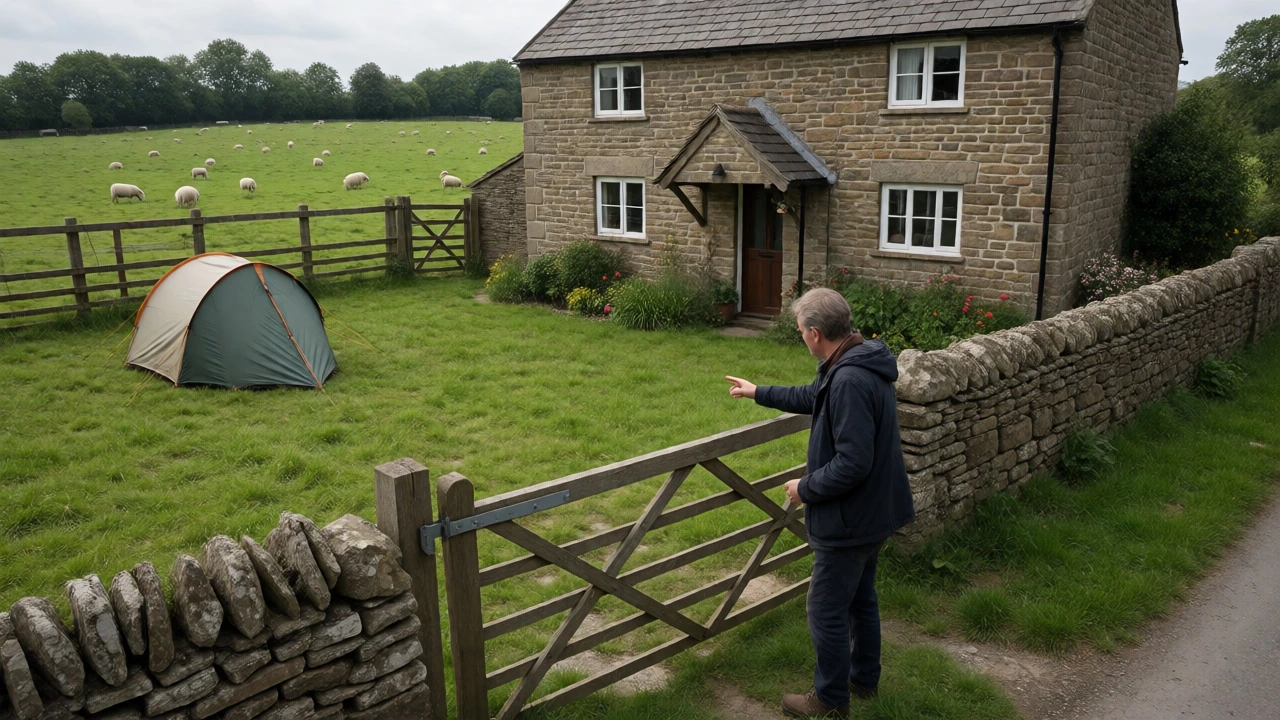
Cross the border into England, and the vibe changes instantly. There is no general right to roam here. Under English common law, if you camp on private land without permission, you are committing civil trespass. This isn’t usually a criminal offense that gets you arrested, but it does give the landowner the right to ask you to leave immediately.
Most land in England is privately owned. Even those vast stretches of green fields you see next to hiking trails belong to someone-often a farmer who might be annoyed if their livestock wanders near your fire pit. So, when is it okay?
- Common Land: Some areas are designated as common land, where grazing rights exist. Camping rules vary wildly here. Always check local bylaws.
- National Parks: Contrary to popular belief, National Parks do not automatically allow wild camping. In places like the Lake District or Dartmoor, specific zones permit it, often requiring short stays (one or two nights) and leaving no trace.
- Forestry England: Many state-owned forests now offer designated wild camping spots. These are free, legal, and often come with basic facilities like compost toilets.
In Wales, the situation mirrors England. However, there is a growing movement towards more permissive access. Organizations like Natural Resources Wales are piloting schemes where camping is allowed in specific upland areas. But until these become standard law, assume you need permission.
Special Zones and Exceptions
Not all restrictions are created equal. Some areas have unique rules that override the general landscape. Knowing these saves you from embarrassment.
Dartmoor National Park has recently clarified its stance. After years of ambiguity, new bylaws came into effect allowing wild camping on open moorland, provided you stay away from roads and buildings and limit your stay to two consecutive nights. This was a massive win for hikers and backpackers who previously faced uncertainty.
Similarly, the Peak District allows camping in certain high-altitude areas, but again, it’s conditional. You cannot camp just anywhere. Check the park authority’s map before you set out. Ignoring these boundaries can result in fixed penalty notices, which feel particularly harsh when you’re trying to enjoy nature.
Coastal areas present another challenge. While you might spot a perfect sandy cove, many beaches are managed by trusts or councils that prohibit overnight stays to protect dunes and prevent littering. Always look for signage. If there’s no sign, call the local council office during business hours. It takes five minutes and ensures you won’t be woken up at dawn by a ranger.
Practical Tips for Staying Out of Trouble
Legality is one thing; etiquette is another. Even in Scotland, where you have rights, being a bad neighbor can ruin the experience for everyone. Here’s how to navigate the social side of wild camping.
- Avoid Farmyards: Never camp right next to a barn or house. Farmers deal with enough stress. Give them space.
- Keep Groups Small: Large groups attract attention and cause more impact. Stick to small numbers, ideally under six people.
- Leave No Trace: This is non-negotiable. Pack out everything, including food scraps. Use portable stoves instead of fires in sensitive areas.
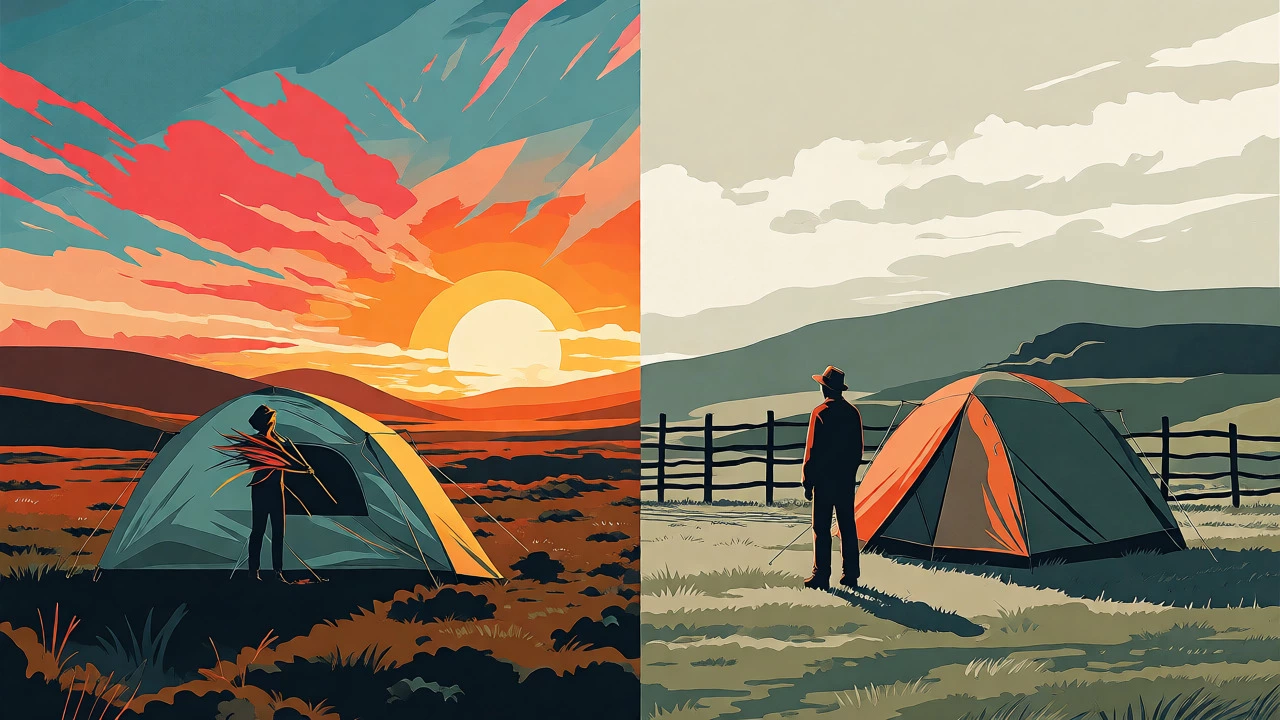
- Be Invisible: Pitch your tent late and strike it early. Avoid camping on skylines where you’re silhouetted against the sky.
If you’re in England and unsure, ask. Knocking on a farmhouse door and asking, "Is it okay if I pitch my tent in that corner field for tonight?" works surprisingly well. Most farmers are happy to say yes if you’re respectful and leave the place cleaner than you found it. Building these informal agreements creates goodwill for future campers.
Frequently Asked Questions
Can I light a campfire while wild camping in the UK?
It depends on the location and weather conditions. In Scotland, you can light a fire if it doesn't damage the ground and you use existing fire sites. In England and Wales, especially during dry seasons, many National Parks and forestry commissions ban open fires due to wildfire risk. Always use a portable stove instead to be safe and compliant.
Do I need permission to wild camp in Scotland?
Generally, no. Under the Land Reform (Scotland) Act 2003, you have the right to camp on most unenclosed land. However, you must follow the Scottish Outdoor Access Code. Restrictions apply in certain managed areas, such as around Loch Lomond during peak season, where permits may be required.
What happens if I get caught wild camping illegally in England?
You will likely be asked to move along by the landowner or a ranger. Since it is civil trespass, police rarely intervene unless there is damage or disorder. However, in some National Parks or protected areas, you could face a fixed penalty fine if you ignore signs prohibiting camping.
Are there any apps to help find legal wild camping spots?
Yes. Apps like 'The Dyrt' or 'Pitchup' often include user reviews indicating legality. More specifically, 'MapMyHike' or official National Park maps highlight permitted zones. For Scotland, the 'Outdoor Access Code' app provides guidance on responsible behavior.
Can I wild camp on the beach in the UK?
It varies. Many beaches are owned by the Crown Estate or local councils that prohibit overnight stays to protect sand dunes and ensure public safety. Always check local signage. If no signs are present, contact the local council to confirm if camping is tolerated.