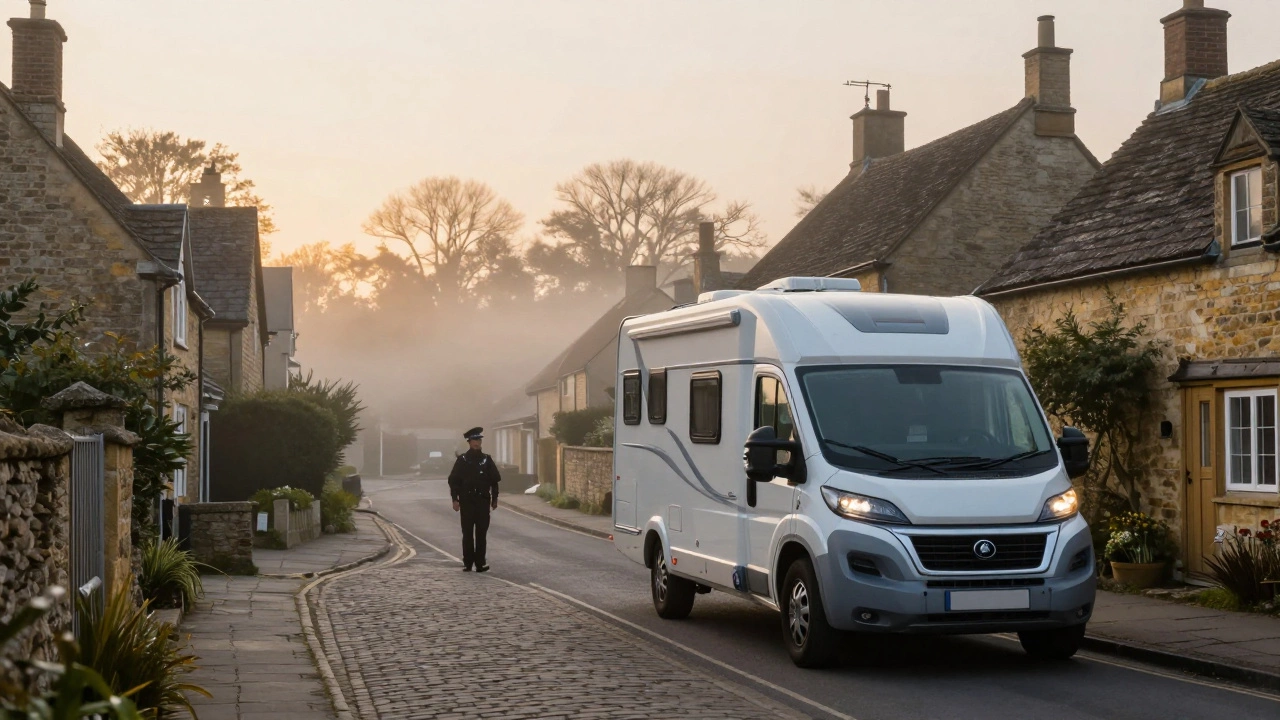
UK Motorhome Parking Risk Checker
Select the scenario that best describes your current situation to see the legal risk and recommended actions.
-
Select a scenario above to see the detailed legal status.
Quick Guide to Street Parking Legalities
- Parking vs. Camping: Simply parking a vehicle is legal unless there are signs saying otherwise. Setting up camp (awnings, chairs, slides) usually makes it illegal.
- Local Authority Power: Individual councils can create their own Public Space Protection Orders (PSPOs) to ban overnight stays.
- The "One Night" Rule: While not a formal law, many police officers treat a single night of sleeping in a vehicle as a non-issue, provided it doesn't cause a nuisance.
- Residential Restrictions: Many urban areas have 'Permit Only' zones where you'll get a ticket within minutes if you don't have a local pass.
The Difference Between Parking and Camping
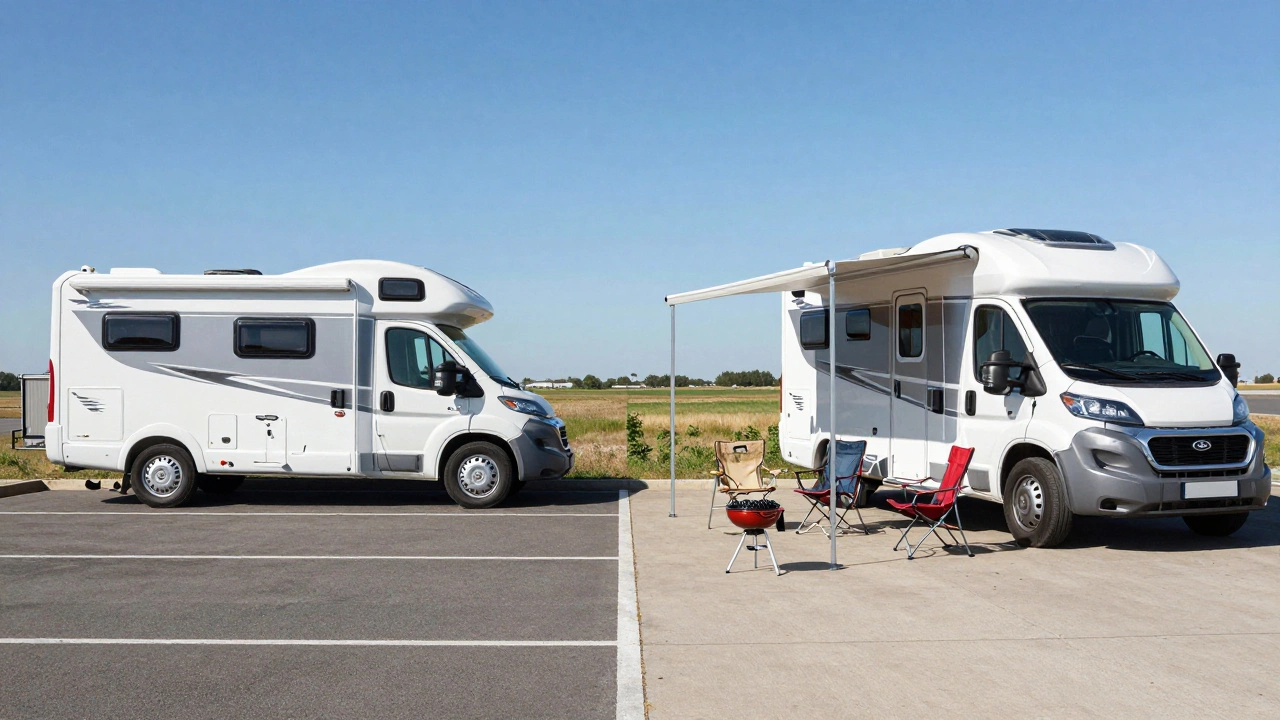
This is where most people get tripped up. In the eyes of the law, there is a massive difference between parking and camping. If you pull your motorhome into a legal parking space, turn off the engine, and go to sleep, you are technically parking. However, the moment you put out a camping chair, extend a slide-out, or deploy an awning, you have transitioned into 'camping'.
Most local councils in the UK have bylaws that prohibit camping on public land. If you've turned your street spot into a miniature living room, you're likely breaking a local ordinance. A common mistake is leaving a satellite dish or a portable BBQ outside. To the police or a council warden, these are "indicators of camping" and provide a legal basis for them to ask you to move or issue a fine.
Dealing with Local Council Restrictions and PSPOs
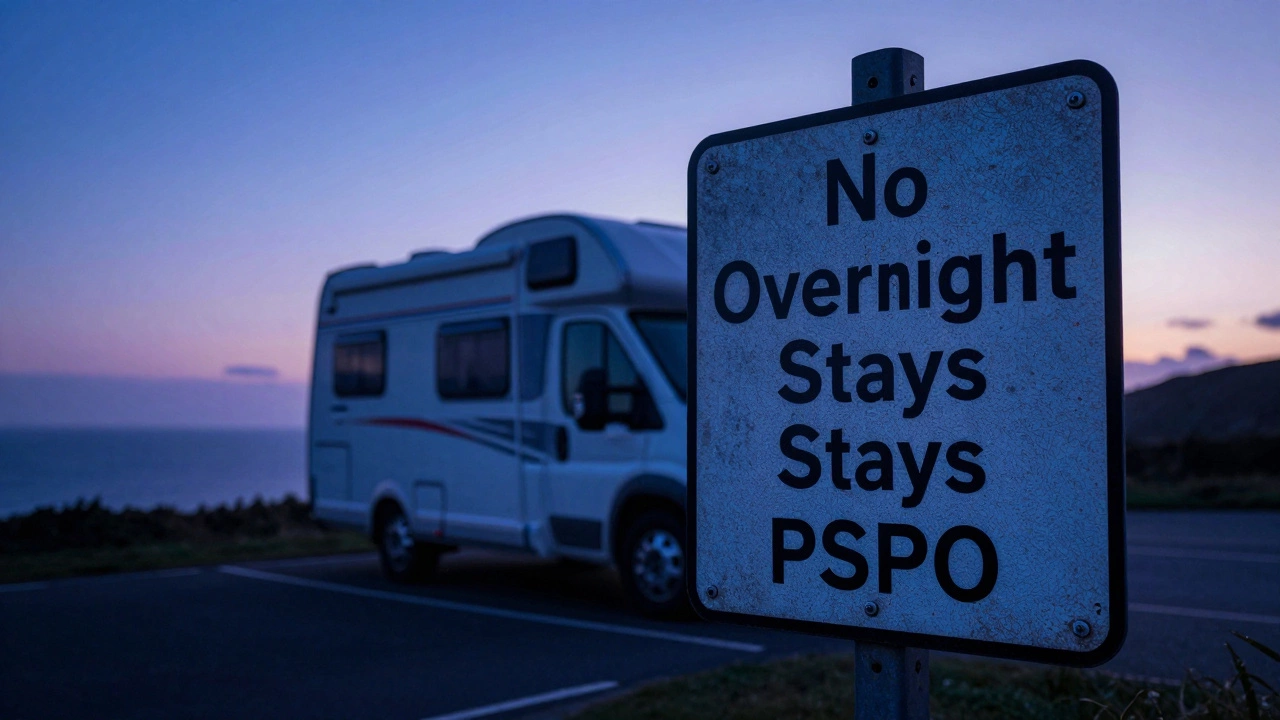
You might find a street that looks perfectly legal, but a small, weathered sign mentions a Public Space Protection Order (or PSPO). A PSPO is a tool used by local authorities to prevent "anti-social behavior," and in many UK towns, this has been expanded to include the overnight parking of motorhomes and campervans.
For instance, some coastal towns in Cornwall or the Lake District have implemented these orders to stop the surge of "wild" street parking during the summer months. If you ignore a PSPO, you aren't just risking a parking ticket; you're potentially committing a criminal offense that could lead to a fixed penalty notice. Always check the signage at the entrance of a village or the start of a road. If you see a sign mentioning "No overnight stays" or "No camping," take it seriously.
| Scenario | Legal Status | Risk Level | Key Trigger |
|---|---|---|---|
| Parking in a residential bay (no permit) | Illegal | High | Parking tickets/Towing |
| Sleeping in vehicle (no gear outside) | Grey Area | Low/Medium | Nuisance complaints |
| Deploying awning/chairs on a street | Illegal | High | "Camping" definition |
| Parking in a designated layby (no signs) | Legal | Low | Obstruction of traffic |
The Danger of Obstruction and Nuisance
Even if there are no signs prohibiting parking, you can still be moved along for causing an "obstruction." A motorhome is a behemoth compared to a hatchback. If you park on a narrow country lane and a tractor or an emergency vehicle cannot pass, you are breaking the law under the Road Traffic Act.
Then there is the "nuisance" factor. This is subjective. If you're running a loud generator at 2 AM to keep your fridge cold, or if you're emptying a chemical toilet into a street drain (which is highly illegal), you are inviting the police to your door. Most residents are fine with a motorhome for one night, but they'll call the council if you start treating the curb like a permanent driveway. Respecting the local environment is your best defense against being asked to leave.
Alternatives to Street Parking
If you're feeling uneasy about the legality of a spot, there are safer bets. Campsites UK provide the most secure option, offering electricity, waste disposal, and a legal guarantee that you won't be towed. If you prefer something more low-key, apps like Park4Night have become the industry standard for finding spots where others have stayed without trouble.
However, remember that these apps are crowdsourced and not legal guides. Just because someone else stayed there last Tuesday doesn't mean the council hasn't changed the rules since then. If you're in a rush, look for large supermarket car parks. While many now have "no overnight stay" signs, some are still lenient if you're just grabbing a quick nap before heading back to the motorway.
Pro Tips for Discrete Overnighting
If you do decide to park on the street for a quick stopover, the goal is to be "invisible." Here are a few rules of thumb to avoid unwanted attention:
- Keep it inside: Do not put anything outside the vehicle. No chairs, no tables, no rugs.
- Manage your lights: Use blackout blinds. A glowing motorhome in a dark street is a beacon for council wardens.
- Silence is golden: Avoid using generators in residential areas. Use your leisure battery or a silent power station.
- Leave no trace: This is the golden rule of the community. Any litter left behind makes the street less likely to be welcoming for the next person.
- Be polite: If a resident asks what you're doing, be honest and friendly. Explain that you're just stopping for the night and will be gone by morning.
Can I be fined for sleeping in my motorhome on a public road?
Yes, you can. While simply sleeping in a vehicle isn't always illegal, you can be fined if you are violating a Public Space Protection Order (PSPO), parking in a permit-only zone, or if the police deem your presence a nuisance or an obstruction. The fine varies by local council.
Is it legal to use a generator while parked on the street?
There is no national law banning generators, but local noise ordinances and "anti-social behavior" laws can be used to stop you. Running a loud generator in a residential area is a fast way to get a visit from the police or a complaint from a neighbor.
What happens if I ignore a "No Overnight Parking" sign?
You risk receiving a Penalty Charge Notice (PCN) or a Fixed Penalty Notice (FPN). In some cases, if the vehicle is causing a significant obstruction, the authorities have the power to tow the vehicle, which is an incredibly expensive and stressful process.
Does the law differ between England, Scotland, and Wales?
The general principles are similar, but Scotland has different laws regarding "wild camping" (though this usually applies to tents and remote areas). In urban streets, all three countries rely heavily on local council bylaws and PSPOs, meaning the rules can change as soon as you cross a county or council border.
Can I park my motorhome in my own driveway and let people stay in it?
Generally, yes, but check your property deeds and local planning laws. Some residential areas have covenants against keeping "commercial vehicles" or large caravans on driveways. If the vehicle is parked on the street outside your own house, the same street parking laws apply as to anyone else.
Next Steps and Troubleshooting
If you find yourself in a situation where you're asked to move, don't argue. Be polite, apologize, and move on immediately. The more cooperative you are, the less likely the officer is to issue a formal fine.
For those who travel frequently, the best strategy is to plan your route around verified sites. If you're unsure about a street, try calling the local tourist information center or a nearby hotel to ask about the local mood toward motorhomes. In many small towns, the locals are welcoming, but in others-especially near "honey pot" tourist sites-the tolerance is very low.