Motorhome Rear Seat Safety Checker
Select your situation below to see if riding in the back is safe and compliant with UK/Ireland laws.
Make selections above to generate a safety report.
You’re cruising down the M1, the kids are settled in their bunks at the back of your motorhome, and you’re thinking: can they stay there? Or maybe you’re eyeing that extra sofa bed for long hauls. The short answer is yes, but with a massive "if." If those seats aren’t legally approved for travel, you’re not just risking a fine-you’re risking serious injury. This isn’t about comfort; it’s about physics and law.
Most people assume that because a motorhome looks like a living room on wheels, you can lounge around while moving. That’s a dangerous myth. In reality, the back of a motorhome is often a no-go zone during transit unless specific conditions are met. Let’s break down exactly when it’s safe, when it’s illegal, and how to keep your family secure without turning your holiday into a stress-fest.
The Golden Rule: Approved Seats Only
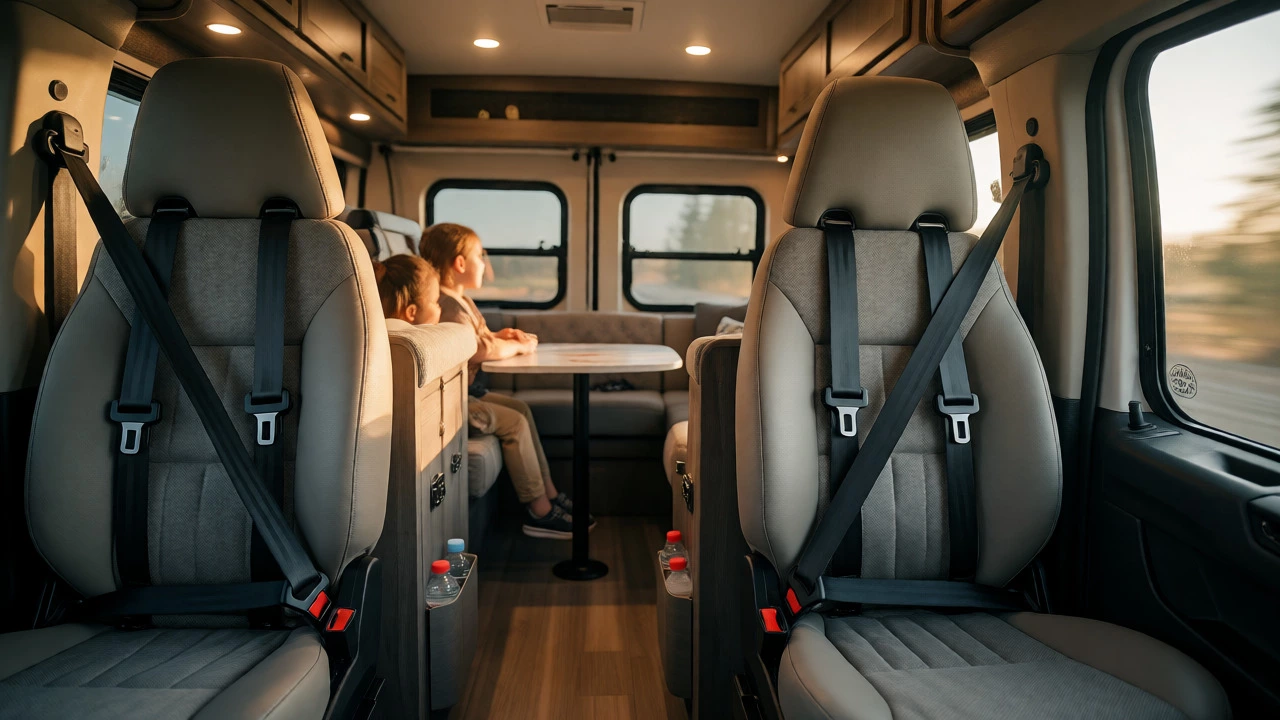
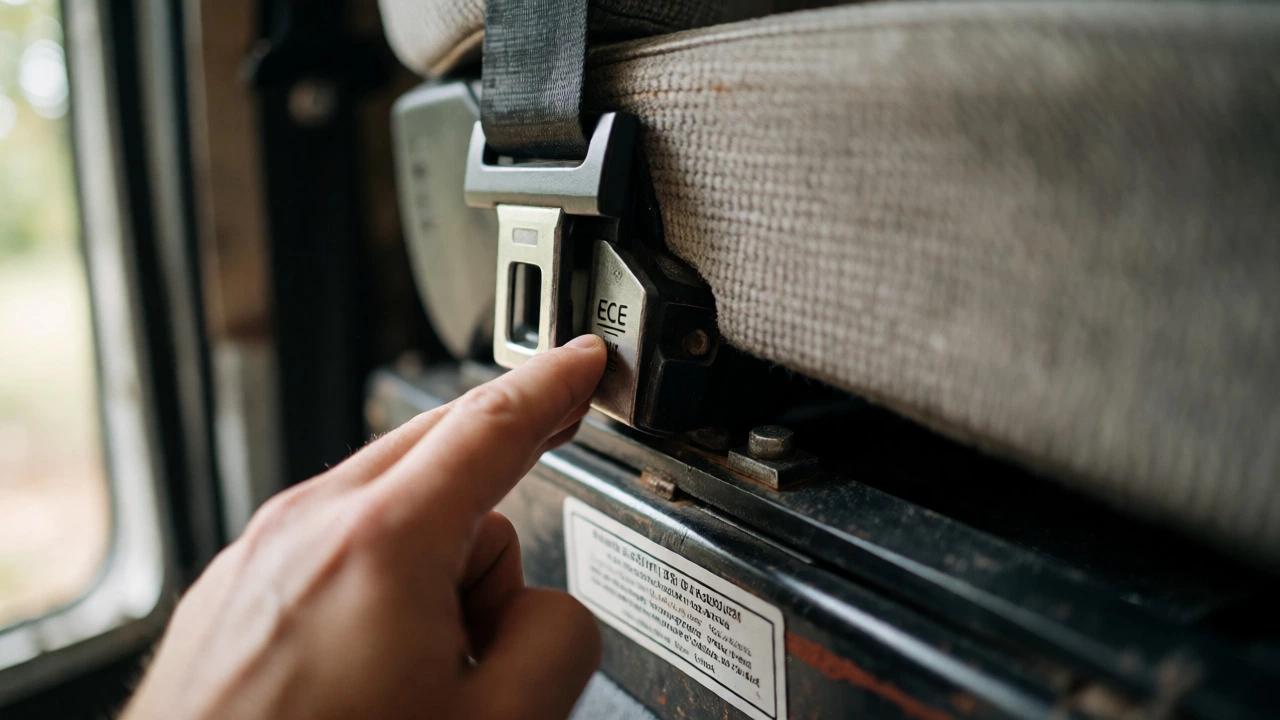
Here is the non-negotiable rule: you can only ride in the back if you are sitting in a seat that has been specifically approved for road travel. This sounds obvious, but many owners confuse "furniture" with "seating." A bench built by the manufacturer might look sturdy, but if it lacks a proper three-point seatbelt and an ECE R44 or ECE R129 (i-Size) approval mark, it is not a car seat. It’s furniture.
In Ireland and the UK, the law requires all passengers to wear a seatbelt if one is fitted. If a seat doesn’t have a belt, you technically shouldn’t be using it for travel. But here’s the catch: some older motorhomes or conversions have belts that were retrofitted poorly. Always check the label on the buckle. If it says "for stationary use only," ignore it at your peril. During a sudden stop at 60 km/h, unsecured passengers become projectiles. A child weighing 30kg hits a wall with the force of a small car. Seatbelts save lives, period.
Understanding Your Motorhome’s Layout
Not all motorhomes are created equal. How safe it is to ride in the back depends entirely on your vehicle’s classification and layout. We need to distinguish between factory-built models and converted vans, as well as different types of seating arrangements.
| Motorhome Type | Typical Rear Seating | Travel Safety Status | Key Risk Factor |
|---|---|---|---|
| Class C Motorhome | Dinette or Bench | Safe if belted | Loose objects becoming missiles |
| Converted Van | Bench or Swivel Chairs | Check approval marks | Retrofitted belts failing under load |
| A-Class Motorhome | Lounge Sofa | Often unsafe for travel | Sofas may lack structural anchoring |
| Campervan (Bunk Beds) | Bunk Beds | Generally Unsafe | No seatbelts; high center of gravity |
As you can see, bunk beds are usually off-limits. You cannot strap someone into a top bunk effectively enough to withstand a crash. If you have kids who want to sleep up top, wait until you’ve parked. For dinettes, the key is the direction of travel. Forward-facing seats are generally safer than rear-facing ones because they protect against whiplash better in frontal collisions, which are the most common type of accident. However, modern regulations are improving rear-facing options too.
The Physics of a Crash: Why Loose Objects Matter
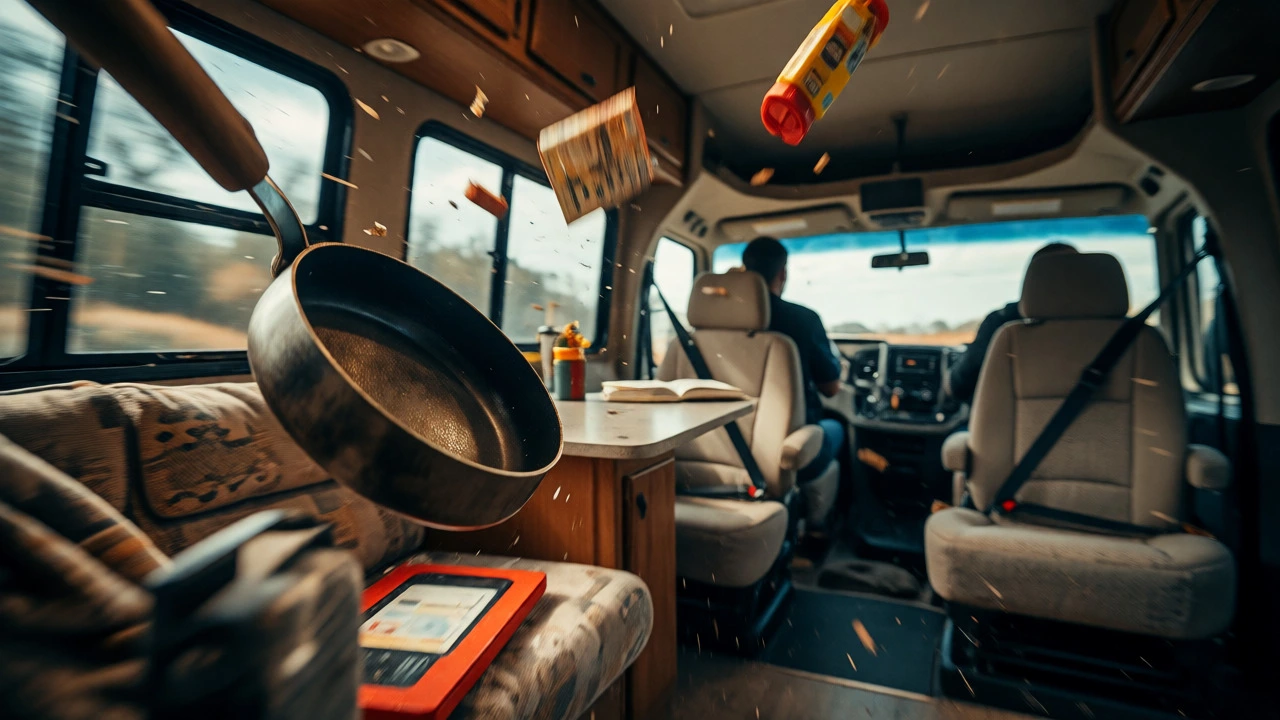
Even if everyone is buckled up, the back of a motorhome presents unique hazards. Unlike a sedan, where your trunk is separated from the cabin, a motorhome’s living space is open. This means loose items-cooking pots, laptops, toys, water bottles-can fly forward with terrifying speed during a collision.
Imagine a 2kg frying pan sliding across the floor at 50 km/h. In a sudden brake, it becomes a heavy projectile. If it hits a passenger’s head, it can cause severe trauma. This is why storage cabinets must have robust latches. Many accidents happen not because of the impact itself, but because of secondary impacts from flying gear. Before every journey, do a "shake test." Open every cupboard. Is everything secured? If a pot rattles, it’s a risk. Use non-slip mats inside cupboards and ensure heavy items are stored low and near the center of the vehicle.
Legal Requirements in Ireland and the UK
If you’re planning a trip from Dublin to Cork or crossing over to Wales, the rules are similar but have nuances. In both jurisdictions, the primary requirement is that every occupant must use an appropriate restraint system. For children, this means age-appropriate car seats or booster cushions. Adult seatbelts are mandatory where fitted.
What happens if you get pulled over? Police officers will look for two things: are you wearing a belt, and is the seat legal? If you’re caught sitting on a sofa that isn’t anchored to the chassis, you could face fines and penalty points. More importantly, if you’re involved in an accident and weren’t in an approved seat, your insurance company might argue negligence. This could leave you paying out of pocket for medical bills or vehicle repairs. Don’t let a minor convenience cost you thousands later.
There is also the issue of weight distribution. Motorhomes have a Gross Vehicle Weight Rating (GVWR). Overloading the rear with passengers and luggage can affect handling and braking distance. If you’re carrying five adults in the back, check your payload capacity. Exceeding it doesn’t just mean a fine; it means your brakes won’t work as efficiently, increasing stopping distances significantly.
Comfort vs. Safety: Making the Back Workable
So, you know the rules. Now, how do you make the back livable for long drives? Sitting in a cramped dinette for four hours is tough, especially for kids. Here are some practical tips to balance safety with sanity:
- Use Headrests Correctly: Ensure headrests are adjusted so the top is level with the top of the ears. This prevents neck injuries in rear-end collisions.
- Break Often: Stop every two hours. Get everyone out, stretch legs, and check that nothing has shifted in the storage areas.
- Secure Electronics: Tablets and phones should be mounted or held securely. Dropping a phone on your foot isn’t fatal, but throwing it into someone’s face is annoying and potentially harmful.
- Avoid Eating While Moving: Hot drinks spill easily. A scalding coffee mug flying forward during a hard brake is a real hazard. Wait for a service station stop.
If your motorhome has a swivel cab, remember that the front seats are usually the safest spots due to airbags and crumple zones. If possible, rotate the front seats backward to create a larger lounge area when stopped, but always return them to forward-facing positions before driving.
Special Considerations for Pets and Children
Pets are often overlooked in motorhome safety discussions. A dog loose in the back can distract the driver or become injured in a crash. Use a crate secured with straps, or a harness that clips into the seatbelt buckle. Never let a pet roam freely in the aisle.
For children, the rules are stricter. Rear-facing seats are recommended for infants and toddlers. In a motorhome, installing these can be tricky due to limited ISOFIX points. Many motorhomes rely on seatbelt installation for child seats. Follow the manufacturer’s instructions precisely. If you’re unsure, visit a certified installer. It’s worth the €50-€80 fee to know your child is truly secure.
Also, consider the temperature. Motorhomes heat up quickly in summer. Even with air conditioning, the back can get stuffy. Crack windows slightly for ventilation, but ensure screens are closed to keep bugs out. Dehydration affects concentration, so keep water accessible and drink regularly.
When to Avoid Riding in the Back Altogether
Despite best efforts, there are scenarios where you should avoid traveling in the back entirely. If you’re driving on rough, unpaved roads, the jolting can be intense. Suspension systems in motorhomes are stiffer than cars, meaning every pothole transfers directly to the cabin. This can cause motion sickness or discomfort, leading to distracted driving.
Additionally, if your motorhome is older, inspect the seatbelt anchors. Rust or corrosion can weaken the mounting points. Pull firmly on the belt; if the anchor moves excessively, it needs repair. Don’t gamble with worn-out hardware. Replace it immediately. Similarly, if you notice any cracks in the floor where the seats are bolted, address it before your next trip.
Finally, listen to your instincts. If the ride feels unstable or the vehicle handles poorly when loaded, pull over and reassess. Maybe you’ve overloaded the rear. Maybe the tires need more pressure. Safety isn’t just about compliance; it’s about awareness.
Frequently Asked Questions
Can I sit on the sofa in my motorhome while driving?
Only if the sofa has been tested and approved for road travel and includes a working seatbelt. Most sofas are designed for stationary use only. Check for an ECE approval label on the seat frame or buckle. If it’s missing, you must not sit there while the vehicle is moving.
Are seatbelts mandatory in the back of a motorhome?
Yes, in Ireland and the UK, seatbelts are mandatory for all passengers in any seat equipped with them. If a seat has a belt, you must wear it. If a seat does not have a belt, it is generally considered unsafe for travel, and you should find another spot or park.
Can children sleep in the bunk beds while the motorhome is moving?
No, it is highly unsafe and often illegal. Bunk beds typically lack seatbelts and are not structurally designed to withstand crash forces. A child sleeping in a bunk can be thrown out or hit by other objects during a sudden stop. Always wait until you are parked.
What happens if I don’t wear a seatbelt in the back?
You risk a fixed charge fine and penalty points on your license. More critically, in the event of an accident, you are much more likely to suffer severe injury or death. Insurance claims may also be complicated if you were not using available restraints.
How do I know if my motorhome seats are approved?
Look for a label on the seatbelt buckle or the seat frame indicating compliance with ECE Regulation 14 (for belts) and ECE Regulation 17 (for seats). Factory-built motorhomes usually come with these approvals. Converted vans require verification from the converter’s documentation.
Final Thoughts: Plan Ahead, Travel Safe
Riding in the back of a motorhome is perfectly safe when done correctly. It allows families to stay together and enjoy the journey. The key is preparation. Know your vehicle’s limits, respect the law, and secure your cargo. Don’t let the freedom of the open road tempt you into cutting corners on safety. Buckle up, lock the cupboards, and enjoy the view. After all, the destination is only half the fun-the journey should be safe, too.