Camping Power Needs Calculator
List your devices, get your daily watt-hour load, and see which power setup actually fits your trip.
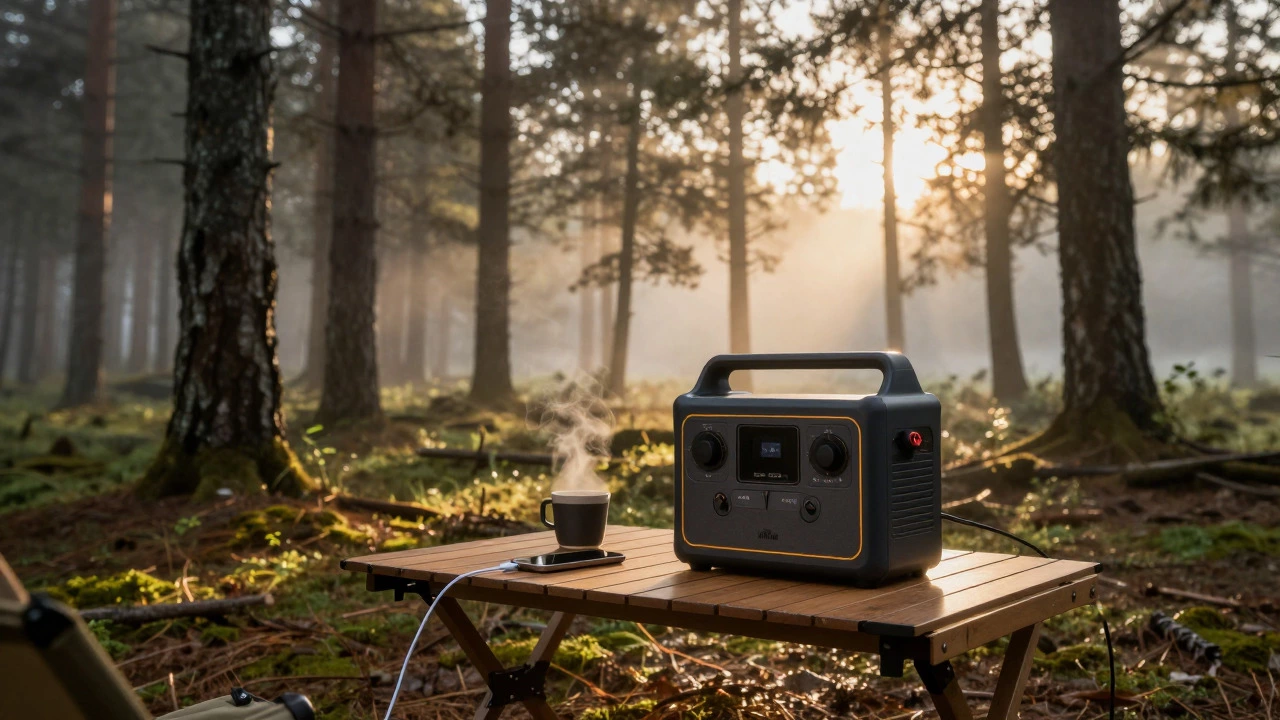
Portable Power Station
Casual / Couples- Cost: $500 – $3,000
- Setup: Minutes
- Maintenance: Low
Custom Battery Bank
Van Lifers / Heavy- Cost: $800 – $2,500
- Setup: Hours–Days
- Maintenance: Medium-High
Solar Only
Light Charging- Cost: $150 – $400
- Setup: Minutes
- Maintenance: Very Low
Imagine this: you’re deep in the woods, far from any grid connection, and your phone is at 15%. The coffee maker is dead. The lights are out. You didn’t bring a generator because you wanted silence, not a roaring engine. This is the reality for many campers who reject the noise and fumes of traditional generators but still need reliable power. The good news? You don’t have to choose between modern comfort and nature’s quiet. With the right setup, you can run your fridge, charge devices, and even use small appliances without ever hearing an engine start.
The core challenge isn't just finding energy; it's managing how much you store and how efficiently you use it. A typical camper needs about 300 to 600 watt-hours per day for basic needs like lighting, charging phones, and running a small fan. If you add a refrigerator or a laptop, that number jumps quickly. Understanding your baseline consumption is the first step to building a system that actually works for your lifestyle.
Understanding Your Power Needs Before You Buy Anything
Before you spend a penny on batteries or panels, you need to know exactly what you’re powering. Most people overestimate their needs because they assume they’ll use everything at once. In reality, most campers run one or two high-draw items at a time. Start by listing every device you plan to use. For each item, check the wattage label, usually found on the back or bottom of the appliance. Multiply the watts by the hours you expect to use it daily to get watt-hours (Wh).
For example, if you use a 10-watt LED light for 5 hours, that’s 50 Wh. If you run a 100-watt laptop charger for 4 hours, that’s 400 Wh. Add these up, and you have your daily load. Now, add a buffer of 20-30% for inefficiencies and cloudy days. If your total is 500 Wh, aim for a system that delivers at least 650 Wh per day. This simple calculation prevents the most common mistake: buying a tiny battery that dies by dinner.
Portable Power Stations: The Modern Battery Solution
Portable Power Stations are large-capacity lithium-ion batteries with built-in inverters that convert DC power to AC power for standard outlets. These devices have revolutionized off-grid living because they combine storage and conversion into one silent unit. Unlike old lead-acid batteries, they weigh less, last longer, and handle deep discharges well. Brands like EcoFlow, Jackery, and Bluetti offer models ranging from 300Wh to over 2000Wh. For a solo camper or couple, a 500Wh to 1000Wh unit is often the sweet spot. It can run a mini-fridge for 24 hours and charge multiple phones several times over.
When choosing a station, look at the continuous output wattage, not just the capacity. If you want to run a 1500W hairdryer or a space heater, you need a unit with at least 1800W continuous output. However, for most camping scenarios, 300W to 600W is plenty. Check the recharge time too. Some units take 8 hours to charge from empty via solar, while others with fast-charging tech do it in under 2 hours. Fast recharging is crucial if you plan to top up during short breaks.
Solar Panels: Harnessing the Sun’s Energy
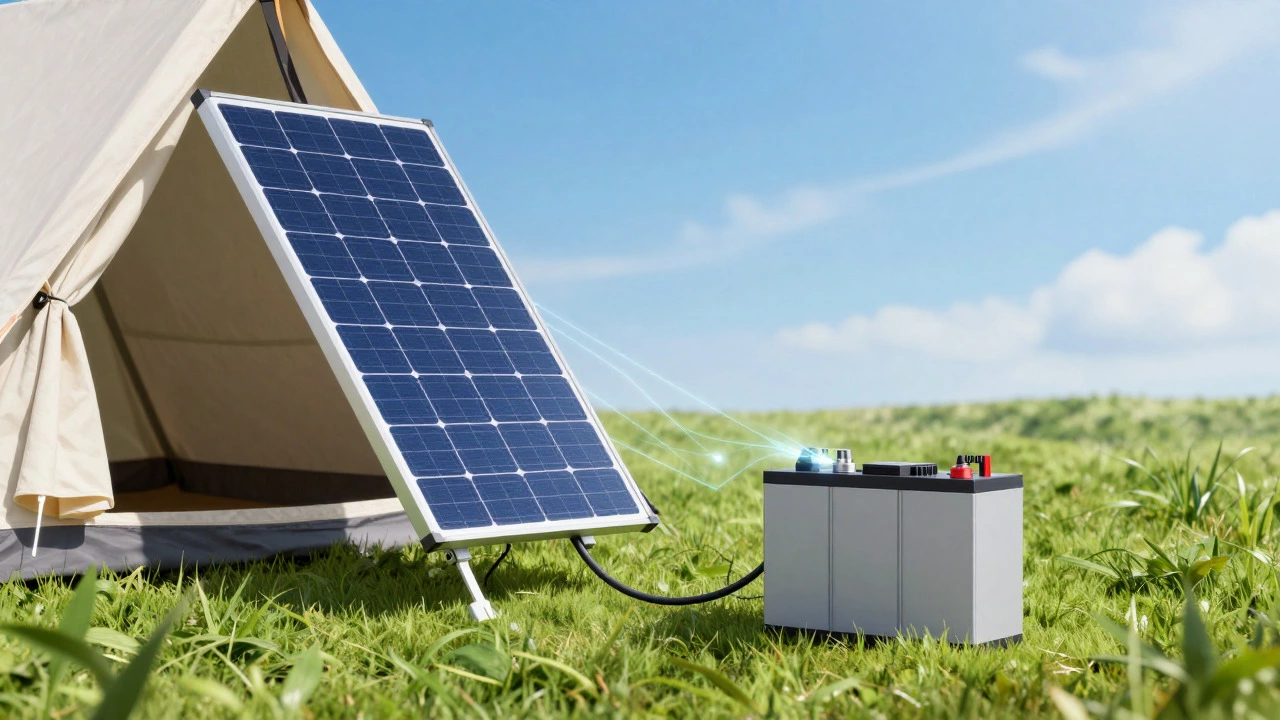
Solar Panels are photovoltaic modules that convert sunlight directly into direct current electricity. They are the primary way to replenish your battery without plugging into shore power or using a generator. Flexible panels are popular among campers because they roll up and attach to motorhomes, tents, or backpacks. Rigid panels are more efficient but heavier and require mounting structures. For most campers, a flexible 100W to 200W panel is a practical starting point. In full sun, a 200W panel produces about 1000Wh per day in ideal conditions, though real-world output is often 60-70% of rated capacity due to angle, temperature, and cloud cover.
You need to match your panel size to your battery capacity. A general rule is to have solar input equal to or greater than your daily consumption. If you use 500Wh daily, a 200W panel might struggle on cloudy days, so consider 300W or split the difference with two 150W panels. Don’t forget the charge controller. While many modern power stations have built-in MPPT controllers, if you build a custom battery bank, you must include one. MPPT (Maximum Power Point Tracking) controllers extract up to 30% more energy from panels than older PWM types, making them worth the extra cost.
Building a Custom Battery Bank for Serious Users
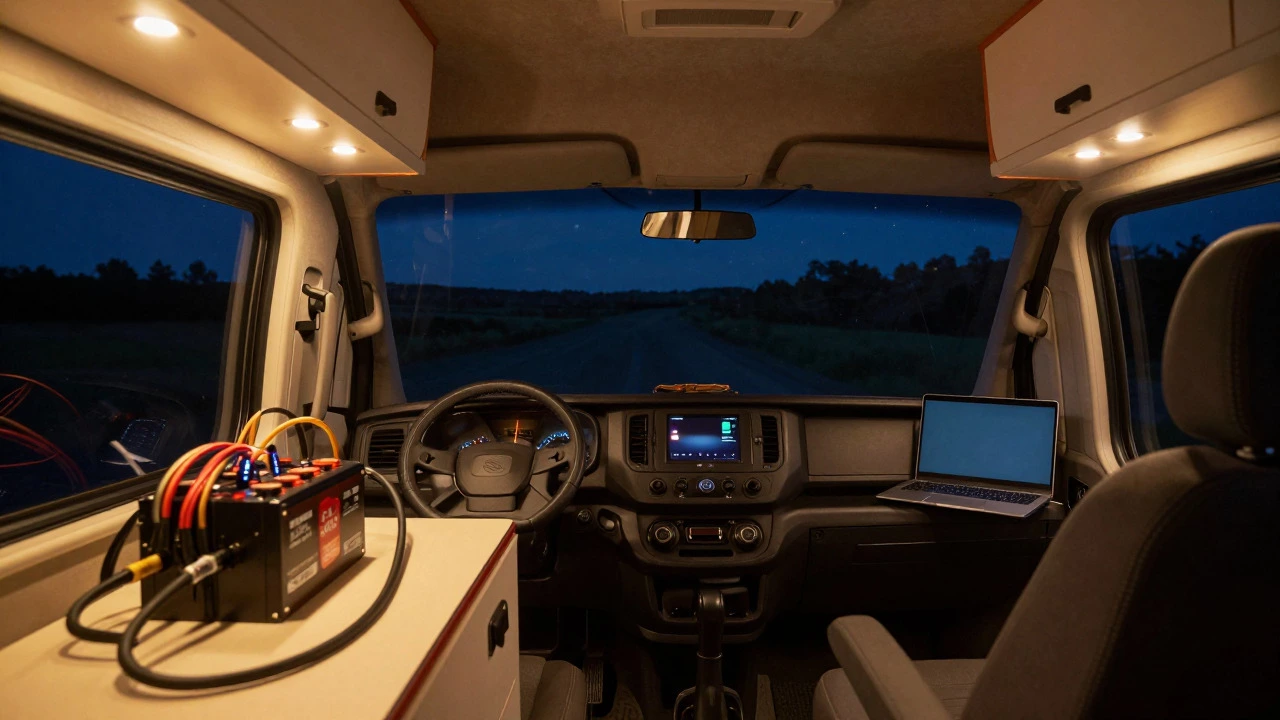
If you run heavy loads like induction cooktops, large fridges, or power tools, a commercial power station might be too expensive or limited. This is where a custom battery bank comes in. You assemble individual lithium LiFePO4 cells, a battery management system (BMS), and an inverter. LiFePO4 chemistry is preferred over NMC or Lead-Acid because it offers 2000+ charge cycles, better thermal stability, and safer operation. A 24V 100Ah LiFePO4 bank stores 2400Wh, enough to power a medium-sized camper for three days without recharging.
Building this system requires some technical knowledge. You need to wire cells in series to increase voltage and in parallel to increase capacity. A 24V system typically uses eight 3.2V cells in series. Adding a BMS protects the bank from overcharging, over-discharging, and short circuits. Pair this with a pure sine wave inverter to safely run sensitive electronics. This approach costs less per watt-hour than buying a pre-made station but takes time to assemble and test. It’s ideal for long-term van lifers or those who enjoy tinkering.
Efficient Appliances and Usage Strategies
No amount of battery capacity saves you if you waste energy. The biggest power drains in camping are usually heating and cooling. Resistive heaters and air conditioners consume thousands of watts. Instead, rely on insulation, quality sleeping bags, and fans for ventilation. For cooking, induction hobs are far more efficient than gas or electric coil elements, converting 90% of energy into heat versus 40-50% for coils. Use LED lighting exclusively; incandescent bulbs waste 90% of their energy as heat. Charge devices overnight when possible, as many phones and laptops draw less power when fully charged. Turn off standby modes on TVs and audio systems. Small habits add up to significant savings over a week-long trip.
Comparison of Power Solutions
| Feature | Portable Power Station | Custom Battery Bank | Solar Only (No Storage) |
|---|---|---|---|
| Cost | $500 - $3,000 | $800 - $2,500 | $150 - $400 |
| Setup Time | Minutes | Hours to Days | Minutes |
| Maintenance | Low | Medium-High | Very Low |
| Capacity Flexibility | Fixed | Highly Modular | None |
| Best For | Casual Campers, Couples | Van Lifers, Heavy Users | Light Charging Only |
Common Mistakes to Avoid
Many new off-grid campers make errors that frustrate them later. First, ignoring weather patterns. If you’re camping in Ireland or northern Europe, expect fewer peak sun hours than in Arizona. Size your solar array accordingly. Second, underestimating winter drain. Cold temperatures reduce battery efficiency by up to 20%, so keep your battery warm if possible. Third, mixing chemistries. Never mix old and new batteries, or different brands, as this causes uneven discharge and potential failure. Fourth, forgetting cable quality. Thin cables cause voltage drop, wasting energy as heat. Use thick, short cables for high-current connections. Finally, not testing your system before leaving home. Run a full cycle at home to ensure all components work together seamlessly.
Frequently Asked Questions
Can I run a refrigerator without a generator?
Yes, provided you use a 12V DC compressor fridge designed for RVs or a small 120V AC fridge paired with a sufficient power station. A 12V fridge draws about 45-60W on average, consuming roughly 1000Wh per day. A 1000Wh power station can run it for 24 hours, assuming other loads are minimal.
How many solar panels do I need for a weekend trip?
For a typical weekend with moderate usage (lights, phone charging, small fan), one 200W flexible panel is usually sufficient. If you plan to use a laptop heavily or run a fridge, consider two 200W panels to ensure you recharge fully despite cloudy weather.
Are lithium batteries safe for camping?
LiFePO4 lithium batteries are considered very safe for camping due to their stable chemistry and low risk of thermal runaway compared to older NMC cells. Always use a quality BMS and avoid puncturing or exposing them to extreme heat above 60°C.
What is the best way to charge a power station at home?
Use the included AC wall adapter for fastest charging. Most modern stations support fast charging, reaching 80% in under two hours. Solar charging is slower and dependent on weather, making it impractical for quick top-ups before a trip.
Do I need an inverter if I only use 12V devices?
If all your devices run on 12V DC (like most RV fridges, LED lights, and fans), you can bypass the inverter entirely. This reduces energy loss by 10-15% since inversion converts DC to AC and back. However, if you use standard household plugs, you need an inverter.