UK Public Drinking Compliance Checker
Answer these questions to check if your evening pint is safe from a Fixed Penalty Notice.
Result
Fill in the details and click "Check Legal Status" to see if you're safe.
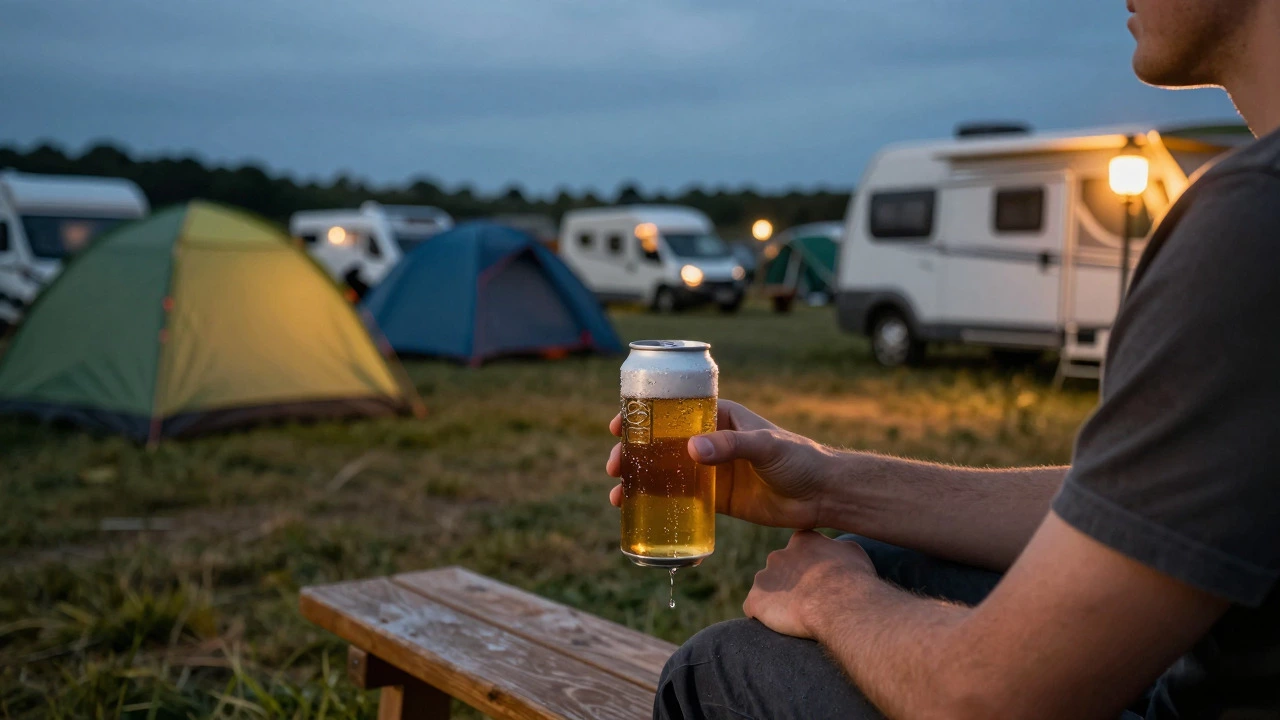
Imagine this: you’re sitting on a bench at a bustling UK campsite, holding a cold lager. A police officer walks by. Do you have to hide it? The short answer is no-but with a big asterisk. In most of England and Wales, public drinking is perfectly legal as long as you aren’t causing a disturbance. However, if you’re planning a trip around campsites, the rules can shift depending on where exactly you are and what local councils have decided.
Understanding these nuances saves you from awkward confrontations or unexpected fines. Whether you’re pitching a tent in Kent or staying in a motorhome in Cornwall, knowing the difference between a public right-of-way and a private campsite pitch changes how you enjoy your evening drink.
The Legal Baseline: England and Wales
In England and Wales, there is no single national law that bans drinking alcohol in public spaces. This means that technically, you can consume a pint of bitter on the High Street, in a park, or at a beach, provided you are over 18 (or 16/17 with a meal) and not acting disorderly. The primary legislation governing this is the Licensing Act 2003, which focuses more on licensed premises than street consumption, but the absence of a specific ban leaves room for local interpretation.
The key word here is "disorderly." If you’re stumbling, shouting, or blocking a path while holding a bottle, you might be picked up under the Anti-Social Behaviour, Crime and Policing Act 2014. But simply standing there sipping a cider? That’s generally fine. This baseline applies to most urban areas, rural paths, and yes, many parts of public-facing campsites.
Local Bylaws: Where the Rules Get Tighter
This is where things get tricky. Local authorities in England and Wales can create "local bylaws" that restrict alcohol consumption in specific zones. These are often implemented in town centers, near schools, or in busy tourist spots to prevent littering and noise complaints.
- Town Centers: Many cities like Manchester, Leeds, and Bristol have designated "no-drinking zones" during certain hours (often 11 PM to 11 AM). Fines for breaking these bylaws usually range from £50 to £100.
- Parks and Gardens: Some municipal parks prohibit glass bottles or any alcohol after dark. Check signage before you settle in.
- Beaches: While less common, some coastal councils ban drinking within 100 meters of lifeguard stations or during high-traffic summer weekends.
If you’re staying at a campsite located near a town center, assume that the "no-drinking zone" extends to the perimeter. Always look for signs. They are legally binding, unlike general police discretion.
Campsite Specifics: Private vs. Public Land
Most UK campsites operate on private land, even if they offer public access. This distinction matters. On private property, the owner sets the rules. For example, a luxury glamping site might allow wine on the deck but ban open flames (and thus, certain types of drinks served hot) near tents. A basic caravan park might have strict quiet hours where loud behavior associated with heavy drinking is discouraged, though the act of drinking itself remains legal.
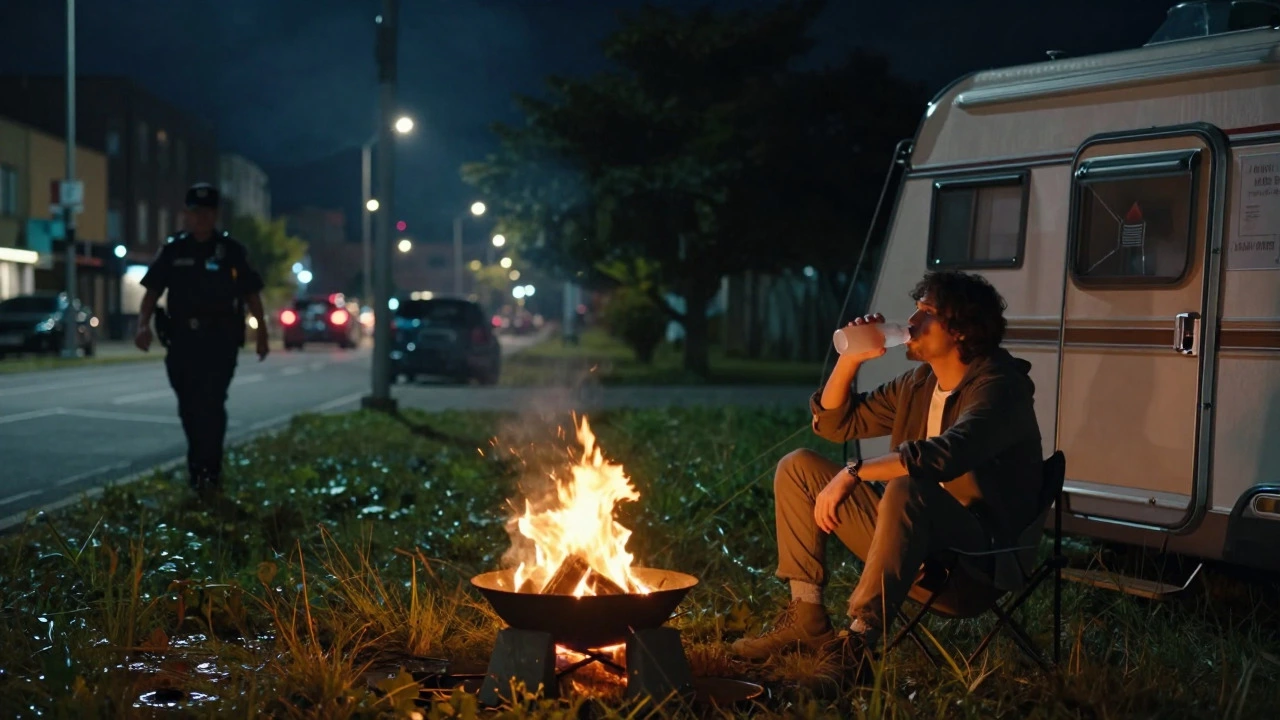
However, if you’re wild camping or using a public right-of-way adjacent to a campsite, the public drinking laws apply. Here, the risk isn’t the drink itself but the container. Glass bottles are rarely banned outright in the countryside, but they are strictly prohibited on many beaches and in national parks due to safety hazards. Switch to cans or plastic flasks to avoid friction with rangers or locals.
Scotland and Northern Ireland: Different Rules Apply
If your travel plans take you north of the border, the legal landscape shifts significantly.
Scotland introduced the Alcohol (Scotland) Act 2010, which gave local councils broader powers to impose restrictions. Unlike England, Scotland has seen more widespread implementation of "drinking curfews" and area-specific bans. In Edinburgh and Glasgow, for instance, it is illegal to drink alcohol in public between 11 PM and 6 AM in designated areas. Violators face an on-the-spot fine of £50. If you’re camping in the Scottish Highlands, you’re likely safe, but if you visit a nearby village after midnight, keep your eyes peeled for signage.
Northern Ireland follows similar principles to England but has its own licensing regulations. There is no blanket ban on public drinking, but local councils in Belfast and Derry have established restricted zones. The enforcement is generally lighter than in Scotland, but the principle remains: don’t cause a scene.
Practical Tips for Campers and Travelers
Knowing the law is one thing; applying it smoothly is another. Here are some practical strategies to keep your camping trip stress-free.
- Check the Campsite FAQ: Before you arrive, read the house rules. Some sites ban alcohol entirely to attract family groups or religious tourists. It’s rare, but it happens.
- Use Cans or Plastic: Glass breaks. Broken glass leads to liability issues and potential bans. Cans are eco-friendlier and safer for shared spaces.
- Respect Quiet Hours: Most campsites enforce quiet hours from 10 PM to 7 AM. Drinking is fine, but singing along to music or clinking glasses loudly is not. Keep it low-key.
- Watch Your Location: If you’re walking from your pitch to the shop, stay on the path. Walking through someone else’s garden with a beer in hand invites complaints.
- Carry ID: If you’re buying alcohol at a local pub near the campsite, you’ll need proof of age. Having your license handy speeds up the process and shows you’re a responsible adult.
What Happens If You Get Caught?
Let’s say you ignore a "No Drinking" sign in a London park. What’s the worst that can happen? Usually, it’s a warning. Police officers prefer education over punishment for minor infractions. However, repeat offenses or aggressive behavior can lead to a Fixed Penalty Notice. In extreme cases, if you’re deemed "intoxicated and disorderly," you could be arrested under the Criminal Justice Act 2003. This is rare for simple drinking, but it underscores the importance of moderation.
Fines vary by region. In Scotland, the standard fine is £50. In England, it depends on the specific local bylaw, typically ranging from £50 to £100. These are small amounts compared to the hassle of dealing with police paperwork while trying to enjoy a holiday.
Comparison of Public Drinking Rules by Region
| Region | General Public Drinking Status | Common Restrictions | Typical Fine Amount |
|---|---|---|---|
| England & Wales | Legal unless disorderly | Local bylaws in town centers/parks (e.g., 11 PM-11 AM) | £50-£100 |
| Scotland | Legal but heavily regulated | Designated no-drinking zones, time-based bans (e.g., 11 PM-6 AM) | £50 |
| Northern Ireland | Legal unless disorderly | Restricted zones in major cities | Varies by council |
| Private Campsites | Determined by owner | Quiet hours, no-glass policies, total bans possible | Ejection or penalty per house rules |
FAQ
Is it legal to drink beer in a car park in the UK?
Yes, generally. Car parks are considered public spaces. As long as you are not driving and are not causing a disturbance, you can drink. However, check for specific local bylaws if the car park is attached to a town center or shopping complex.
Can you drink alcohol on a UK beach?
Usually yes, but glass containers are often banned. Many coastal councils prohibit glass bottles to prevent injuries. Use cans or plastic flasks instead. Also, be mindful of lifeguard stations where drinking might be restricted during peak hours.
What is the minimum age to buy alcohol in the UK?
You must be 18 to buy alcohol in the UK. However, 16 and 17-year-olds can drink beer, wine, or cider if they are eating a supervised meal. Spirits require being 18. This rule applies everywhere, including campsites and shops.
Do I need a permit to drink alcohol while wild camping?
No, no special permit is needed just to drink. However, wild camping legality varies. In Scotland, it is generally allowed on unenclosed land. In England and Wales, it requires landowner permission. If you have permission, public drinking laws still apply regarding disorderly conduct.
Are there any places in the UK where drinking in public is completely banned?
There are no nationwide complete bans. However, specific local bylaws can effectively ban drinking in designated zones during specific times. For example, parts of central London and Edinburgh have strict time-based prohibitions. Outside these zones, drinking is permitted.