Glamping Cost Calculator
Estimate Your Glamping Trip
Calculate costs for your next outdoor adventure
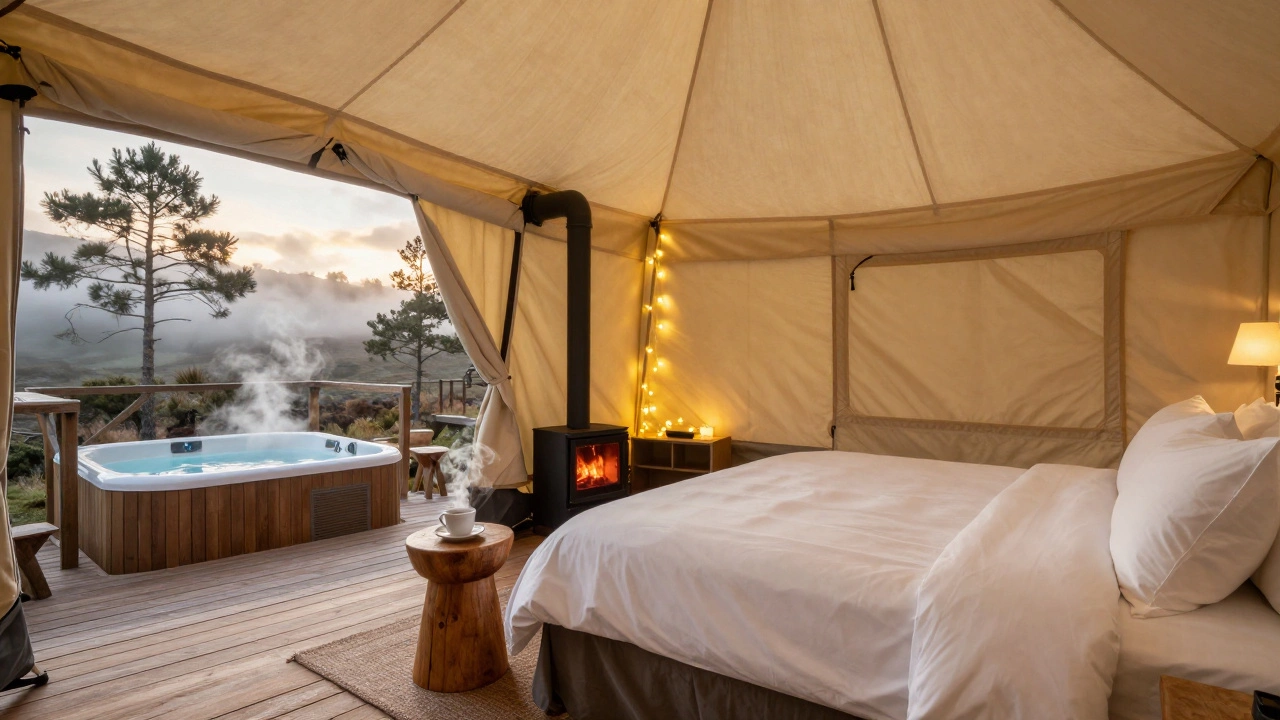
Ever seen a tent with a real bed, a chandelier, and a private hot tub outside? That’s not a fantasy-it’s glamorous camping, also known as glamping. If you’ve ever thought camping meant sleeping on the ground with a damp sleeping bag and a can of beans for dinner, you’re not alone. But glamping changed all that. It’s not just camping with extra pillows. It’s a full experience-where nature meets comfort, and you don’t have to sacrifice luxury to be under the stars.
Where Did Glamping Come From?
The word "glamping" is a blend of "glamorous" and "camping." It started popping up in the early 2000s, but the idea isn’t new. Think back to 19th-century British explorers in Africa who brought silk tents, fine china, and even servants into the wild. Modern glamping took off in New Zealand and the UK, where people began renting out upgraded tents, yurts, and treehouses as vacation rentals. By 2015, glamping sites in the UK had grown by over 300% in just five years. Today, you can find glamping spots from the Scottish Highlands to the Cornish coast, and even in the middle of national parks.
What Makes a Campsite "Glamping"?
Not every fancy tent is glamping. There are real standards. A true glamping site offers at least three of these:
- Real beds with proper mattresses (not airbeds)
- Heating or air conditioning
- Private bathroom with hot water
- Electricity and USB charging ports
- Complimentary breakfast or gourmet snacks
- Stylish, curated interiors-think rugs, fairy lights, wooden furniture
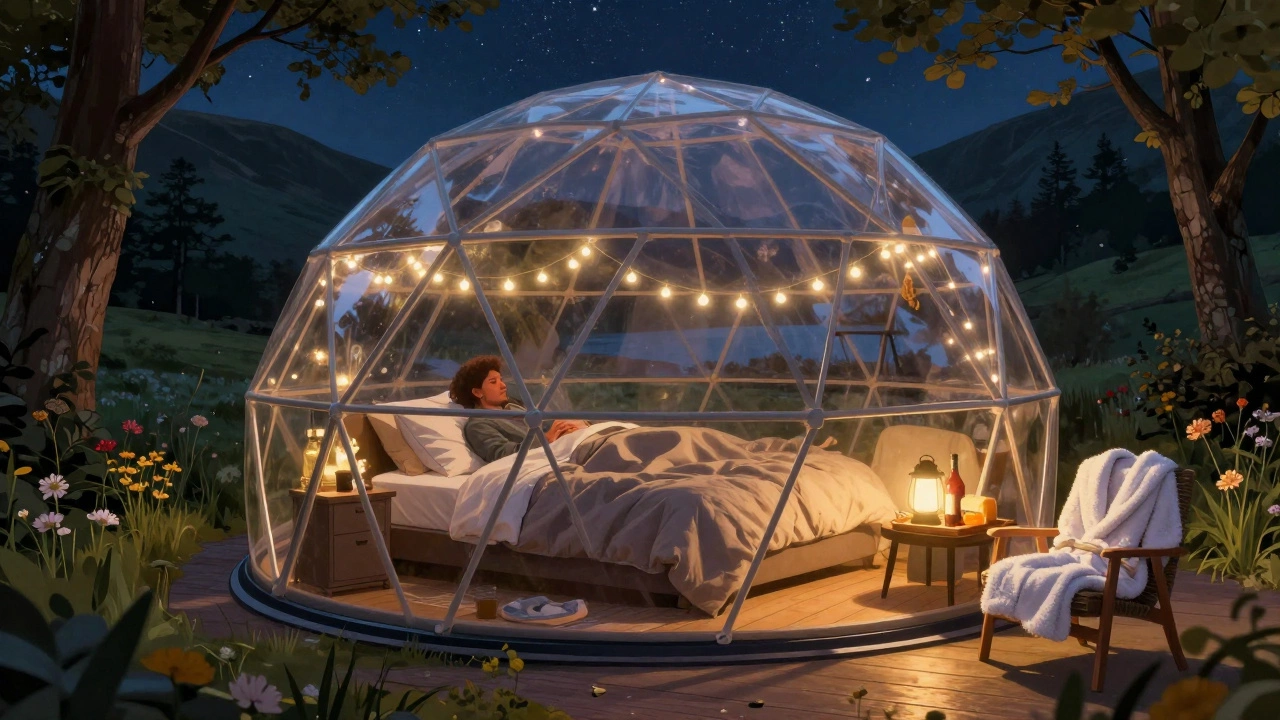
Some places go further. You’ll find domes with glass ceilings for stargazing, safari tents with wood-burning stoves, and even floating cabins on lakes. The key difference from regular camping? You don’t need to bring a single piece of gear. Everything’s provided-down to the bathrobes and local honey for your tea.
Glamping vs. Regular Camping: What’s the Real Difference?
Let’s be clear: glamping isn’t just camping with better lighting. It’s a different kind of experience. Regular camping is about roughing it-carrying your gear, setting up a tent, cooking over a fire. Glamping is about relaxing in nature without the hassle.
Think of it like this:
- Regular camping: You wake up cold, wet, and hungry. You spend two hours pitching your tent before you even have coffee.
- Glamping: You wake up warm, dry, and smell fresh coffee. Your bed is made. The fire’s already lit. You just step outside and enjoy the view.
One study from the UK’s National Trust in 2023 found that 68% of glampers had never camped before. They weren’t trying to "get back to nature"-they were looking for a peaceful escape without the stress of preparation. Glamping opened the door for people who love the outdoors but hate the setup.
What’s Included in a Typical Glamping Stay?
It varies by site, but here’s what you can generally expect:
- Accommodation: Canvas safari tents, wooden cabins, yurts, geodesic domes, or even converted horse trailers.
- Furniture: Queen or king beds, armchairs, side tables, mirrors, and storage.
- Bedding: High-thread-count sheets, down duvets, extra pillows.
- Bathroom: En-suite toilets, showers with hot water, towels, shampoo, and sometimes even bath salts.
- Electricity: Plug sockets, LED lighting, and often Bluetooth speakers.
- Extras: Welcome baskets with local cheese, wine, or homemade cookies. Some even offer private chefs, yoga mats, or guided nature walks.
At a top-rated site in the Lake District, guests get a daily breakfast delivered to their tent-fresh bread, local eggs, and organic jam. At another in Wales, you can book a sunset gin tasting on your deck. These aren’t gimmicks. They’re part of the experience.
Who Is Glamping For?
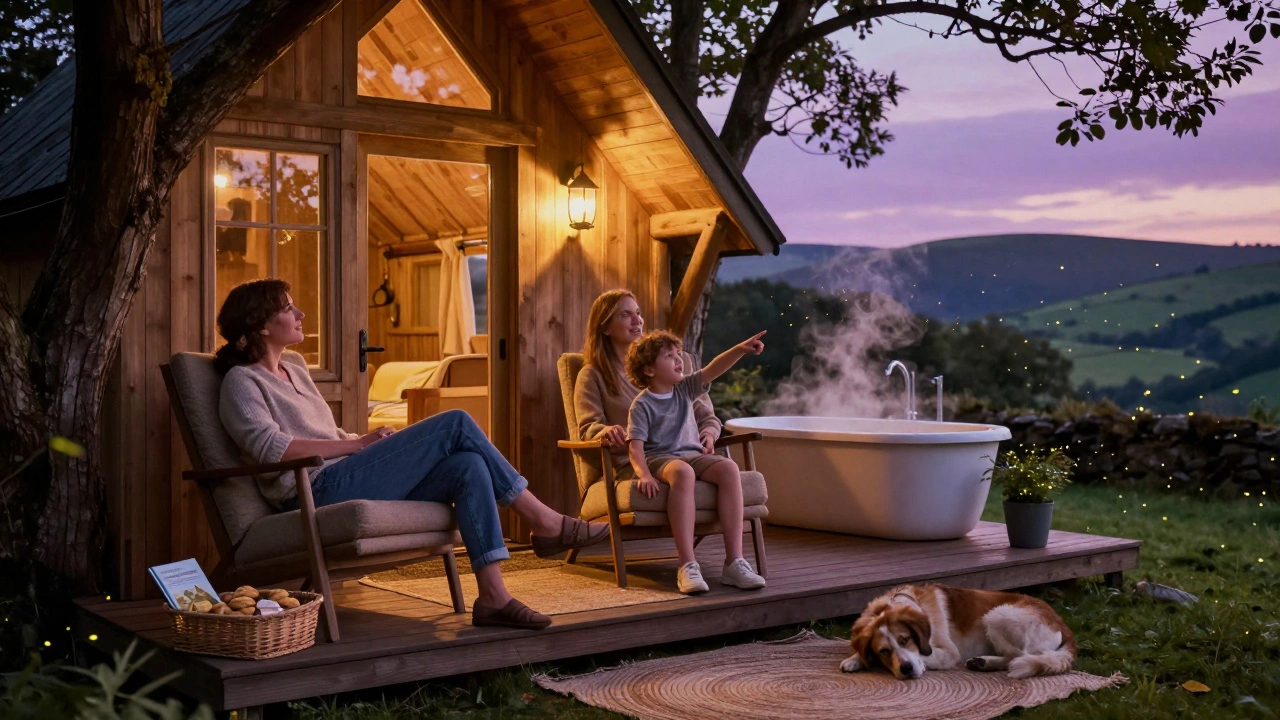
People assume glamping is only for couples or rich tourists. But that’s not true. Families love it because kids get to sleep in a cool space without needing a tent. Retirees enjoy the comfort after years of roughing it. Solo travelers appreciate the safety and privacy. Even dog owners find glamping sites that welcome pets with dog beds and treats.
One couple from Manchester told me they booked a glamping trip after their first child was born. "We missed the outdoors," they said. "But we were too tired to set up a tent. Glamping gave us the peace we needed without the exhaustion."
It’s not about being fancy. It’s about being restored.
How Much Does Glamping Cost?
Prices vary wildly. A basic glamping pod in rural Wales might cost £80 a night. A luxury safari tent with a hot tub in the Cotswolds? £350. In Scotland, some glass domes with underfloor heating and panoramic views go for £500+.
But here’s the thing: it’s often cheaper than a hotel. A standard double room in a 3-star hotel near a national park can cost £120-£180. Add breakfast, parking, and Wi-Fi, and you’re close to glamping prices. Plus, you’re not stuck in a concrete box-you’re surrounded by trees, birds, and silence.
Many glamping sites offer midweek discounts. Booking in November or January? You can often find deals 30-50% off peak season rates.
Glamping Isn’t Just a Trend-It’s a Shift
People aren’t just buying a place to sleep. They’re buying a reset. After years of screen time, remote work, and crowded cities, glamping offers something rare: presence. You’re not scrolling. You’re listening to wind in the leaves. You’re watching fireflies. You’re drinking tea in silence.
It’s why glamping sites in the UK now report 70% repeat guests. They don’t come for Instagram. They come because they feel better afterward.
Where to Find the Best Glamping Sites in the UK
Here are a few standout spots:
- YHA Glamping at Langdale (Lake District): Family-friendly, with heated yurts and a shared kitchen. Great for beginners.
- Glamping in the Forest (Wales): Treehouse cabins with private saunas and outdoor baths.
- Wilderness Retreat (Cornwall): Glass domes with heated floors and star-gazing beds.
- Glamping by the Sea (Northumberland): Secluded tents with sea views and fire pits.
Most of these sites are listed on platforms like Glamping Hub, Pitchup.com, or Airbnb. But the best ones aren’t always the most popular. Ask locals. Check small regional tourism sites. Some of the most magical spots are family-run and barely advertised.
Is Glamping Worth It?
If you’ve ever dreamed of sleeping under the stars without shivering, then yes. Glamping isn’t about luxury for luxury’s sake. It’s about removing the barriers that keep people away from nature. It’s for the tired, the busy, the curious, and the ones who just want to breathe.
You don’t need to be rich. You don’t need to be an outdoor expert. You just need to want to rest-in a real way.
Is glamorous camping the same as glamping?
Yes, "glamorous camping" and "glamping" mean the same thing. "Glamping" is just the shortened, more commonly used version. Both refer to camping experiences that include luxury amenities like real beds, private bathrooms, heating, and stylish interiors-without sacrificing the outdoor setting.
Do you need to bring your own gear for glamping?
No, you don’t. That’s the whole point. Glamping sites provide everything: bedding, towels, lighting, cooking equipment, and even toiletries. All you need to bring is clothes, personal items, and maybe a good book. Some places even offer picnic baskets or welcome snacks.
Is glamping more expensive than hotels?
Sometimes it’s cheaper. A basic glamping pod costs about the same as a mid-range hotel room. But you get more space, privacy, and a unique setting. In national parks or remote areas, hotels are scarce or expensive. Glamping often offers better value, especially if you’re staying for multiple nights or traveling with a group.
Can families with kids enjoy glamping?
Absolutely. Many glamping sites are designed for families. Kids love the novelty of sleeping in a tent with real beds and fairy lights. Parents love that there’s no setup, no cold floors, and no midnight tent collapses. Some sites even have playgrounds, board games, or nature scavenger hunts for children.
Is glamping eco-friendly?
Many glamping sites prioritize sustainability. They use solar power, composting toilets, rainwater harvesting, and locally sourced materials. Unlike hotels, they often occupy less land and have smaller footprints. Still, not all are eco-friendly-always check if a site mentions green practices before booking.
What to Do Next
If you’re ready to try glamping, start small. Pick a site within a two-hour drive. Book a weekend in November or January for the best prices. Don’t overthink it-just go. You’ll sleep better than you have in months. And when you wake up to birdsong and sunlight filtering through canvas, you’ll understand why people call it glamorous.