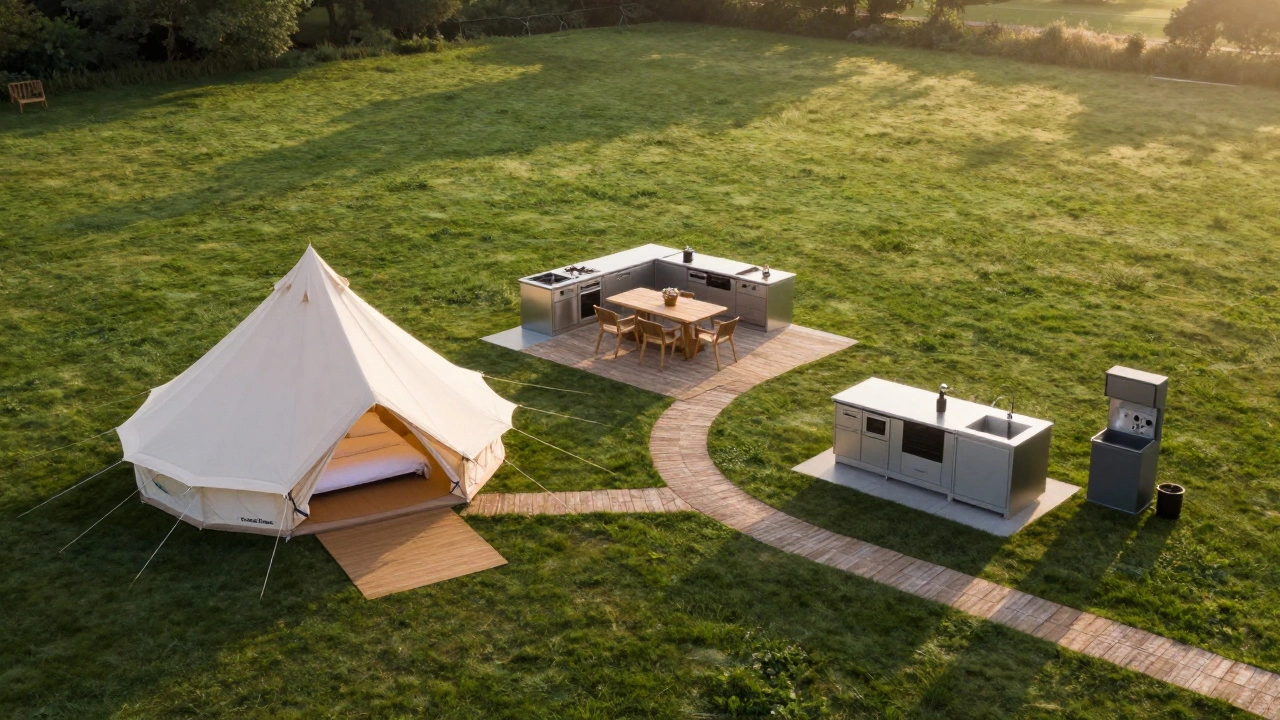
Luxury Campsite Layout Planner
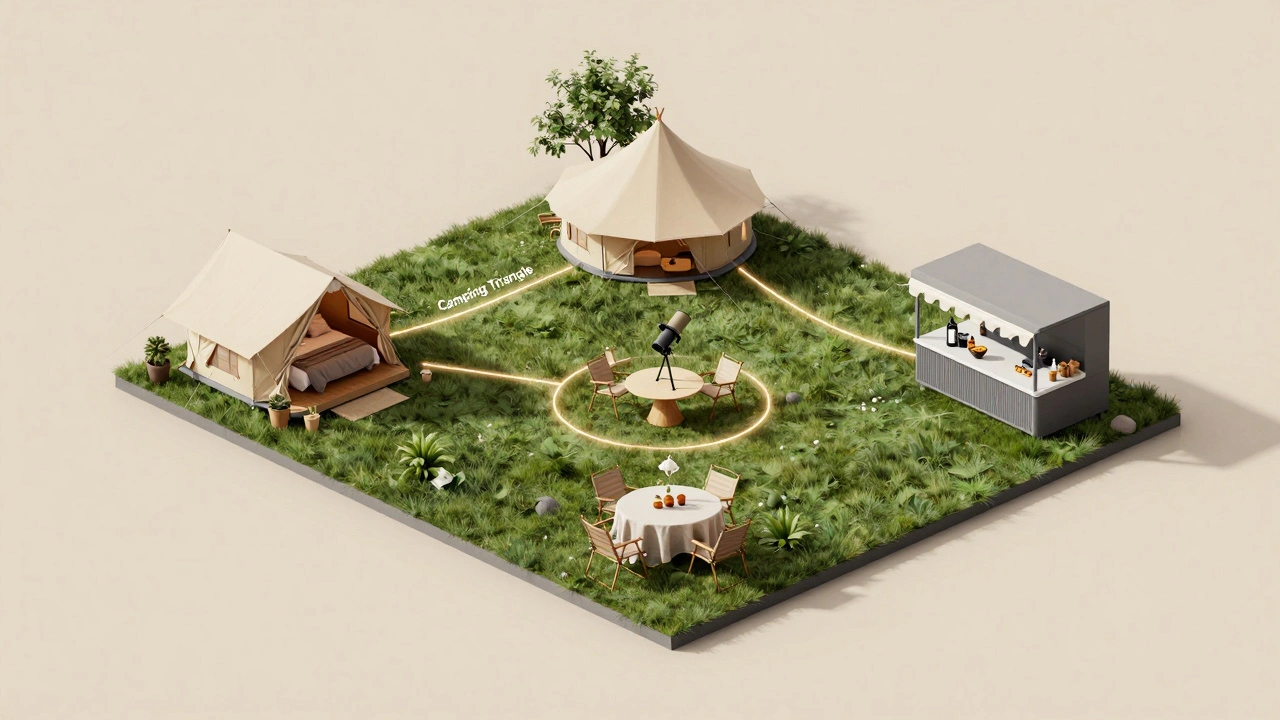
Drag the zones to arrange your campsite. The lines show your Camping Triangle. Aim for 10-20ft between points to balance privacy and accessibility.
Distance Analysis
Ever walked into a high-end glamping pod or set up a massive luxury canvas tent and felt like you were constantly tripping over your own boots or walking miles just to get from the fire pit to the cooler? It’s a common frustration. The difference between a chaotic campsite and a five-star experience usually comes down to a concept called the camping triangle is a spatial organization method used to optimize the flow between the three most critical zones of a luxury campsite: the sleeping area, the cooking/dining area, and the sanitation/utility zone. Also known as the Glamping Layout Principle, it borrows heavily from the "work triangle" used in professional kitchen design to minimize unnecessary movement and maximize comfort.
Key Takeaways for Site Planning
- The triangle connects the Bed, the Stove, and the Bathroom.
- Ideal distance between points is usually 10 to 20 feet to balance privacy and accessibility.
- Proper placement prevents "traffic jams" in high-traffic luxury sites.
- It helps in choosing the right gear, from oversized rugs to modular decking.
Why the Triangle Matters for Luxury Camping
When you're dealing with basic wild camping, you just throw a tent down and put your bag inside. But in the world of luxury camping, you're often dealing with heavy-duty Canvas Tents is large, breathable fabric shelters often featuring interior partitions, wooden flooring, and integrated furniture , outdoor kitchens, and perhaps even a portable hot tub. Without a plan, these amenities can feel scattered and dysfunctional.
If your coffee station is on the opposite side of the site from your bed, you're spending your first waking moments of a serene morning trekking through dew-soaked grass. By applying the camping triangle, you create a natural flow. You move from the sleeping zone to the utility zone (brushing teeth/washing) and then to the dining zone (breakfast) in a logical, circular motion. This reduces stress and makes the environment feel curated rather than accidental.
The Three Pillars of the Camping Triangle
To build this, you need to identify your three primary "hubs." In a luxury setting, these aren't just spots on the ground; they are fully equipped zones.
First, the Sleeping Zone. This is your sanctuary. In a luxury context, this usually involves a real mattress, a bedside table, and high-thread-count linens. This point of the triangle should be the most secluded, tucked away from the noise of the cooking area but still connected to the other two points.
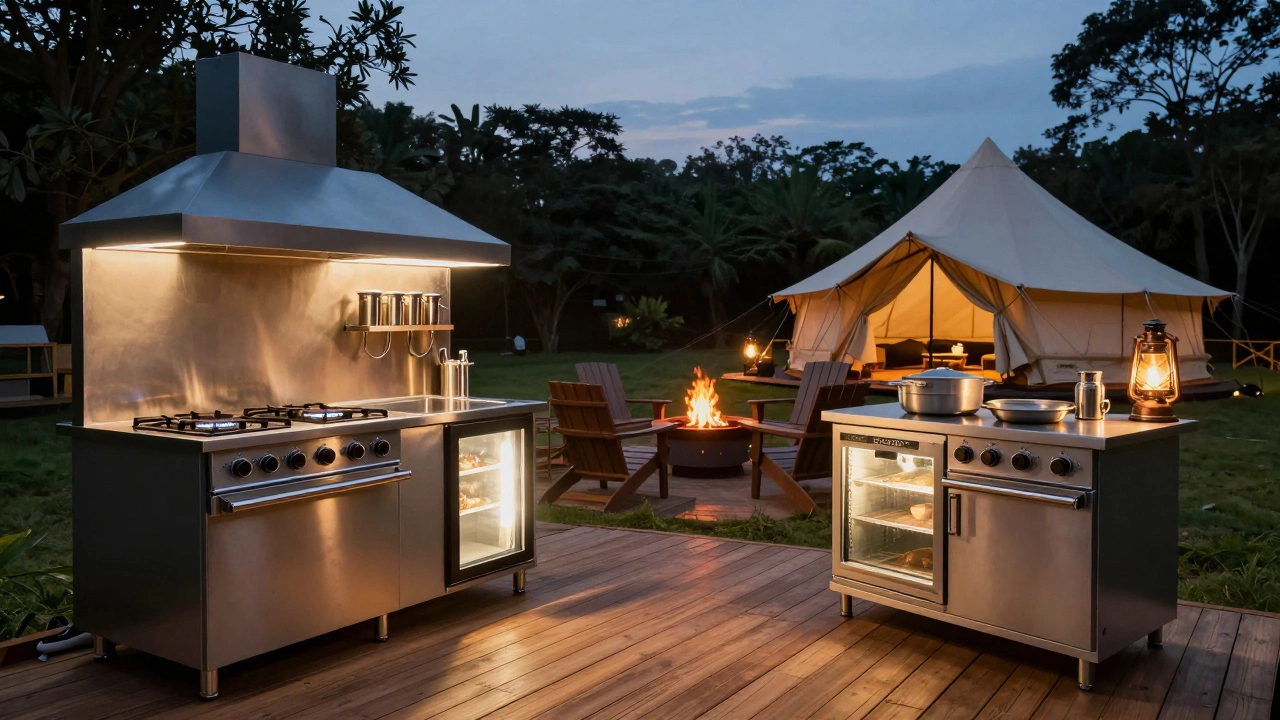
Second, the Culinary Zone. We aren't talking about a small backpacking stove here. For a luxury setup, this includes a Camp Kitchen is a dedicated outdoor cooking station often featuring stainless steel surfaces, gas burners, and integrated refrigeration and a dining table. This area is the social heart of the site. Placing it too close to the bedroom can lead to smells and noise disrupting sleep, but placing it too far makes meal prep a chore.
Third, the Utility Zone. This is where the magic of glamping happens. Whether it's a luxury portable toilet, a wash station, or a dedicated gear storage area, this zone handles the "unpretty" side of camping. The goal is to keep it accessible enough that you don't have to walk through your kitchen to get to the restroom, but far enough away to maintain a sensory barrier.
| Zone | Primary Goal | Ideal Distance | Key Attribute |
|---|---|---|---|
| Sleeping | Rest & Privacy | Center/Back | Quiet & Low Light |
| Culinary | Nutrition & Social | 15-20 ft from Bed | Ventilated & Level |
| Utility | Hygiene & Storage | 10-15 ft from Bed | Downwind & Discreet |
Step-by-Step: Designing Your Luxury Layout
If you're setting up a luxury site for the first time, don't just start hammering stakes. Follow this sequence to ensure the triangle actually works.
- Map the Wind and Sun: Before placing anything, identify the prevailing wind. You want your Utility Zone (especially toilets) to be downwind. You want your Culinary Zone to be placed where the morning sun hits, making that first cup of coffee feel like a spa experience.
- Place the Anchor: The Sleeping Zone is your anchor. Place your tent or pod first. This is the largest piece of gear and the least flexible in terms of position.
- Establish the Culinary Hub: From the tent exit, move roughly 15 feet away to set up your kitchen. This provides enough space for a Fire Pit is a designated area for controlled open fires, often surrounded by Adirondack chairs for lounging in between, creating a transition zone for relaxation.
- Position the Utility Point: Place your wash station or restroom to create the third point of the triangle. Ensure there is a clear, unobstructed path from the bed to the utility zone. Using Outdoor Rugs is heavy-duty, weather-resistant floor coverings used to define spaces and prevent mud tracking in luxury sites can help visually define these paths.
- Fill the Center: The middle of the triangle is your "flex space." This is where you put the lounge chairs, the telescope, or the cocktail table. By keeping the center clear of permanent gear, you keep the site feeling airy and open.
Common Pitfalls in Campsite Ergonomics
Even with a plan, it's easy to mess up. One of the biggest mistakes is the "Linear Trap." This happens when people line up their tent, kitchen, and bathroom in a straight row. While it looks neat on a map, it creates a bottleneck. If two people are cooking, the person trying to get to the bathroom has to navigate through the chefs. The triangle solves this by creating multiple paths of travel.
Another issue is neglecting the "splash zone." If your cooking area is too close to the sleeping area, the smell of fried bacon or the noise of a blender at 7 AM will wake up anyone trying to sleep in. In luxury camping, we call this sensory overlap. The goal of the triangle is to maintain a balance where you are close enough for convenience but far enough to maintain different "moods" for each area.
Scaling the Triangle for Different Environments
Depending on where you are, the triangle might need to stretch or shrink. In a dense forest, your triangle might be tighter because of tree placement. In this case, use vertical storage-like hanging organizers-to keep the ground clear and the paths open.
If you're on a wide-open beach, you can expand the triangle. However, be careful not to make it too large. If the distance between your bed and your coffee pot exceeds 30 feet, you've transitioned from a "luxury layout" to a "commute." The sweet spot is where you can see the other two points of the triangle without having to shout to be heard.
For those using Bell Tents is circular canvas tents with a single center pole and a wide, open interior suitable for luxury furniture , the triangle often starts inside the tent. You might have a sleeping area at the back, a small vanity (utility) on one side, and a breakfast nook (culinary) near the entrance. This "micro-triangle" ensures that even inside the shelter, the flow remains efficient.
Is the camping triangle only for luxury glamping?
While it's most useful in luxury setups with lots of gear, the principle works for any campsite. Even in a basic tent setup, keeping your "messy" area (cooking/cleaning) separate from your "clean" area (sleeping) using a triangular flow prevents your sleeping bag from smelling like campfire smoke and keeps your site organized.
What is the best distance between the tent and the kitchen?
Generally, 15 to 20 feet is ideal. This distance is short enough that you won't feel like you're hiking to get a snack, but far enough that cooking smells and noise don't permeate the sleeping area. If you have a very large party, you can expand this to 30 feet to allow for more social lounging space in between.
How do I handle the utility zone if I don't have a portable toilet?
The utility zone is about more than just the bathroom. It can be your gear storage bin, a washbasin for dishes, or where you keep your shoes. Simply dedicate a specific area for "maintenance tasks" and place it as the third point of your triangle to keep the rest of your site pristine.
Does the camping triangle change for couples vs families?
Yes. For couples, the triangle can be smaller and more intimate. For families, you often need a "hub-and-spoke" model. The culinary zone becomes the central hub, and you create individual triangles for the adults' sleeping area and the children's sleeping area, all connecting back to the main kitchen and utility points.
Can I use the triangle method with a motorhome?
Absolutely. In a motorhome, the internal layout is fixed, but the external layout is where the triangle applies. Place your outdoor rug and dining set (Culinary), your awning/lounging area (Sleeping/Rest), and your utility hookups or exterior shower (Utility) in a triangular formation to keep the area around your vehicle organized.
Next Steps for a Better Site
If you're feeling overwhelmed, start by sketching your site on a piece of paper before you arrive. Mark your three points and draw the paths between them. If you see too many lines crossing or a path that feels too long, adjust your points.
For those who want to level up, consider adding zonal lighting. Use warm, dimmable lanterns in the sleeping zone and bright, functional LED strips in the culinary and utility zones. This reinforces the psychological boundaries of your triangle, telling your brain when it's time to work and when it's time to wind down.