Legal Living in Woods Calculator
Is Your Woodland Living Legal?
This tool helps you understand the legal status of living in US woods based on land ownership type and duration. Based on article information.
Legal Status
Select land type and duration to see results
People often dream of living off the grid-building a cabin deep in the trees, growing their own food, and waking up to birds instead of alarms. But when you start thinking about actually doing it, one question pops up: Is it illegal to live in the woods in the US?
The short answer? It depends. There’s no single federal law that says you can’t live in the woods. But you also can’t just pick any patch of forest and set up camp for good. Most land in the US is owned by someone-federal agencies, states, private owners, or tribes. And each has rules. If you ignore them, you could face fines, forced removal, or even criminal charges.
Who Owns the Woods?
The US has about 640 million acres of public land. That’s nearly a third of the entire country. Most of it is managed by four federal agencies:
- Bureau of Land Management (BLM) - Manages 245 million acres, mostly in the West.
- US Forest Service (USFS) - Oversees 193 million acres of national forests.
- National Park Service (NPS) - Protects 84 million acres in parks like Yellowstone and Yosemite.
- US Fish and Wildlife Service (FWS) - Runs 89 million acres of wildlife refuges.
These lands are not free-for-alls. You can camp in most national forests and BLM lands-but only temporarily. The rules vary by location, but generally, you’re allowed to stay for 14 to 30 days in one spot before you must move. This is called the 7-day/14-day rule in many areas. Stay longer? You’re technically trespassing.
What About Private Land?
Over 60% of US land is privately owned. That means if you set up camp on someone’s forested acreage without permission, you’re breaking the law. Even if the land looks abandoned, it’s still owned. Trespassing on private land is a misdemeanor in most states. Penalties range from $100 to $1,000 in fines, and in some places, you could be jailed for repeat offenses.
There are exceptions. Some landowners allow informal homesteading-especially in rural areas where property taxes are high and owners want to avoid maintenance. But these are rare, unspoken arrangements. They’re not legal rights. If the owner changes their mind, you have no protection.
Can You Build a Cabin in the Woods?
If you think about living in the woods, you probably imagine a sturdy cabin. But building anything permanent-even a small shed-on public land is almost always illegal. The National Forest System Act of 1911 and the Federal Land Policy and Management Act of 1976 make it clear: no permanent structures on federal land.
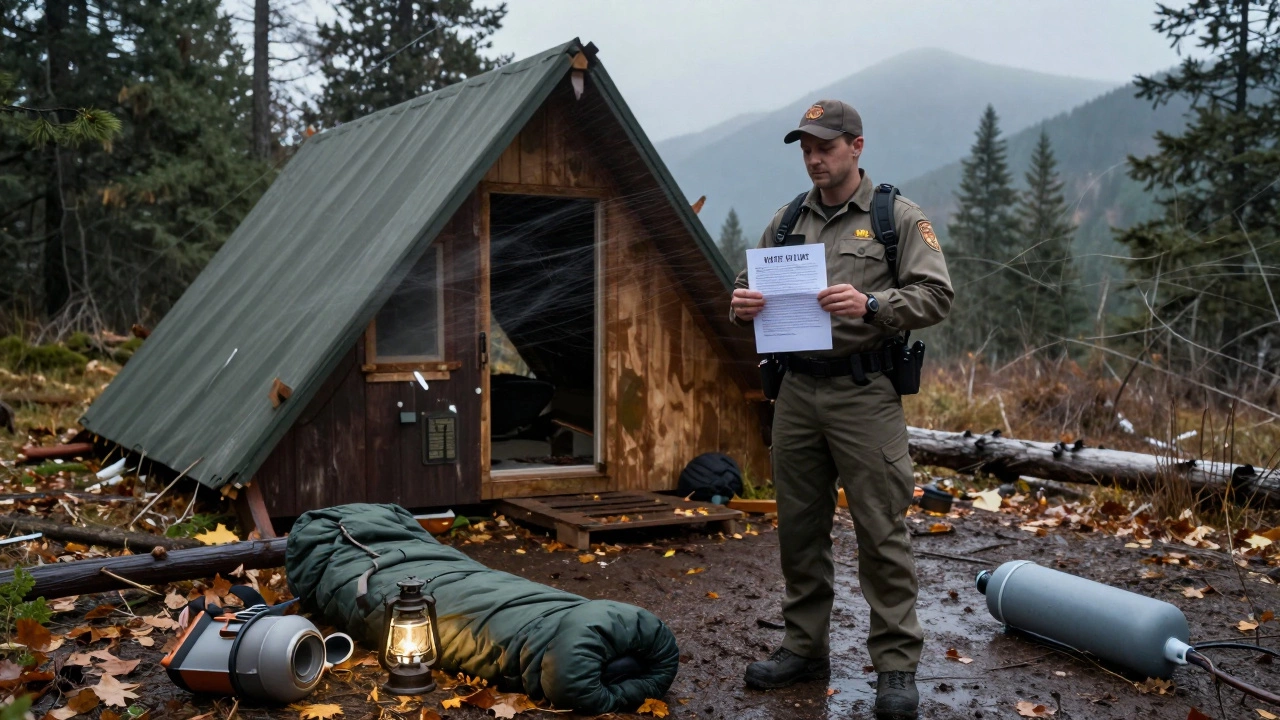
Even if you use recycled materials, avoid nails, or build it off the ground, if it’s meant to be lived in long-term, it’s considered an illegal structure. Rangers don’t always check every corner of the forest, but when they do, they remove it. In 2023, the USFS removed over 1,200 unauthorized structures from national forests. Some were tiny shelters. Others were full cabins with solar panels and wells.
What About Homesteading?
You might have heard about homesteading-the idea of claiming land by living on it and improving it. The Homestead Act of 1862 let people claim 160 acres of public land for free if they farmed it for five years. But that law was repealed in 1976, except in Alaska, where it ended in 1986.
Today, there’s no legal way to claim public land by living on it. Even if you plant trees, dig a well, or build a compost toilet, you don’t gain ownership. The government doesn’t recognize “squatter’s rights” on federal land. Some people try to use adverse possession laws, which allow someone to claim private land after living on it for years without permission. But those laws don’t apply to federal property.
Where Can You Legally Live in the Woods?
There are a few legal ways to live in the woods-just not the way most people imagine.
- Land ownership - Buy land in a rural area with zoning that allows off-grid living. Many counties in Montana, Idaho, Maine, and Oregon allow this. You still need permits for wells, septic systems, and sometimes solar power.
- Leasing public land - Some BLM offices offer long-term leases for recreational use, like for RV parks or hunting cabins. These are rare and competitive, but they exist.
- Native American tribal land - Some tribes allow non-members to live on their land under specific agreements. These are not public rights-they’re negotiated.
- State forest cabins - A few states, like Pennsylvania and New York, rent out simple cabins in state forests. You can live there for months, but you’re still a renter, not an owner.
The real key? You need legal land ownership or a formal lease. No exceptions.
What Happens If You Get Caught?
Most people who live in the woods aren’t caught right away. But if you are, the consequences vary by state and agency.
- BLM - You’ll get a notice to remove your belongings. If you don’t, they’ll confiscate and destroy your property. No warning. No refund.
- US Forest Service - Fines up to $5,000 and/or six months in jail for illegal occupancy. Structures are removed without compensation.
- State parks - Trespassing charges, which can include mandatory court appearances.
- Private land - Criminal trespassing, which can lead to arrest in some states.
There’s no gray area: if you’re living in the woods without permission, you’re taking a legal risk. And if you have children, pets, or medical needs, the stakes get even higher.
Why Do People Try It Anyway?
People live in the woods for many reasons: economic hardship, a desire for freedom, environmental ideals, or just escape. Some are retirees on fixed incomes. Others are young people rejecting consumer culture. A few are survivalists preparing for collapse.
But the reality is harsh. Winter temperatures in the northern forests can drop below -30°F. No running water. No emergency services. No cell service. Many who try it leave within months. Some end up in hospitals from hypothermia or untreated injuries. Others are arrested after neighbors report them.
There’s a romantic myth that the woods are free. But the law doesn’t see it that way.
What’s the Real Alternative?
If you want to live close to nature without breaking the law, here’s what works:
- Buy a small plot of land in a rural county with relaxed zoning. Many cost under $20,000.
- Use a tiny home on wheels. In many places, it’s classified as a vehicle, not a building.
- Join a land co-op or intentional community. These are legal, organized groups that share land and resources.
- Work as a caretaker for a private estate. Some landowners hire people to live on-site in exchange for rent-free housing.
These options aren’t glamorous. But they’re legal. And they give you real stability.
Final Thoughts
Living in the woods sounds peaceful. But the law doesn’t care about your dreams. It cares about ownership, boundaries, and rules. You can camp for weeks. You can hike for months. But you can’t just settle down and call it home-unless you own the land or have a written agreement.
The freedom people crave isn’t found in breaking rules. It’s found in planning smartly, knowing your rights, and choosing legal paths that still let you live simply. The woods aren’t lawless. But there’s still a way to live there-on your terms, and within the law.