UK Beach Camping Legality Checker
Check if beach camping is legal at your destination based on UK regional laws.
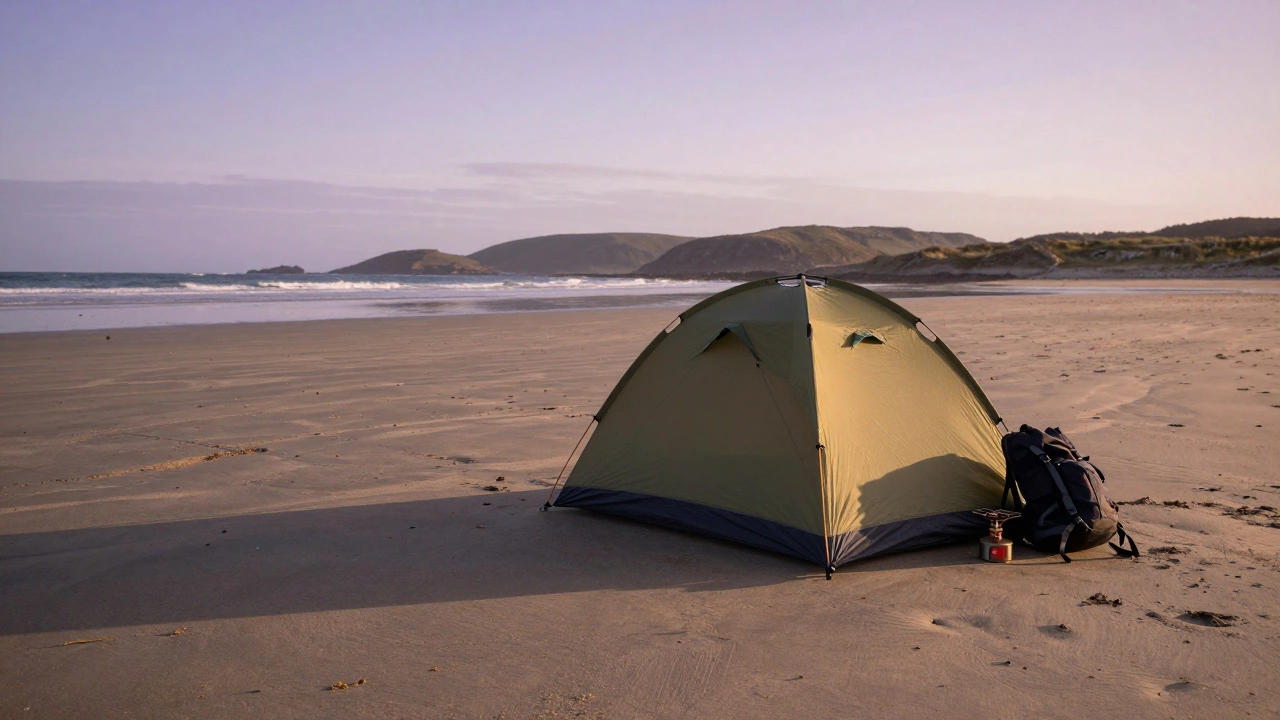
Many people dream of waking up to the sound of waves, sleeping under the stars right on the sand, and having the whole coastline to themselves. But when you pack up your tent and head for a quiet stretch of beach in the UK, you might be asking: is it legal to camp on UK beaches? The answer isn’t simple. It depends on where you are, who owns the land, and whether you’re being discreet or loud.
Most UK Beaches Are Not Public Land
In England and Wales, the vast majority of beaches are privately owned. Even if you can walk along the shore, that doesn’t mean you can set up camp. The Crown Estate controls some coastal land - mostly tidal zones - but that doesn’t give you the right to pitch a tent. The real rule is this: if there’s a sign, a fence, or a person in charge (like a lifeguard or landowner), you’re not allowed to camp without permission.
Scotland is different. The Land Reform (Scotland) Act 2003 gives you a legal right to access most land, including beaches, for wild camping - as long as you follow the Scottish Outdoor Access Code. That means no fires, no litter, no staying more than two or three nights in one spot, and keeping well away from buildings and farmland. Many people camp on the beaches of the Outer Hebrides, the Isle of Skye, or along the north coast without issue - because the law lets them.
What About England and Wales?
In England and Wales, camping on beaches is technically illegal unless you have permission from the landowner. That includes places like Cornwall’s beaches, the South Coast, or even popular spots like Bournemouth or Brighton. Local councils often enforce no-camping rules strictly, especially during summer months. You might see signs that say “No Camping” or “Trespassers Will Be Prosecuted.”
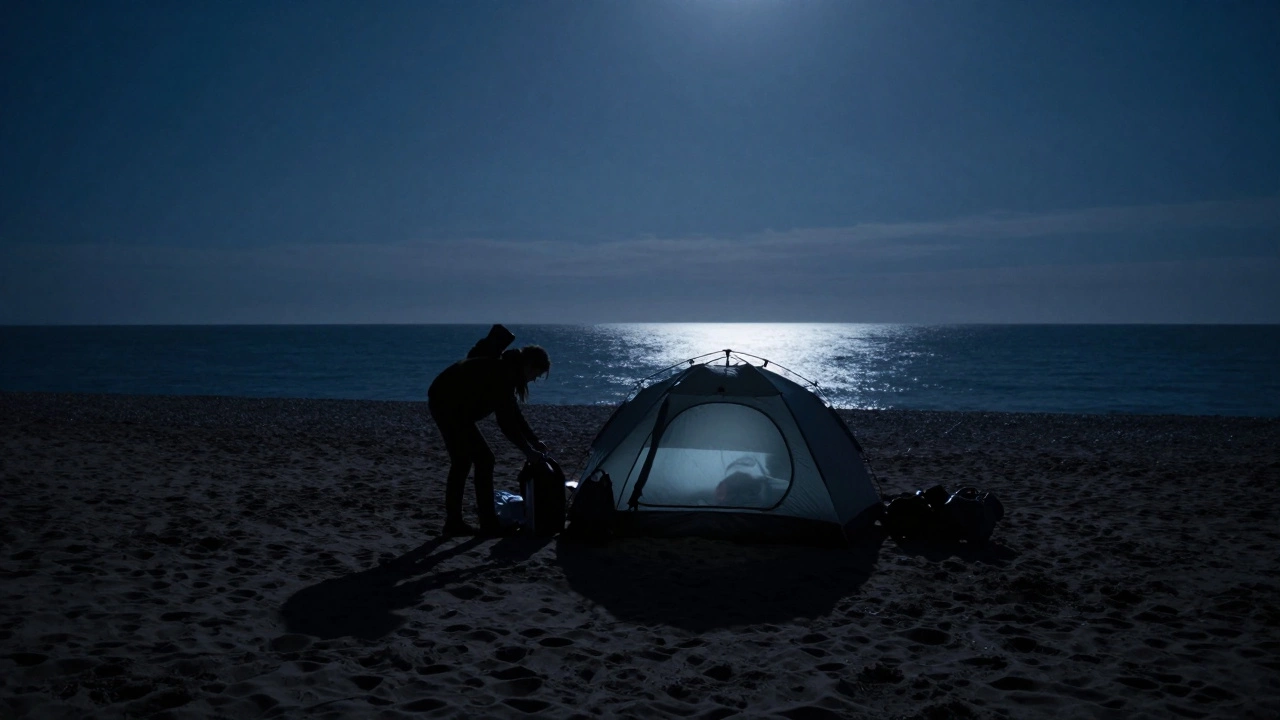
That doesn’t mean no one does it. There’s a quiet culture of stealth camping on remote beaches - places like the Llyn Peninsula in Wales, the Northumberland coast, or the wilder parts of Dorset. People who do it usually arrive after dark, leave before sunrise, and take every bit of trash with them. But if you’re caught, you could be asked to leave, fined, or even have your gear confiscated.
Where Can You Legally Camp on a Beach?
There are a few places where beach camping is officially allowed:
- Scotland - as long as you follow the Access Code. Popular spots: Sands of Morar, Camus nan Geall on the Isle of Mull, and the beach at Arisaig.
- Isle of Man - wild camping is tolerated if done responsibly. No official rules, but no enforcement either.
- Some National Trust beaches - like Porthcurno in Cornwall. They don’t allow camping, but they don’t actively police it if you’re quiet and gone by morning.
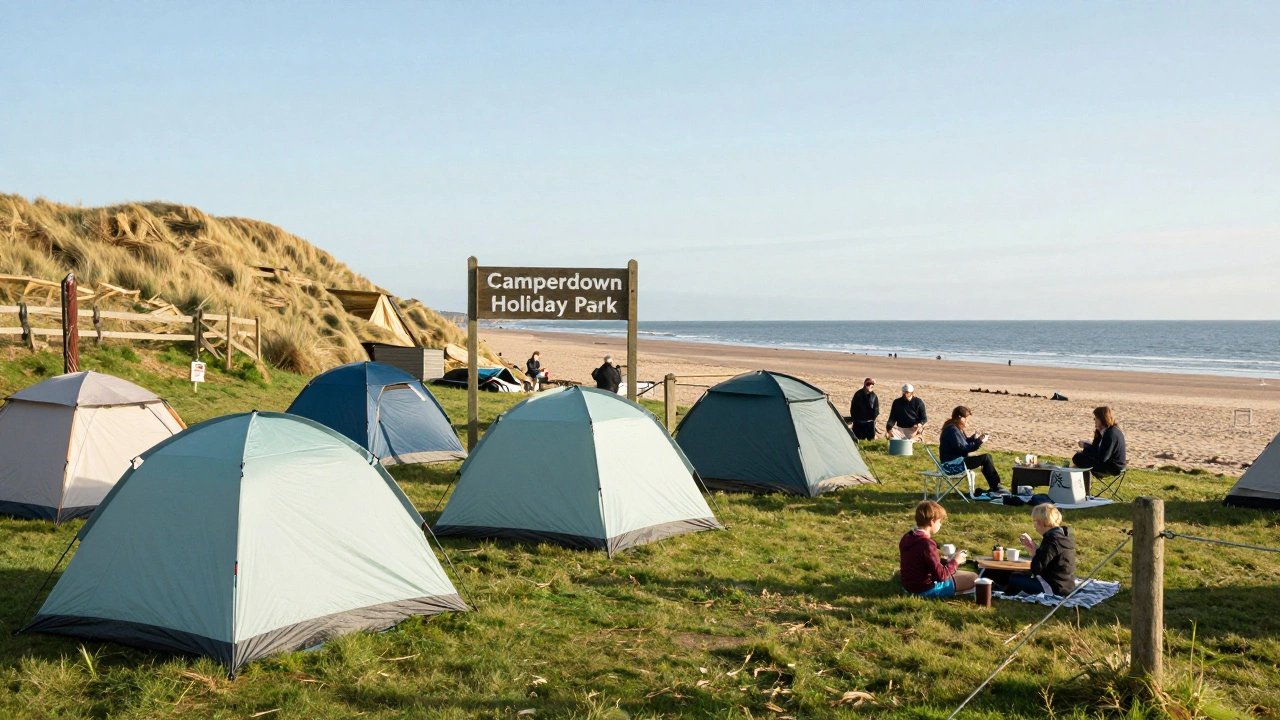
- Designated campsites on beaches - places like Camperdown Holiday Park in North Yorkshire or Beachside Campsite in Devon. These are legal,收费, and have facilities.
There’s also a loophole: some beaches are part of public footpaths. You can walk along them, but not stop to camp. The difference between walking and staying overnight is legally clear - and enforced.
Why Do People Get Away With It?
Many landowners don’t care - as long as you’re not causing trouble. If you leave no trace, don’t light fires, don’t block access, and don’t bring loud music or a big group, you’re unlikely to be bothered. The real problem isn’t the law - it’s the people who ignore the rules completely.
Think about it: a single campfire on a dune can start a wildfire. A group of people drinking and shouting ruins it for everyone else. That’s why councils and landowners crack down. It’s not about stopping responsible campers - it’s about stopping the bad actors who make everyone look bad.
What Happens If You Get Caught?
If a landowner or council officer asks you to leave, you must go. Refusing can lead to trespassing charges. In England and Wales, that’s a civil offense - not a criminal one - but you can still be fined up to £1,000 if it goes to court. In rare cases, police have seized tents, stoves, or even vehicles if they believe you’re causing a public nuisance.
Scotland is different again. You can’t be arrested for wild camping if you’re following the Access Code. But if you’re clearly violating it - say, leaving a pile of trash or camping right next to a farmhouse - you can be asked to move. And if you refuse, you can be charged with anti-social behavior.
Best Practices for Beach Camping
If you want to camp on a beach legally - or at least without getting into trouble - follow these rules:
- Check who owns the land. Look for signs, contact local councils, or use apps like Outdoor Access Scotland or OS Maps.
- Camp after dark and leave before sunrise. You’re far less likely to be noticed.
- Never use a fire. Use a gas stove instead. Beaches are dry, windy, and full of flammable dunes.
- Take every single thing with you - including toilet paper and food scraps.
- Stay at least 100 meters away from homes, roads, and wildlife areas.
- Don’t bring more than two people. Big groups attract attention.
- Never camp on protected dunes, nesting bird areas, or archaeological sites. These are protected by law.
Alternatives to Beach Camping
If you want the beach experience without the legal risk, here are better options:
- Book a campsite right next to the beach - many exist in Devon, Cornwall, and Northumberland.
- Use a beachside caravan park. They often have showers, toilets, and electricity.
- Try wild camping on nearby moorland or woodland - then walk to the beach during the day.
- Stay in a B&B or hostel near the coast and take day trips.
These options are safer, more comfortable, and still give you the feeling of being close to the sea. And you won’t risk a fine or a confrontation.
What About Motorhomes and Vans?
Same rules apply. You can’t park overnight on most beaches in England and Wales - even if you’re in a van. Some places, like the New Forest or parts of Pembrokeshire, have designated overnight parking for motorhomes. But beachfront parking? Almost always banned.
There’s a growing trend of “van life” enthusiasts trying to sleep on coastal roads. Many councils now install bollards, CCTV, or even mobile patrols to stop it. If you want to sleep near the sea in a van, book a legal spot. There are hundreds across the UK.
Why This Matters
Responsible wild camping keeps access open for everyone. If everyone started camping wherever they wanted, beaches would become trash-filled, noisy, and off-limits. The law isn’t trying to ruin your trip - it’s trying to protect the coastline for future generations.
The truth? Most people who camp on beaches do it because they love the peace, the quiet, and the beauty. That’s worth protecting. But it’s also worth doing right.
Is it legal to camp on any beach in Scotland?
Yes, under the Scottish Outdoor Access Code, you can legally wild camp on most beaches in Scotland as long as you follow the rules: camp in small groups, stay no more than two or three nights in one place, avoid private property and farmland, take all your trash, and never light open fires. Popular coastal spots like the Isle of Mull and the northwest coast are commonly used by campers.
Can I camp on a beach in Cornwall?
No, camping on beaches in Cornwall is not legal without landowner permission. Most beaches are privately owned or managed by the National Trust or local councils. Signs are posted at many access points, and enforcement increases during summer. While some people do it quietly, you risk being asked to leave or fined if caught.
What’s the difference between wild camping and regular camping?
Wild camping means setting up a tent on land that isn’t a designated campsite - like a field, woodland, or beach - without paying or getting permission. Regular camping happens at official campsites that charge fees and provide facilities like toilets, showers, and waste disposal. Wild camping is only legal in Scotland and parts of the Lake District with permission. Everywhere else, it’s technically trespassing.
Are there fines for illegal beach camping?
Yes, in England and Wales, you can be fined up to £1,000 for trespassing if you refuse to leave after being asked. While it’s rare for first-time offenders to be fined, councils have increased enforcement in popular areas. In Scotland, fines are only issued if you’re clearly breaking the Access Code - like camping on farmland or leaving litter.
Can I sleep in my car on a beach?
No, sleeping in your car on a beach is generally not allowed in England and Wales. Many coastal areas have signs banning overnight parking. Even if you’re not camping, staying overnight can be considered a public nuisance. In Scotland, it’s allowed if you’re not blocking access or causing disturbance - but you still need to follow the Access Code. Always check local rules before parking overnight.
Final Thoughts
The UK’s coastline is one of its greatest treasures. It belongs to everyone - but not in the way you might think. You have the right to walk along it, to enjoy it, to feel the wind and the salt. But that doesn’t mean you can claim it for the night. The real adventure isn’t about breaking rules - it’s about finding the places where the rules already let you in.
If you want to camp on a beach, go to Scotland. Or book a legal site. Or hike to a remote spot where you’re not seen. The sea won’t mind. The land won’t mind. But the people who protect it? They’ll notice if you don’t respect it.