
RV vs. Apartment Cost Estimator
Enter your details below to see if the "freedom" of RV living is financially viable for you, or if a traditional rental might be cheaper.
Your Lifestyle & Costs
Verdict
RV is CheaperSave €0/mo
Annual Savings: €0
Monthly Breakdown
| Expense Category | RV Living | Apartment |
|---|---|---|
| Housing / Site Fees | €0 | €0 |
| Maintenance Reserve | €0 | €0 |
| Fuel | €0 | €0 |
| Utilities (Propane/Water) | €0 | Included* |
| Insurance | €0 | €0 |
| Internet | €0 | Included* |
| Total Estimated | €0 | €0 |
Enter your data and click Calculate to see the financial reality of RV living.
You see the Instagram photos: a couple sipping coffee on their porch with a mountain view, zero mortgage payments, and a sense of freedom that makes your cubicle feel like a prison. It looks cheap. It looks easy. But is it financially smart to live in an RV? The honest answer isn't a simple yes or no. It depends entirely on how you handle the hidden numbers.
Most people underestimate the cost by about 30%. They look at the purchase price of a used Winnebago or a new Sprinter conversion, do some quick math, and think they'll save money compared to renting a flat in Dublin or London. Then reality hits. Insurance premiums are higher than car insurance. Maintenance isn't just an oil change; it's roof seals, generator repairs, and plumbing fixes that require specialized technicians who charge premium rates for mobile service. If you're thinking about ditching bricks-and-mortar for wheels, you need to look past the romance and stare directly at the spreadsheet.
The Upfront Hit: Buying vs. Renting
Let's start with the biggest barrier: acquisition. You have two main paths here. You can buy an older, cheaper unit, or you can lease/finance a newer one. Buying seems like the obvious financial win because you own the asset. But here is the catch: RVs depreciate faster than most cars. A brand-new Class C motorhome might lose 20-30% of its value in the first year alone. That's thousands of euros gone before you've even unpacked your boxes.
If you rent long-term, you avoid depreciation and major repair bills (usually), but you lock yourself into a monthly payment that builds no equity. In Ireland and the UK, long-term motorhome hire is niche. You often end up paying a premium for convenience. For example, renting a mid-range camper van for six months could cost you as much as financing a decent used RV, but you walk away with nothing. Ownership gives you control over modifications and resale, but it hands you the liability of every breakdown.
| Cost Factor | Used RV (5-10 years old) | New Lease/Finance |
|---|---|---|
| Down Payment | €5,000 - €10,000 | €1,000 - €3,000 |
| Monthly Payment | €400 - €600 | €800 - €1,200 |
| Depreciation Risk | High (if buying new-ish) | Low (for lessee) |
| Maintenance Responsibility | Owner | Often Dealer/Lessor |
The Monthly Reality: Campsite Fees and Utilities
This is where the "free camping" dream usually dies. Yes, wild camping exists. In parts of Scotland, it's legal. In many US states, Bureau of Land Management land allows free stays. But if you have a family, kids who need showers, and a need for reliable electricity, you are paying for campsites. And those fees add up fast.
In Europe, a standard pitch at a well-maintained campsite with hookups can range from €25 to €50 per night. Let's average it to €35. Multiply that by 30 nights, and you're spending €1,050 a month just to park. Compare that to a small apartment rental outside a city center, which might be €900-€1,200 depending on location. Suddenly, the RV doesn't look so cheap. You also need to factor in fuel. Moving a 3.5-tonne vehicle isn't efficient. Expect 10-12 liters per 100km. If you move every weekend, your fuel bill rivals your site fees.
Utilities are another sneaky expense. Propane for heating and cooking costs around €25-€40 per tank refill, which might last two weeks in winter. Water dumping fees at dump stations can be €5-€10 each time. Internet isn't included either. Starlink or high-data SIM plans will set you back €50-€100 a month if you want reliable connectivity for work or streaming.
Maintenance: The Silent Budget Killer
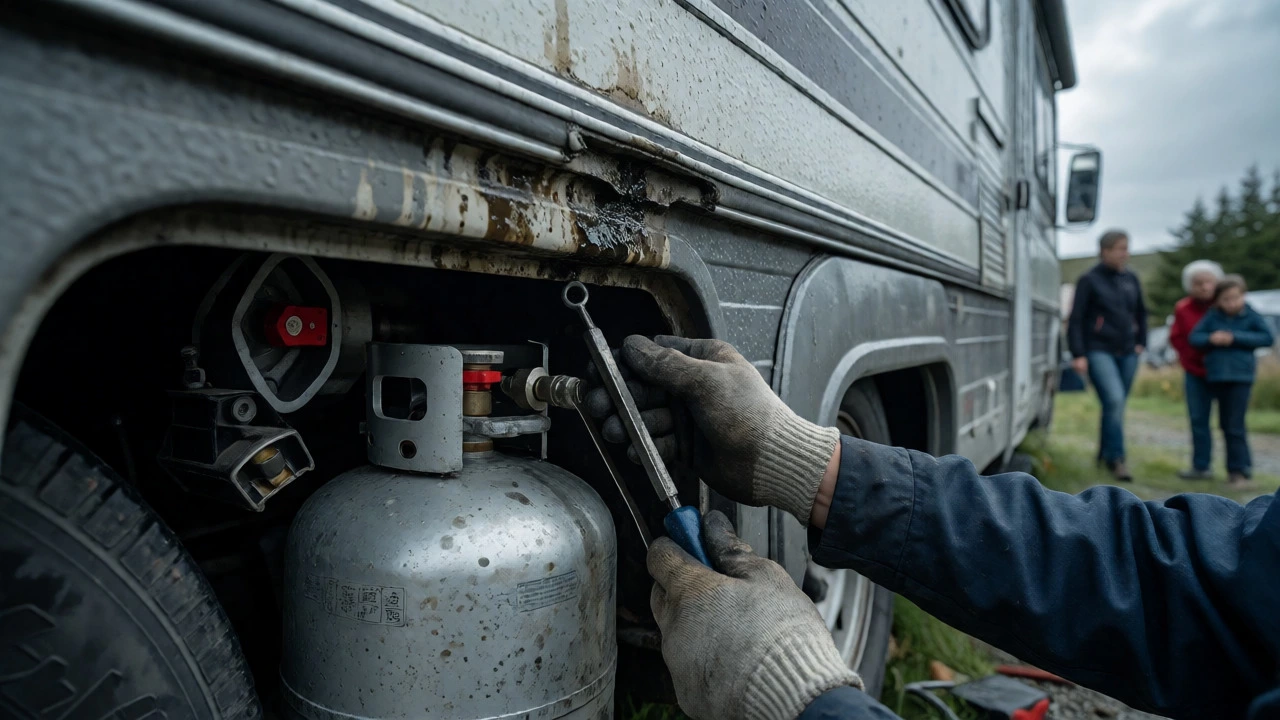
People forget that an RV is three machines in one: a vehicle, a house, and a boat (because of the water systems). When something breaks, you can't just call a handyman from down the street. You need an RV technician. These specialists are rare, especially in rural areas, and they charge for their expertise.
Common issues include:
- Roof Leaks: Seals fail after 5-7 years. Repairs can cost €500-€2,000 depending on damage.
- Fridge Failures: Absorption fridges are notorious for breaking down. Replacement or repair runs €300-€800.
- Suspension Wear: Heavy loads wreck tires and shocks. Tire replacement every 3-5 years can cost €800+ for a set.
- Generator Service: Needs regular running and oil changes. Neglect leads to expensive rebuilds.
A good rule of thumb is to budget 10% of the RV's value annually for maintenance. If you bought a €40,000 rig, set aside €4,000 a year. That's €333 a month. If you don't use it, great-save it for the inevitable big repair. If you spend it, you're already over budget.
Lifestyle Costs: Eating Out and Entertainment
Here is a psychological trap. When you live in an RV, you are always "on vacation." This mindset encourages spending. You stop cooking elaborate meals because cleaning up feels tedious when you're tired. You eat out more. You visit paid attractions because you're passing through a town. You buy souvenirs because you're documenting the journey.
In a traditional home, you have routines. You cook at home, you watch TV, you stay local. In an RV, novelty drives consumption. To make RV living financially viable, you must maintain strict household discipline. Meal planning becomes critical. Shopping at local markets instead of tourist traps saves money. Using library apps for entertainment instead of streaming services helps. If you treat every day like a holiday, you will pay holiday prices.

When Does It Make Sense?
So, when is it actually smart? It works best if you combine these factors:
- You sell your house: If you cash out property equity and invest it, the returns can cover RV costs. If you keep your house empty and pay rent elsewhere, you're double-paying.
- You minimize stationary time: Boondocking (free camping) requires skill and equipment (large solar, big batteries). If you can park for free 50% of the time, your costs drop significantly.
- You downsize drastically: Living in 200 square feet forces minimalism. If you still buy stuff, you won't fit it, and you'll waste money on storage solutions.
- You enjoy DIY: Fixing your own toilet seat or patching your own screen door saves hundreds. Hiring out everything kills the budget.
For families, the equation changes. Kids need space. You might need a larger, more expensive RV (Class A or large Fifth Wheel). Schooling options (homeschooling vs. online classes) add complexity and potential costs. However, the shared experience can reduce external entertainment costs. Instead of buying toys, you explore nature. Instead of cinema tickets, you hike. It’s a trade-off of comfort for experience.
Irish and UK Specific Considerations
Living in an RV in Ireland or the UK is different from the US. Space is tighter. Wild camping laws are stricter (especially in England/Wales, though Scotland is more permissive). Campsite density is high, which means competition for pitches in peak season drives prices up. Winter is harsh. Heating costs skyrocket in November through March. Many Irish full-timers head south to Spain or Portugal for winter, adding ferry and fuel costs to the budget.
Insurance is also tricky. Standard auto insurance doesn't cover living contents. You need specialist motorhome policies, which can be pricey for older vehicles. Always check if your policy covers theft of personal belongings inside the RV, not just the vehicle itself.
Is it cheaper to live in an RV than renting an apartment?
Not necessarily. While you avoid mortgage or rent, you pay for campsites, fuel, and higher maintenance. In urban areas, renting a small studio might actually be cheaper than full-time paid camping. RV living becomes cheaper only if you utilize free camping (boondocking) regularly and maintain a strict budget.
How much should I budget for RV maintenance?
A safe rule of thumb is to budget 10% of the RV's current market value annually. For a €30,000 RV, this means setting aside €3,000 per year (€250/month) specifically for repairs, tire replacements, and unexpected mechanical failures.
Can I claim tax deductions for full-time RV living?
Tax rules vary by country. In the US, certain expenses may be deductible if you meet specific criteria for residency. In Ireland and the UK, tax benefits for RV living are limited and generally apply only if the RV is used for business purposes. Consult a local accountant for specific advice.
What are the biggest hidden costs of RV living?
The biggest hidden costs are propane for heating, internet subscriptions (Starlink/mobile data), specialized insurance, and the frequency of campsite fees during peak seasons. Fuel costs also surprise many beginners due to poor aerodynamics and heavy weight.
Is RV living suitable for families with children?
Yes, but it requires careful planning. Children need space and routine. Larger RVs cost more. Homeschooling or online schooling adds educational considerations. The benefit is experiential learning and reduced consumer spending on toys and entertainment, but privacy can be a challenge.