Forest Survival & Safety Estimator
Trip Parameters
Water Needed
-- L
(Minimum survival)Calories Needed
-- kcal
(Standard activity)--
Enter your trip details to see survival estimates and legal constraints.
Picture this: you’ve packed your bag, left the city noise behind, and set up camp deep in the woods. The air is crisp, the birds are singing, and for a moment, it feels like freedom. But then reality hits. How long can you actually stay there before things go wrong? Is it a weekend getaway or a month-long experiment?
The answer isn’t just about how much food you have in your backpack. It’s a mix of local laws, your physical health, and whether you know how to keep warm when the temperature drops at night. If you’re thinking about living off-grid in a forest, even for a short while, you need to understand the hard limits.
The Legal Reality: Where Are You Allowed to Stay?
Before we talk about survival skills, let’s talk about the law. In many places, "living in the woods" is illegal unless you own the land or have explicit permission. The rules change drastically depending on where you are.
In the United Kingdom, wild camping is generally prohibited under the Criminal Law Act 1977. While Scotland has a more relaxed Right to Roam (Lomond and Trossachs National Park allows it with strict codes), England and Wales treat unauthorized overnight stays as trespassing. Landowners can ask you to leave, and if you refuse, you could face eviction or fines.
If you are looking at the United States, the landscape is different. Federal lands managed by the Bureau of Land Management (BLM) or the US Forest Service often allow dispersed camping for up to 14 days within a 30-day period. However, national parks usually require designated campsites. State forests vary wildly; some allow free camping, others charge fees, and some ban it entirely during fire season.
- UK (England/Wales): No legal right to wild camp. High risk of eviction.
- UK (Scotland): Legal under responsible access guidelines, but not indefinite "living."
- USA (Federal Lands): Typically 14 days per 30-day window.
- Europe: Most countries restrict wild camping to protect ecosystems. France and Germany have specific zones only.
Physical Limits: The Rule of Threes
If you ignore the law and head into the deep woods, your body becomes the next barrier. Survival experts use the "Rule of Threes" to estimate how long a human can survive without critical resources. This isn’t just theory; it’s based on physiological breakdown.
- 3 Minutes without air: Drowning or suffocation kills quickly. In the woods, this means avoiding shallow water traps or dense smoke from fires.
- 3 Hours without shelter: In extreme weather (hypothermia or heatstroke), exposure can kill you in hours. A simple tarp or lean-to extends this significantly.
- 3 Days without water: Dehydration sets in fast. You lose about 2-3 liters of water daily through sweat and breath. Without a clean source, your cognitive function drops after 24 hours.
- 3 Weeks without food: Your body burns fat stores first. Starvation is slow, but weakness makes finding water and building shelter harder.
So, theoretically, you could survive a few weeks. But "surviving" doesn’t mean "living comfortably." After day three, you’ll be tired, thirsty, and likely miserable. By day seven, you’re risking serious health issues.
Safety Hazards: What the Woods Hide
Forests look peaceful in movies, but they are full of hidden dangers. Living there long-term exposes you to risks that a weekend camper rarely faces.
Weather Exposure
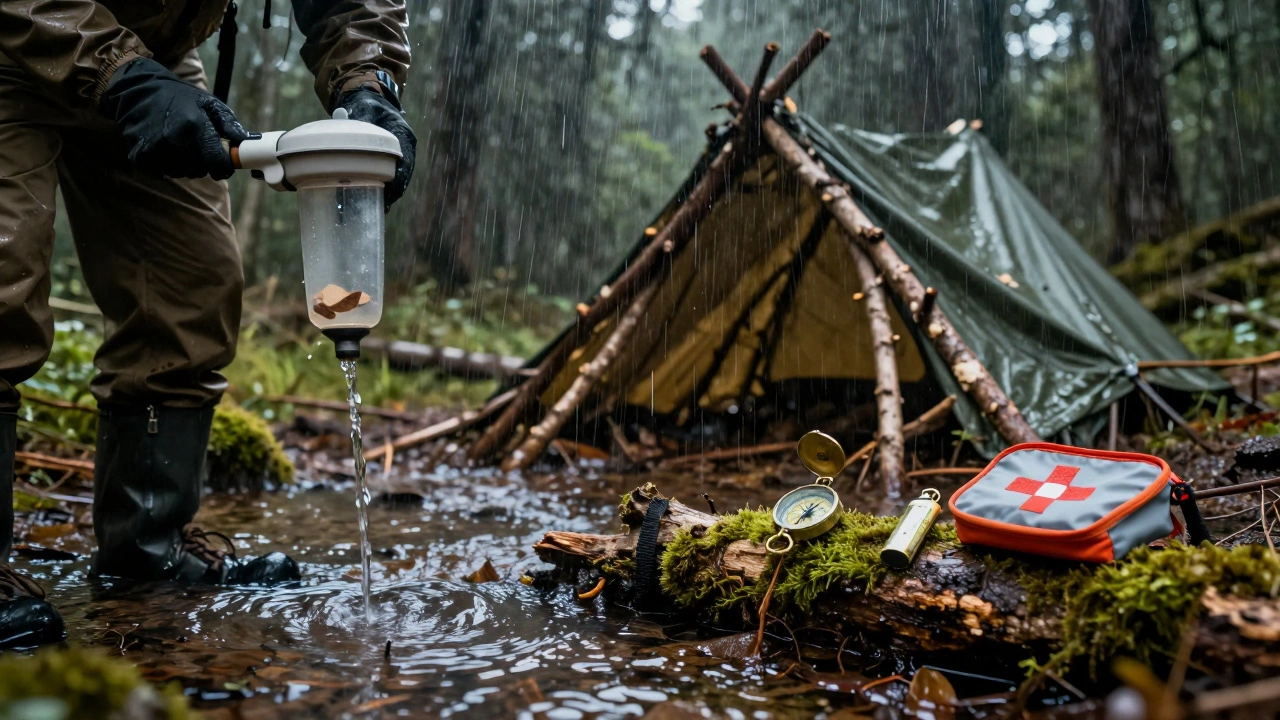
Rain isn’t just annoying; it’s deadly. Wet sleeping bags lose their insulation value. Hypothermia can occur at temperatures above freezing if you are wet and windy. In summer, heat exhaustion is a real threat if you don’t have shade. You need a waterproof shelter and dry clothing layers to last more than a couple of days.
Wildlife Encounters
Bears, moose, snakes, and insects are part of the ecosystem. Leaving food out attracts rodents and larger predators. Proper food storage-using bear cans or hanging food from trees-is non-negotiable for stays longer than two nights. Tick-borne diseases like Lyme disease become a higher risk the longer you sit in tall grass or brush.
Waterborne Illnesses
That clear stream looks drinkable, but it might contain Giardia or Cryptosporidium. These parasites cause severe diarrhea, vomiting, and dehydration. Boiling water for one minute or using a filter is essential. Drinking untreated water can end your forest stay in less than 24 hours due to illness.
Psychological Toll: The Loneliness Factor
Most people underestimate the mental challenge of isolation. The first day is exciting. The second day is quiet. By the third or fourth day, boredom and anxiety can set in. This is known as "sensory deprivation" stress. Without social interaction, your mind starts playing tricks on you. Paranoia, irritability, and depression are common among those who attempt long-term solo stays without proper preparation.
If you plan to stay more than a week, you need a routine. Set goals: build a better shelter, identify edible plants, or journal. Keeping your brain active prevents the mental spiral.
Practical Checklist for Extended Stays
If you decide to push beyond a single night, here is what you need to make it safe and legal.
| Item Category | Specific Item | Why It Matters |
|---|---|---|
| Shelter | Waterproof Tent or Tarp | Protects against rain and wind; keeps you dry. |
| Water | Filter + Purification Tablets | Removes bacteria and parasites from natural sources. |
| Food | Calorie-Dense Rations | Nuts, jerky, and bars provide energy without cooking. |
| Fire | Lighter + Waterproof Matches | Backup ignition sources for warmth and cooking. |
| First Aid | Trauma Kit | Bandages, antiseptics, and blister care for minor injuries. |
| Navigation | Map + Compass | GPS batteries die; analog tools never fail. |
Realistic Timeframes: What Can You Actually Do?
Let’s break down what different durations look like in practice.
- 1-2 Nights: Feasible for most fit adults with basic gear. Focus on comfort and safety. Check local regulations.
- 3-7 Days: Requires serious planning. You need enough food, a reliable water source, and a way to signal for help if injured. Mental fatigue begins.
- 2-4 Weeks: Only possible with established supply lines or advanced foraging skills. Hygiene becomes a major issue. Skin infections and dental problems arise.
- Long-Term (Months+): Essentially impossible without permanent infrastructure. This requires building cabins, growing food, and managing waste systems. It transitions from "camping" to "off-grid living," which involves zoning laws and construction permits.
Environmental Impact: Leave No Trace
Living in the woods affects the environment. Even small groups can degrade an area. Follow the Leave No Trace principles:
- Plan Ahead: Use durable surfaces like rock, sand, or gravel for campsites.
- Dispose of Waste Properly: Pack out all trash. Human waste should be buried in catholes 6-8 inches deep, 200 feet from water.
- Leave What You Find: Don’t take rocks, plants, or artifacts.
- Minimize Campfire Impacts: Use a stove instead of open fires to prevent soil scarring and wildfires.
Respecting the land ensures it remains available for future generations. Overuse leads to bans, which hurts everyone who loves the outdoors.
Is it legal to live in the woods in the UK?
Generally, no. In England and Wales, wild camping is considered trespassing. While enforcement varies, landowners can evict you. Scotland allows wild camping under responsible access guidelines, but it is intended for temporary recreation, not permanent residence. Building structures or staying indefinitely will likely result in legal action.
How long can a human survive in the wild without supplies?
Using the Rule of Threes, you can survive roughly 3 minutes without air, 3 hours without shelter in extreme weather, 3 days without water, and 3 weeks without food. However, these are absolute minimums. Quality of life drops sharply after day one, and survival chances decrease rapidly without proper gear and knowledge.
Can I drink water directly from a forest stream?
No. Natural water sources often contain harmful parasites like Giardia and bacteria such as E. coli. Always boil water for at least one minute or use a certified water filter and purification tablets before drinking. Consuming untreated water can lead to severe dehydration and illness.
What are the biggest risks of long-term forest camping?
The primary risks include hypothermia or heat exhaustion, dehydration, wildlife encounters, and psychological stress from isolation. Physical injuries like sprains or cuts can become serious infections without medical care. Planning for emergencies and knowing your limits is crucial.
How do I handle waste when living off-grid?
Pack out all solid trash and hygiene products. For human waste, dig catholes 6-8 inches deep and at least 200 feet away from water sources, trails, and campsites. Cover the hole completely when done. This minimizes environmental impact and prevents contaminating water supplies.