RV Cost Comparison Calculator
Your Trip Details
Vehicle Options
Results
Based on UK market dataArticle Reference: "After two years of three-week trips, buying pays for itself." (Source: Article)
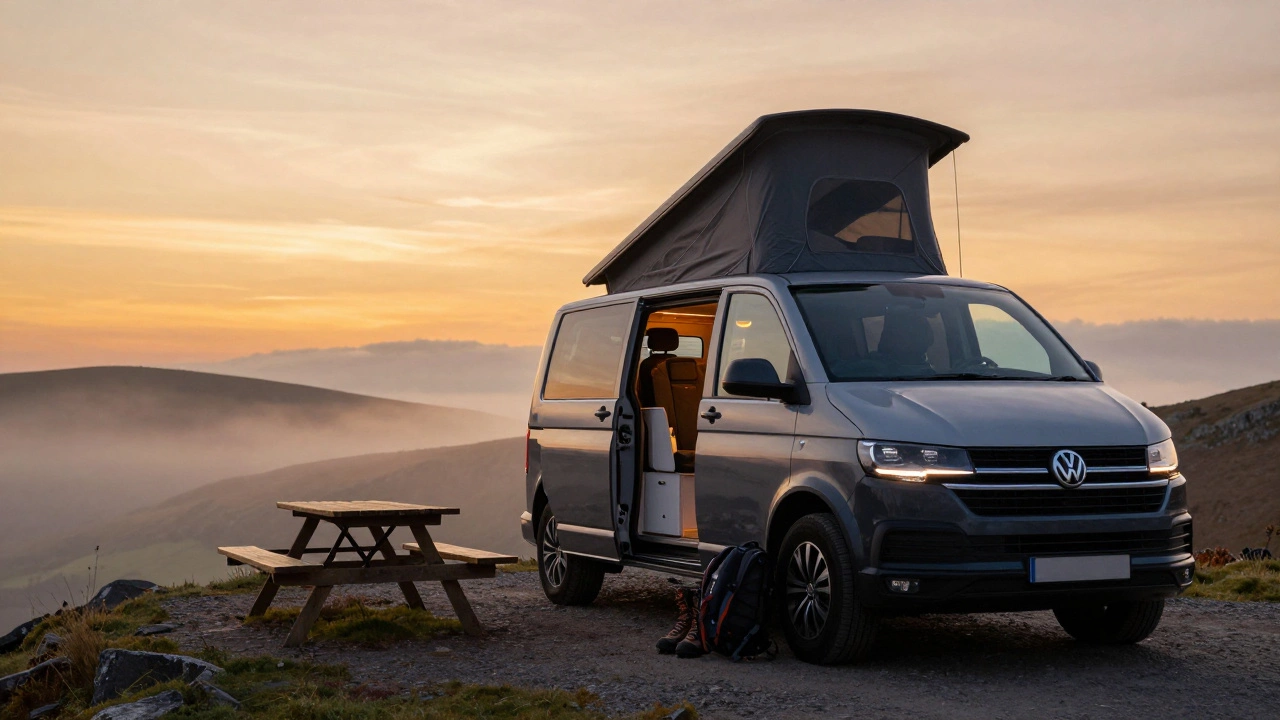
Class B RVs - also called camper vans - are the smallest type of motorhome you can rent or buy. They look like regular vans but come with a bed, kitchenette, and sometimes a tiny bathroom. If you’ve ever scrolled through Instagram photos of a sleek VW California parked on a cliffside in Wales, you’ve seen why people love them. But are they actually worth the money? Especially when you’re paying £150-£300 a day to rent one in the UK?
What You Get for the Price
A Class B RV isn’t a luxury suite on wheels. It’s a smart compromise. You trade space for convenience. Most models have a fold-down bed that turns the rear seats into a sleeping area. The kitchen usually includes a two-burner stove, a small sink, and a 12V fridge. Some have portable toilets; others don’t. No shower. No standing room. You’ll need to plan for campsite showers or public facilities.
But here’s what you do get: freedom. You can park overnight in lay-bys, service stations, or quiet country roads (where legal). You don’t need to book a campsite every night. You can wake up in the Lake District, drive to the coast by lunch, and sleep under the stars in Cornwall - all without hauling gear or setting up tents.
Compare that to a Class C or A motorhome. Those are bigger, pricier, and harder to drive. They cost £400-£700 a day to rent. You need a bigger parking spot. You can’t fit into narrow village lanes. You pay more for fuel, insurance, and tolls. A Class B RV? You can drive it on any UK road. It fits in standard parking spaces. And you’ll use about 30% less fuel than a larger motorhome.
Real Costs: Renting vs Buying
If you’re thinking about renting, here’s what you’ll pay in early 2026:
- Basic Class B (e.g., Ford Transit Custom camper): £150-£200/day
- Mid-range (e.g., VW California, Mercedes Sprinter): £220-£300/day
- Premium (e.g., Autocruise, Winnebago Revel): £350+/day
That’s for a week-long rental. Multiply that by four trips a year, and you’re looking at £3,000-£6,000. That’s a lot - until you compare it to buying.
A used Class B RV in good condition costs £25,000-£40,000. New ones start at £50,000. But here’s the trick: if you use it for just three weeks a year, you’re spending £800-£1,300 per trip. Renting the same model would cost £2,100-£3,900 for the same time. After two years of three-week trips, buying pays for itself.
And if you live in Ireland or the UK, you can use it for weekend getaways, festivals, or even as a backup living space during home renovations. That’s not just a vacation - it’s a tool.
Who It’s Best For
Class B RVs aren’t for everyone. Here’s who they’re perfect for:
- Couples or solo travelers - You don’t need a big bed or a full kitchen. Two people sleeping in a van is cozy, not cramped.
- Adventure seekers - Want to hike the Pennine Way or explore the Scottish Highlands? A Class B lets you park where bigger rigs can’t go.
- Minimalists - If you hate clutter, you’ll love how little you need. No extra gear. No bulky tents. Just the essentials.
- First-time renters - Driving a van is easier than a truck-sized motorhome. No one’s going to honk at you in a narrow lane.
Who should skip it?
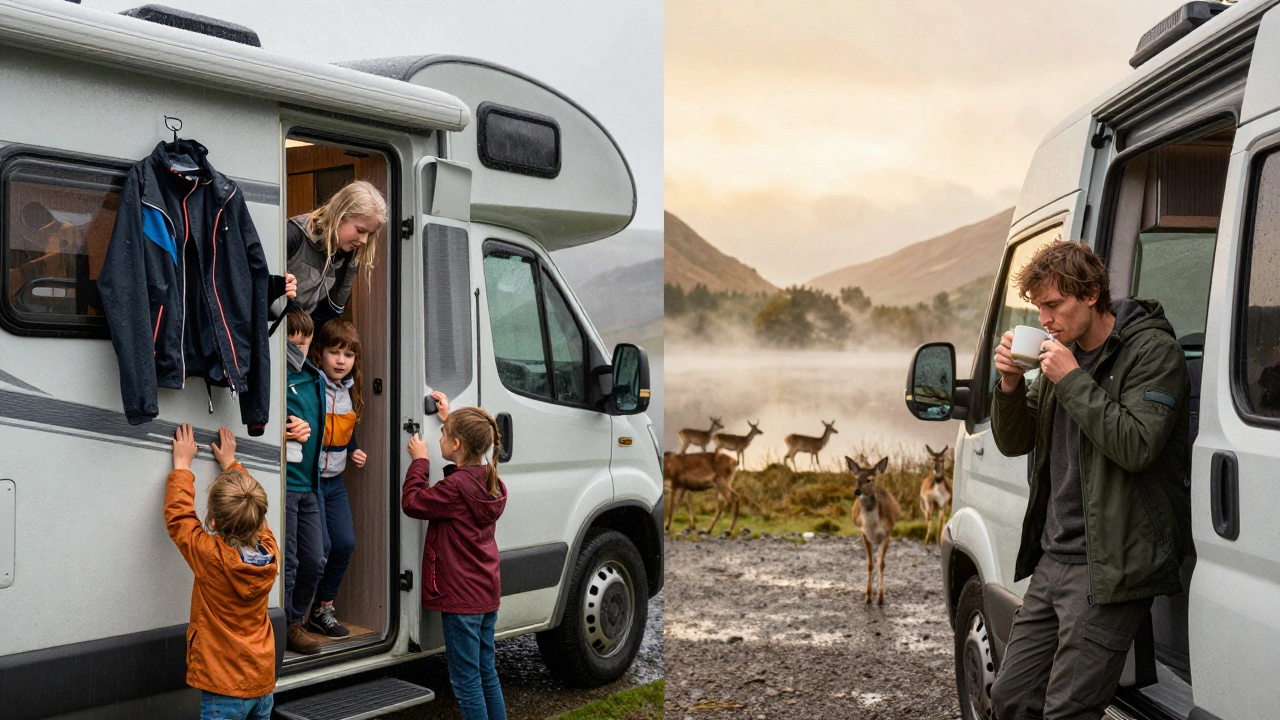
- Families with kids - Unless your kids are under 8, you’ll feel cramped. No separate sleeping areas. No bathroom. You’ll be fighting for space.
- People who hate cooking on the road - You’ll be eating sandwiches, pasta, and canned beans. No oven. No dishwasher. If you crave restaurant meals, this isn’t your trip.
- Those who need daily showers - You’ll need to plan. Campsites with facilities cost extra. Public showers aren’t always clean or open.

Hidden Costs You Can’t Ignore
People forget the extras. A Class B RV might seem cheap to rent, but here’s what adds up:
- Campsite fees - Even if you wild camp, you’ll still need to stop at campsites for water, waste disposal, and charging. Expect £15-£25 per night at decent sites.
- Insurance excess - Most rental companies charge £1,000-£2,000 excess. You can reduce it for £10-£20/day, but that adds up.
- Propane and electricity - You’ll need to refill propane tanks. Some vans have solar panels, but not all. You’ll pay for hookups at campsites.
- Waste disposal - Grey water and toilet waste need emptying. Most campsites charge £5-£10 for this. Some service stations offer free disposal - if you know where to look.
- Driving restrictions - Some UK towns have low-emission zones. Class B vans are usually fine, but check before entering London, Edinburgh, or Oxford. Fines start at £130.
Factor in £100-£200 per week in hidden costs. That’s not optional. It’s part of the budget.
What You Lose
Space isn’t the only thing you give up. You lose:
- Storage - You can’t pack for a month. You’ll need to be ruthless. One pair of shoes. Two outfits. No bulky towels.
- Weather comfort - It gets cold inside. No central heating. You’ll need a good sleeping bag and thermal layers. Rainy days mean you’re stuck in a small space.
- Privacy - No separate bathroom. No locked bedroom. If you’re sharing with someone, you’re sharing everything.
- Power - Your fridge runs on battery. Your phone charger drains it fast. Solar panels help, but you’ll still need to plug in every 2-3 days.
It’s not a hotel. It’s a mobile tent with a kitchen. If you expect comfort, you’ll be disappointed.
What You Gain
But here’s the flip side. What you gain is priceless:
- Flexibility - Change plans on a whim. See a sign for a hidden waterfall? Turn off. Found a quiet beach? Park for the night. No booking system. No check-out time.
- Cost savings over time - If you rent once a year, you’re paying £1,000-£2,000. If you buy, you’re paying £5,000-£10,000 over five years. That’s still cheaper than renting every time.
- Access to remote spots - National parks like Snowdonia, the Cairngorms, or the Pembrokeshire Coast have limited campsites. A Class B lets you park closer to trails and viewpoints.
- Freedom from schedules - No more rushing to check out of a B&B at 10 a.m. Sleep in. Drive slow. Watch the sunrise.
And the best part? You’ll remember these trips. Not the hotel room. Not the restaurant. The quiet moment at 6 a.m., coffee in hand, watching deer walk past your van in the mist.
Alternatives to Consider
Is a Class B RV the only option? No.
Car + Tent - Cheaper. More space. But you have to set up every night. And you’re stuck in bad weather.
Class C Motorhome - More room, more comfort. But harder to drive, more expensive, and harder to park. Only worth it if you’re traveling with kids or need a bathroom.
Camper Trailer - Towed behind your car. More space than a Class B. But you need a vehicle that can tow. And you still need to set up every night.
Class B is the sweet spot for people who want the freedom of a motorhome without the hassle.
Final Verdict
Is a Class B RV worth the money? Yes - if you know what you’re getting into.
If you’re a couple or solo traveler who values freedom, flexibility, and adventure over luxury - then yes. It’s one of the best investments you can make for UK road trips.
If you expect a hotel room on wheels, or you’re traveling with a family, or you hate cooking in a tiny kitchen - then no. You’ll be frustrated. Spend the money on a cabin or a B&B instead.
It’s not about the price. It’s about the fit. And for the right person, a Class B RV doesn’t just save money - it changes how you travel.
Can you live in a Class B RV full-time in the UK?
Yes, but it’s not easy. You need access to campsites for water, waste disposal, and electricity. Wild camping is legal in Scotland but restricted elsewhere. You’ll need a good solar setup, insulated walls, and a plan for winter heating. Most full-timers use it as a base, not a permanent home. It works for digital nomads or seasonal workers - but not for families without a backup plan.
Do Class B RVs have bathrooms?
Some do, but most don’t. Higher-end models like the VW California or Winnebago Revel have a wet bathroom - a toilet and shower that share the same space. Budget models usually have a portable toilet you empty manually. Many renters skip the bathroom entirely and rely on campsite facilities. Don’t assume it’s there - always check the specs.
Is it cheaper to rent or buy a Class B RV?
Renting is cheaper for short trips - under 3 weeks a year. Buying pays off after 2-3 years of regular use. A used Class B costs £25,000-£40,000. If you rent the same model for £250/day, you’d spend £5,000 in 20 days. After three years of three-week trips, buying saves you thousands. Factor in insurance, maintenance, and storage costs - but the math still works for frequent travelers.
What’s the best Class B RV for UK roads?
The VW California is the most popular - reliable, compact, and well-insulated. The Ford Transit Custom camper is cheaper and easier to service. For rugged terrain, the Mercedes Sprinter with a pop-top gives you more headroom. Avoid oversized models - they struggle on narrow lanes and in villages. Stick to vans under 5.5 meters long. That’s the sweet spot for UK driving.
Can you wild camp in a Class B RV in England?
Technically, no - wild camping is illegal in England and Wales without landowner permission. But in practice, it’s tolerated if you’re quiet, leave no trace, and don’t stay more than one night. Popular spots include Dartmoor, the Lake District, and the Scottish Highlands (where it’s legal). Use apps like Park4Night to find safe, discreet spots. Never block roads, never light fires, and always pack out your waste.
How do you charge your devices in a Class B RV?
Most vans have a 12V socket (cigarette lighter) and USB ports. For longer trips, you need a battery system. Basic models rely on the van’s engine to charge - so you need to drive daily. Better setups include solar panels (100-200W) and a lithium battery. A 100W solar panel can charge a phone 15 times a day and run a small fridge. Don’t rely on campsite hookups - they’re not always available.
Do Class B RVs hold their value?
Yes - better than most vehicles. A well-maintained VW California or Ford Transit camper holds 60-70% of its value after five years. Demand is high, especially for low-mileage, clean interiors. Custom conversions hold value if done professionally. Avoid cheap, poorly built conversions - they depreciate fast. If you plan to sell later, keep it clean, service it regularly, and avoid smoking inside.
Class B RVs aren’t for everyone. But for the right person - someone who wants to explore the UK without being tied down - they’re one of the smartest travel tools you can own or rent.