Motorhome Shower Location Finder
Find Shower Facilities Along Your Route
Planning your next stop? This tool helps you locate nearby shower facilities along popular UK motorhome routes.
It’s a sunny afternoon, you’re cruising down the A1 in your hired motorhome, the sea is just a few miles away, and you’ve been on the road since dawn. Your skin feels sticky, your hair’s greasy, and the thought of waiting until you reach the campsite feels unbearable. So you ask: Can you shower in a motorhome while driving? The short answer? No, and here’s why.
It’s Not Just Unsafe-It’s Illegal
Showering while your motorhome is moving isn’t a matter of convenience-it’s a serious safety and legal issue. In the UK, the Highway Code Rule 165 clearly states that all passengers must be properly seated and wearing seatbelts while the vehicle is in motion. That includes anyone inside the shower area. There’s no such thing as a "moving shower" exemption.
Think about it: showers in motorhomes aren’t designed like bathtubs in a stationary home. They’re small, slippery, and often have no handrails strong enough to hold you steady. When the vehicle turns, brakes, or hits a bump-which it will-you’ll be thrown around. A single sudden stop could send you flying into the shower wall, the toilet, or the sink. Serious injuries like head trauma, broken bones, or spinal damage aren’t hypothetical-they’ve happened.
Insurance companies in the UK treat incidents like this as gross negligence. If you’re injured while showering during motion, your motorhome hire insurance won’t cover you. And if you’re caught by police, you could face fines or even points on your license-even if you’re not the driver.
Why Motorhome Showers Are Built for Stationary Use
Most motorhome showers are compact, usually under 3 square feet. They rely on a gravity-fed or pump-driven water system that only works when the vehicle is level. When you’re driving, the water sloshes around unpredictably. Even if you somehow stayed upright, the water would spill everywhere, soaking carpets, electronics, and floor insulation.
Waste water doesn’t magically vanish. The grey water tank fills up fast, and if it overflows while you’re on the move, sewage can leak into the chassis or even onto the road. That’s not just messy-it’s a public health violation and could lead to environmental fines.
And let’s not forget the shower head. Most are handheld and mounted on a bracket that swings freely. When the motorhome hits a pothole, that shower head becomes a projectile. One driver in Northern Ireland reported a broken tooth after a shower head cracked his jaw during a sharp turn.
What About the "I’ve Seen It Done" Argument?
You’ve probably seen videos online-someone in a motorhome showering while driving, laughing, waving at the camera. Those clips are misleading. They’re either edited, shot on private land, or filmed while the vehicle was stationary but moving slowly on a smooth surface. Some are even faked using green screens.
Real motorhome owners don’t do this. Ask anyone who’s rented or lived in an RV for more than a year. They’ll tell you the same thing: shower before you leave, or wait until you stop. No exceptions.
Even luxury motorhomes with built-in showers-like the Adria Alpina a high-end European motorhome model with full wet-room bathrooms or the Hymer B-Class a German-engineered motorhome with integrated shower and heated floors-are designed for use only when parked. Their plumbing systems aren’t built to handle motion. The water pressure drops, the pumps strain, and the seals leak.
What Should You Do Instead?
If you’re feeling grimy on the road, here’s what actually works:
- Use wet wipes or body spray before you leave. A quick wipe-down with alcohol-based wipes keeps you fresh for hours.
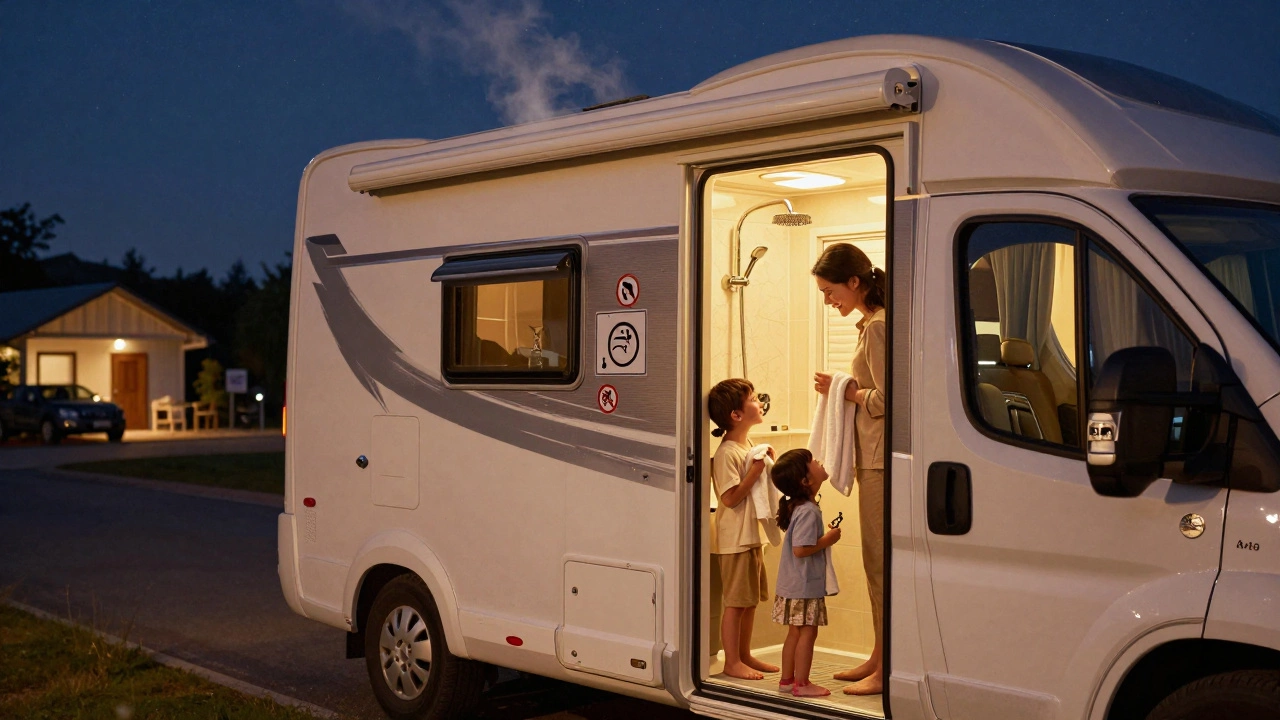
- Carry a portable camping shower. You can use it at rest stops, picnic areas, or even in a quiet layby with privacy. Just make sure you’re not on a public highway.
- Plan your stops. Most motorhome hire companies provide a route planner with nearby service stations that have showers. Many motorway service areas in the UK, like those run by Motorway Services UK a network of highway rest stops offering public showers for motorhome users, let you use their facilities for a small fee-even if you didn’t buy fuel.
- Use a towel and a bucket of warm water. Some long-term motorhome travelers keep a small bucket and a microfiber towel in the back. A 5-minute sponge bath with warm water from a thermos is surprisingly effective.
Many motorhome hire companies now include a free shower pass with rental. Companies like Campervan Hire Ireland a Dublin-based motorhome rental service offering free access to 200+ public shower stations across Ireland partner with local campsites and service centers to give renters access to clean, safe showers along popular routes.
What Happens If You Try It Anyway?
Let’s say you ignore all this and try to shower while driving. Here’s what you risk:
- Physical injury-slips, falls, or being thrown into hard surfaces.
- Property damage-water leaks ruin floorboards, electrical systems, and insulation. Repair costs can exceed £2,000.
- Insurance denial-most hire agreements have clauses that void coverage if you violate safety rules.
- Legal trouble-police can issue fines under the Road Traffic Act for endangering yourself or others.
- Environmental violation-if grey water leaks onto public roads, you could be fined under environmental protection laws.
There’s no "just this once" loophole. Once you’re caught or injured, it’s on record. And if you’re renting, the company will likely charge you for damages, even if you didn’t mean to cause harm.
Real Story: The Shower That Went Wrong
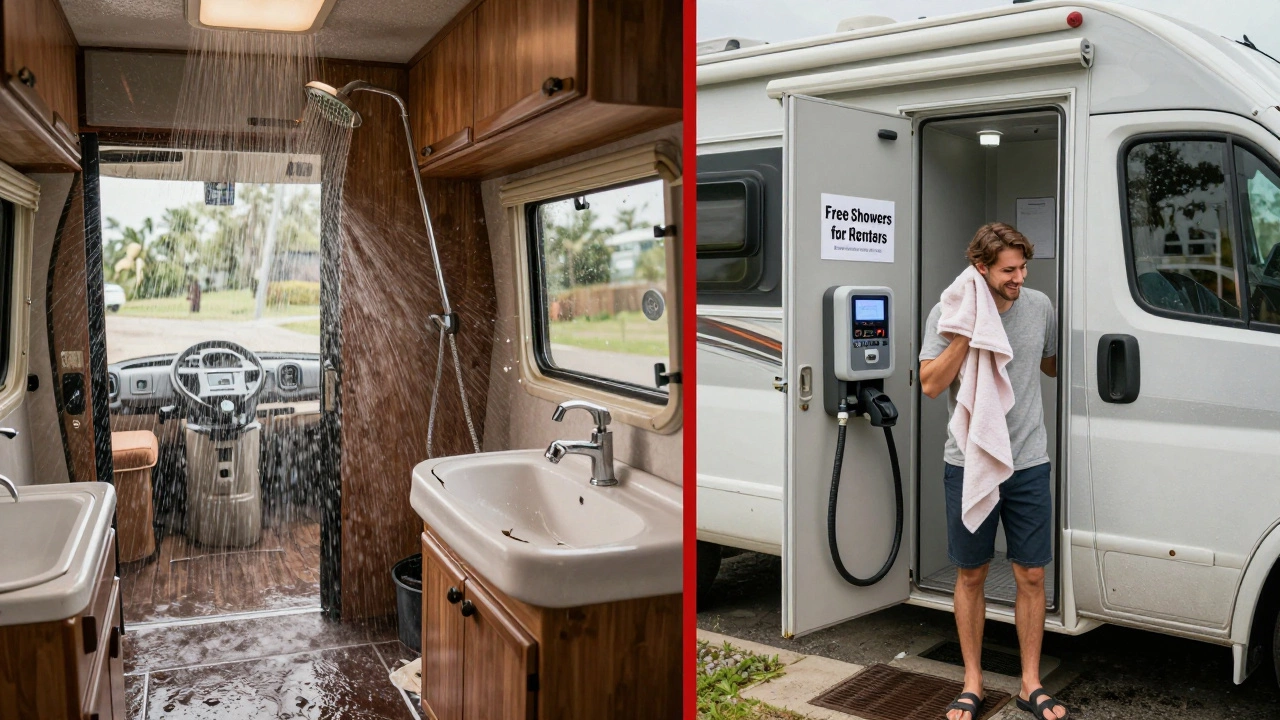
In 2024, a family from Manchester rented a motorhome from a Dublin-based company. They were heading to the coast and wanted to freshen up before arriving. The dad, thinking it was harmless, turned on the shower while the vehicle was moving at 50 mph on the M6. The motorhome hit a patch of wet pavement, swerved slightly, and he lost his balance. He slammed into the sink, cracked his collarbone, and the shower water flooded the electrical panel.
The motorhome broke down 20 miles later. Emergency services had to tow it. The repair bill? £4,800. The medical bill? £1,200. The rental company charged them the full cost because their contract stated: "All occupants must be seated and belted at all times while the vehicle is in motion."
They didn’t get their deposit back. They had to cut their trip short. And they still owe the company £3,000.
Bottom Line: Wait Until You Stop
There’s no clever hack, no secret trick, no "it’s fine if you’re careful." Showering in a moving motorhome is dangerous, illegal, and expensive. It’s not worth the risk.
Plan ahead. Stop when you need to. Use the services available. Most motorhome hire companies give you free access to shower facilities along major routes. Take advantage of them. Your body-and your wallet-will thank you.
And if you’re worried about cleanliness on long drives? Pack a few biodegradable wipes, a travel-sized dry shampoo, and a towel. You’ll be surprised how much better you feel without ever turning on the shower.
Can you use the toilet in a motorhome while driving?
Yes, you can use the toilet in a motorhome while driving-unlike the shower. Most motorhome toilets are designed to function safely while moving. They’re sealed systems with holding tanks that don’t rely on water flow or gravity. However, it’s still safer to use the toilet when parked. Some models have locks or automatic shutoffs that prevent use while in motion, so check your rental manual.
Do all motorhomes have showers?
No. Basic models, especially smaller campervans, often skip the shower entirely. Mid-range and luxury motorhomes usually include a wet-room shower, but it’s always designed for stationary use. Always check the rental specs before booking. If shower access is important to you, ask for confirmation that the model includes a full bathroom and whether it’s a wet-room design.
Is it okay to shower at a motorway service station?
Yes, and it’s one of the best options. Most UK motorway service stations, including those operated by Moto, Welcome Break, and Roadchef, allow motorhome users to use their showers for a small fee-usually £3 to £5. You don’t need to buy fuel or food. Just ask at the front desk. Some even offer free showers if you’re a member of a motorhome club.
What if I’m pregnant or have mobility issues?
The same rules apply: never shower while driving. But if you have mobility issues, many rental companies offer adapted motorhomes with wider doors, grab bars, and non-slip flooring. Some even provide a portable shower chair you can use at rest stops. Always request these features when booking. Your safety and comfort matter.
Can I install a shower that works while driving?
No, and no reputable mechanic or manufacturer will do it. There’s no safe way to retrofit a shower for use while moving. Water systems in motorhomes aren’t designed for motion, and modifying them voids warranties and insurance. Any company offering this service is either misinformed or trying to sell you something dangerous.
Next Steps: Plan Your Hygiene Routine
Before your next motorhome trip, make a simple checklist:
- ☐ Pack biodegradable wipes and dry shampoo
- ☐ Confirm your rental includes shower access at service points
- ☐ Note down 3 rest stops with showers along your route
- ☐ Bring a microfiber towel and a small bottle of body spray
- ☐ Never, ever turn on the shower while the engine is running
Staying clean on the road doesn’t require a shower while driving. It just requires a little planning-and a lot of common sense.