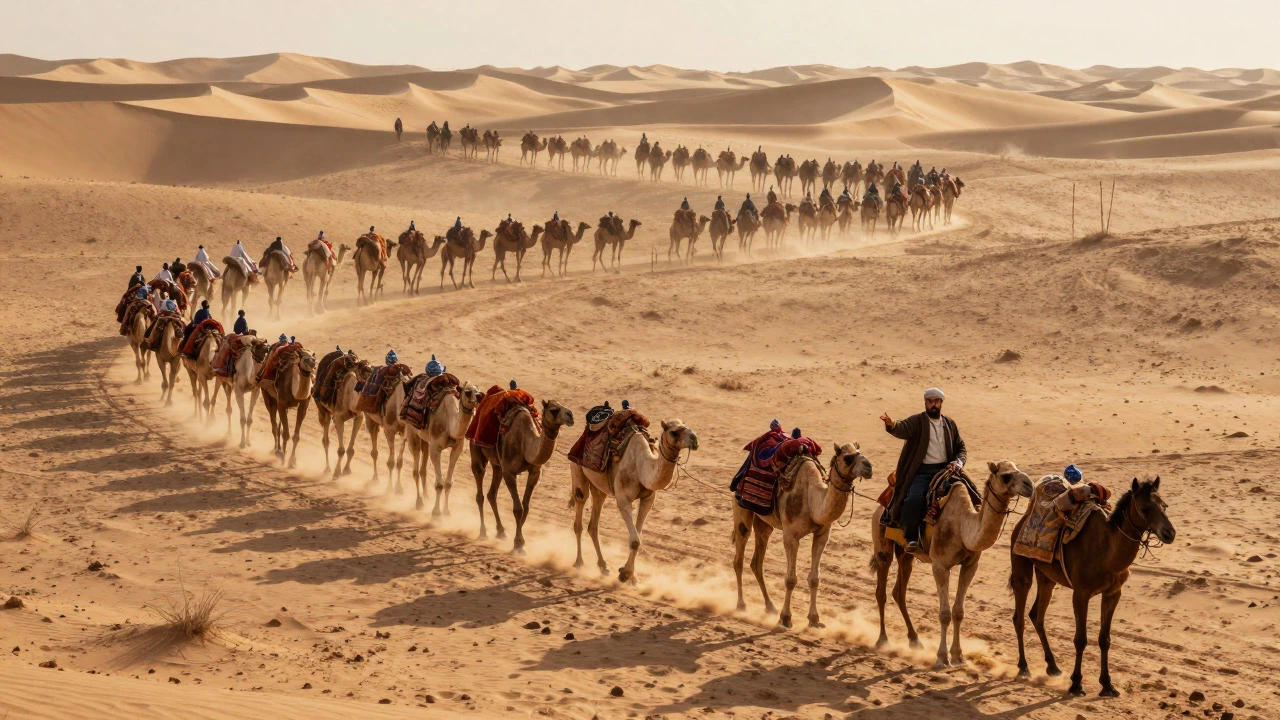
The Evolution of the Word 'Caravan'
Explore how a Persian word for merchant groups transformed into the name for your holiday home. Click on any point in the timeline to see the details.
Karvan
Group of travelers/merchants moving together across difficult terrain for safety and mutual support.
Context: In the Safavid Empire, traveling alone was dangerous. These organized expeditions relied on shared resources and collective resilience.
Have you ever stopped to wonder why we call those wheeled homes on wheels "caravans"? It’s a term so common in caravan parks that most people never question its roots. But the answer isn't just about a type of vehicle; it’s a journey through trade routes, ancient empires, and linguistic shifts that span thousands of years.
The word didn't start with camping holidays or leisure travel. It began as a descriptor for massive groups of merchants traveling across deserts and mountains. Understanding this origin helps explain not just the name, but the culture surrounding modern recreational vehicles today.
The Persian Roots of the Word
To understand the term, we have to go back to the 16th century and the Safavid Empire in Persia (modern-day Iran). The word Caravan is a loanword derived from the Persian term 'karvan', which referred to a large group of travelers moving together for safety and mutual support. In these harsh environments, traveling alone was dangerous. Bandits, extreme weather, and lack of resources made individual journeys nearly impossible.
The concept of the karvan was strictly organized. These weren't random gatherings; they were structured commercial expeditions. A leader, known as a sarai or caravan master, would coordinate the route, negotiate passage rights, and manage the logistics of hundreds of camels, horses, and porters. The safety in numbers was the primary value proposition. If one traveler fell ill or their animal died, the group could share the burden. This collective resilience is the core DNA of the word.
From Trade Routes to European Languages
How did a Persian word end up in English? The Silk Road played a crucial role here. As goods like silk, spices, and porcelain moved from Asia to Europe, so did ideas and language. Italian merchants were among the first Europeans to regularly interact with these long-distance trading groups. They adopted the term, slightly modifying it to caravana.
By the late 1500s, the word had crossed into French as caravane. From there, it entered the English lexicon around 1673. Interestingly, when it first appeared in English, it still referred exclusively to the traveling group of merchants and animals, not the vehicle itself. For centuries, if you said "caravan," you meant the people and the pack animals, not a box on wheels.
The British Influence: Why We Don't Say "Trailer"
If you’re in North America, you might be confused. Americans call these units "travel trailers" or simply "trailers." So why do the British, Irish, and Australians stick with "caravan"? The answer lies in colonial history and specific vehicle designs used in India during the British Raj.
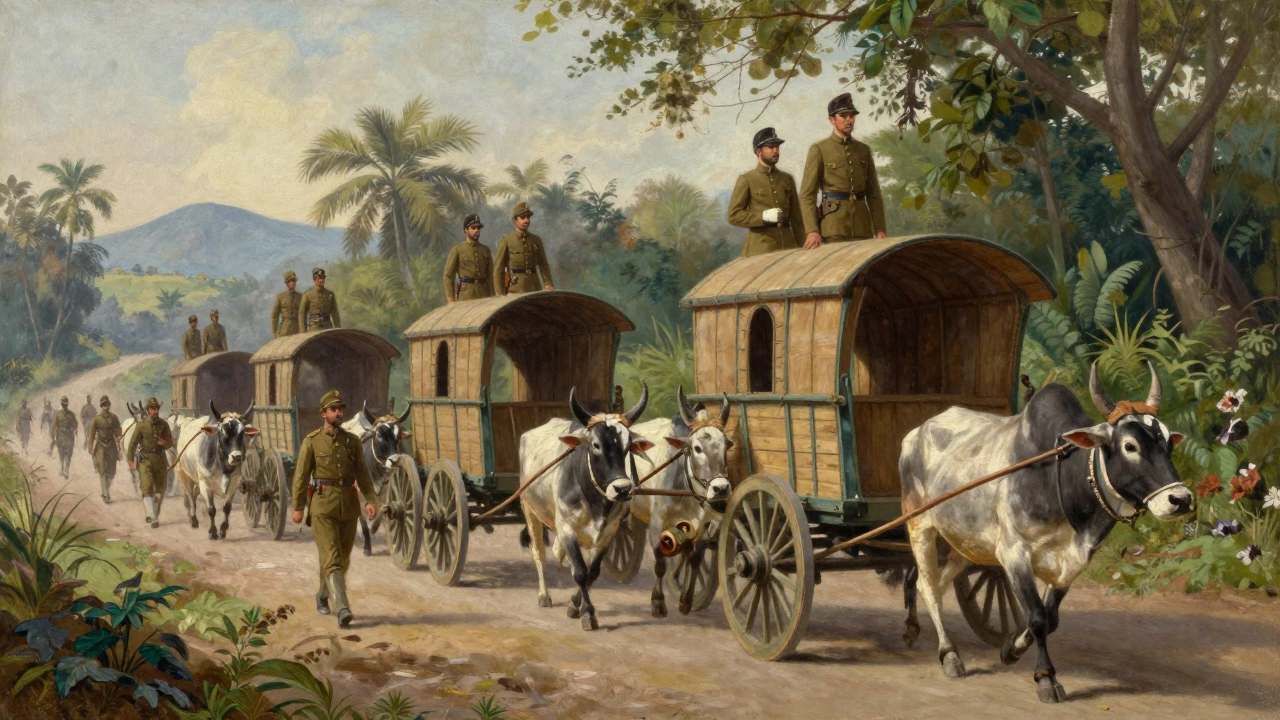
In the 18th and 19th centuries, British officers and administrators in India needed mobile housing that could withstand the local climate and terrain. They utilized heavy, enclosed wagons often pulled by bullocks or oxen. These vehicles were distinct from the lighter carts used for cargo. Because these groups of officials traveled in organized convoys-mimicking the old trade karvans-the association between the *group* and the *vehicle* solidified.
When these officers returned to Britain, they brought the terminology with them. The term "caravan" stuck in the UK for these wheeled dwellings, while the US, having less direct exposure to that specific Indian military/administrative context, defaulted to "trailer." This linguistic split is a perfect example of how geography and empire shape everyday vocabulary.
Modern Usage: Leisure vs. Logistics
Today, the word has two distinct meanings that often cause confusion. In logistics, a "freight caravan" still refers to a group of trucks or vehicles traveling together for safety. However, in the context of Caravan Parks is facilities designed for stationary or semi-stationary living spaces, the term refers specifically to the towable accommodation unit.
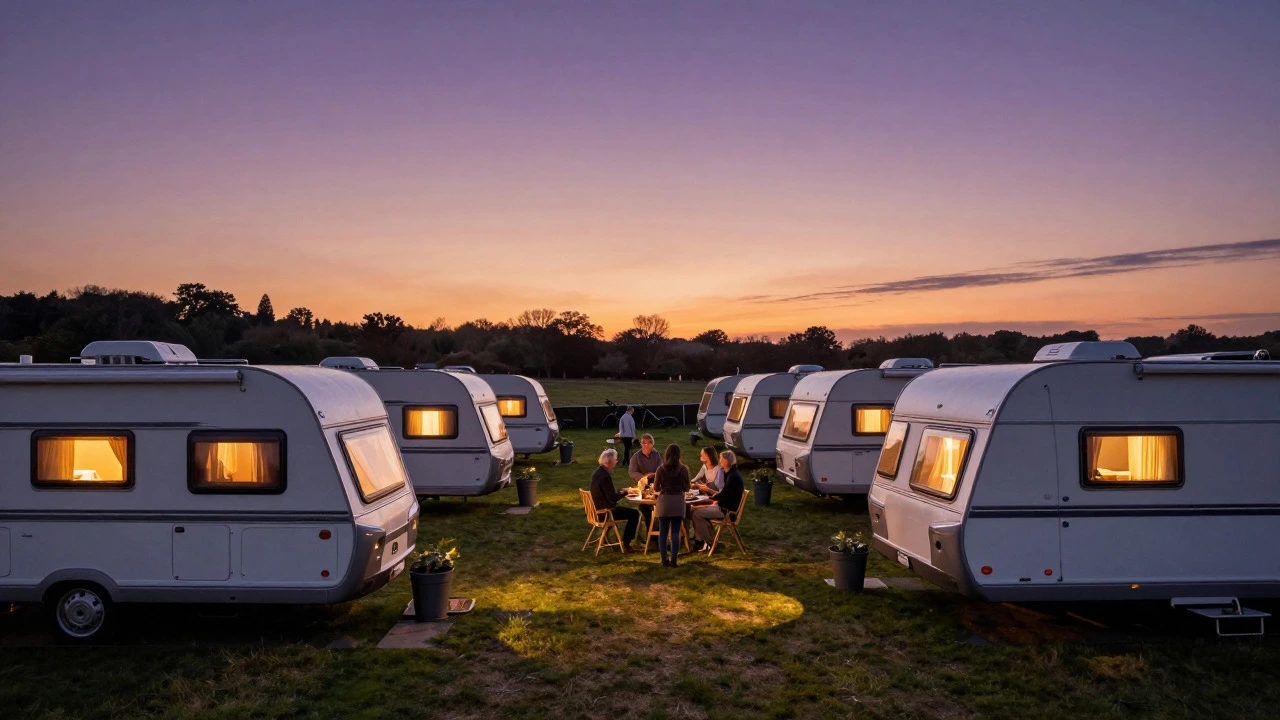
This shift from "moving group" to "stationary home" is significant. Originally, a caravan defined motion. Now, it defines a place where you stop. This irony is lost on most campers who spend weeks at the same pitch. Yet, the heritage remains in the communal aspect of these parks. Just as ancient karvans relied on shared resources and social bonds, modern caravan communities thrive on neighborly interaction, shared facilities, and collective security.
Common Misconceptions About the Name
There are a few persistent myths about the word's origin that deserve debunking:
- It comes from the word "Carter": While cdrivers (carters) were part of the trade, the root is distinctly Persian, not Anglo-Saxon.
- It refers to the shape of the vehicle: The original karvans were not uniform boxes. They were diverse collections of animals and people. The shape came later, standardized by industrial manufacturing.
- It is related to "Carnival": Despite sounding similar, carnival comes from the Latin carne vale (farewell to flesh), referring to pre-Lenten feasts. No relation.
Understanding these distinctions helps clarify why the term feels so specific to certain cultures. It’s not just a generic word for a box; it carries the weight of historical trade networks.
The Connection to Modern Travel Culture
Why does the name matter to you as a traveler? It connects your holiday to a millennia-old tradition of human mobility. When you pull your unit into a pitch, you are participating in a lineage of movement that started with merchants navigating the Sahara and the Gobi Desert. The safety, community, and self-sufficiency valued in those ancient groups are exactly what modern recreational vehicle owners seek.
Furthermore, the durability associated with the term reflects the build quality expected of these units. A true caravan, in the historical sense, had to withstand months of rough terrain. Today, while our roads are paved, the expectation of robustness remains. Whether you are staying in a luxury pod in Dublin or a basic tented site in Wales, the name "caravan" implies a standard of preparedness and endurance.
Frequently Asked Questions
What is the original meaning of the word caravan?
The original meaning, from the Persian word 'karvan,' referred to a large group of merchants and travelers moving together across difficult terrain for safety and trade purposes.
Why do Americans call it a trailer instead of a caravan?
Americans use "trailer" because the specific term "caravan" became associated with enclosed, wheeled dwellings in British India. Since the US had less direct cultural exchange with that specific colonial context, they retained the simpler descriptive term "trailer" for any towed vehicle.
Is a motorhome considered a caravan?
Technically, no. A motorhome is self-propelled, whereas a caravan is towed. However, in casual conversation, some people group them under the broader umbrella of "RVs" or "caravanning" as a lifestyle, even if the technical definitions differ.
When did the word caravan enter the English language?
The word entered English in the 1670s, initially describing a group of travelers or a military convoy, before shifting to mean the vehicle itself in the 1800s.
Does the word caravan relate to camels?
Not directly. While camels were the primary beasts of burden in many historic karvans, the word itself means "group of travelers." The association with camels is contextual, not etymological.