Glamping Cost Calculator
Compare the cost of traditional camping versus glamping to see which option provides better value for your outdoor adventure.
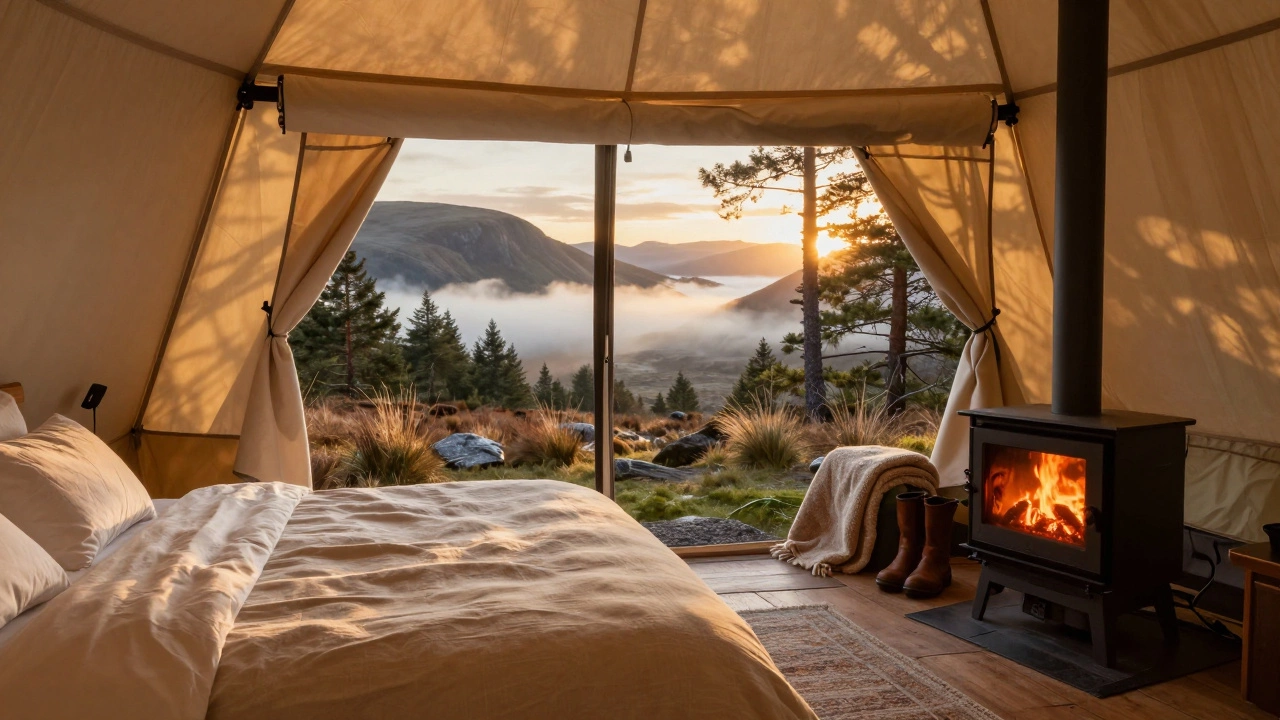
Ever booked a tent with a real bed, a private bathroom, and a wood-burning stove-then realized no one calls it "luxury camping"? That’s because the word you’re looking for is glamping. It’s not just a trendy buzzword. Glamping is the official term used by resorts, travel sites, and campers worldwide to describe high-end outdoor stays that skip the soggy sleeping bag and embrace comfort without losing the wilderness vibe.
Where Did "Glamping" Come From?
The word "glamping" is a blend of "glamorous" and "camping." It started showing up in travel blogs and magazine articles around 2007, but the idea is much older. Think Victorian-era tourists renting furnished tents in the Scottish Highlands in the 1800s. They had proper beds, china plates, and even servants. Fast-forward to today, and glamping has evolved into a global industry worth over $4 billion, with resorts from the Canadian Rockies to the Australian Outback offering everything from yurts with heated floors to treehouses with hot tubs.
Unlike traditional camping, glamping doesn’t ask you to carry a 15-pound backpack full of gear. You show up, unpack your suitcase, and relax. No pitching tents. No digging latrines. No wondering if your inflatable mattress will hold up through the night.
What Makes a Campsite "Glamping"?
Not every fancy tent is glamping. There are clear markers that separate true glamping sites from just "nice campsites." Here’s what you’ll typically find:
- Real beds with quality mattresses and linens
- Private bathrooms (sometimes en suite, sometimes shared but clean and well-maintained)
- Climate control-heat in winter, air conditioning or fans in summer
- Electricity and lighting that actually works
- On-site amenities like restaurants, spas, or guided activities
- No need to bring your own cooking gear-kitchenettes or meal service included
- Design-focused interiors: wooden floors, rugs, lighting, art
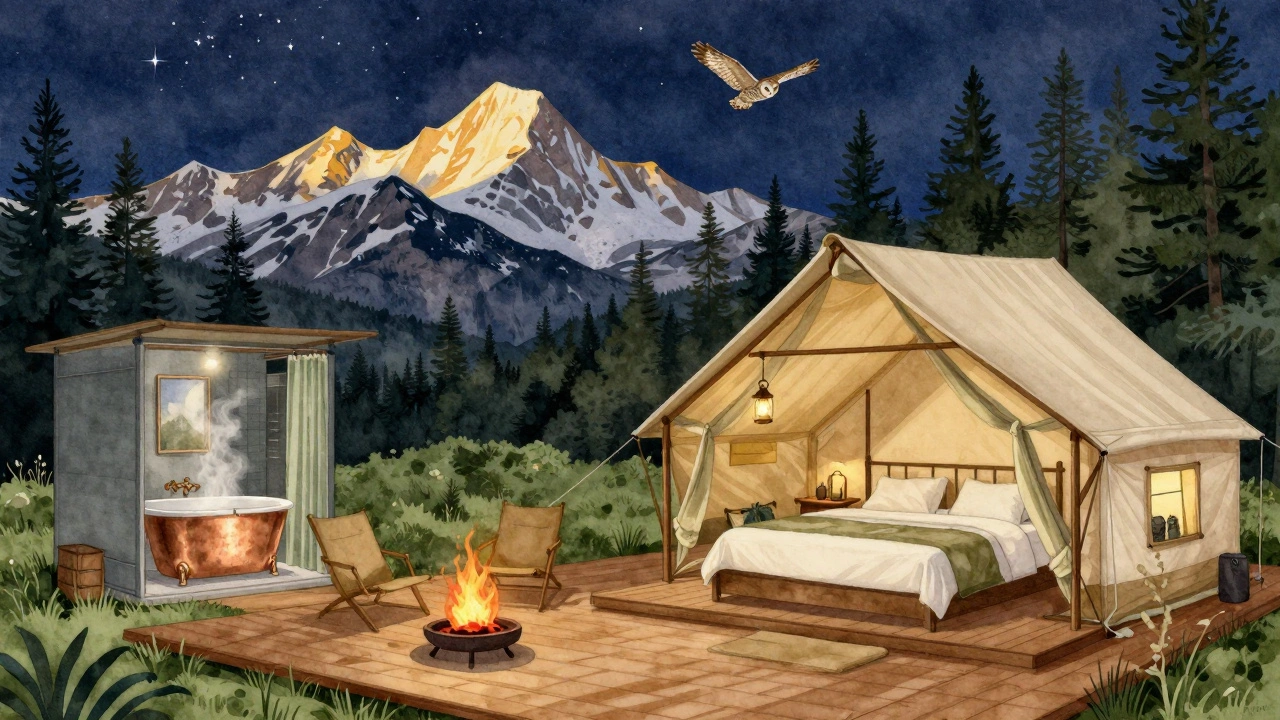
Some places go all out: glass domes under the stars, safari-style tents with four-poster beds, or converted Airstreams with espresso machines. Others keep it simple but still meet the core standard: you sleep like you’re in a hotel, but wake up to birdsong and pine trees.
Glamping vs. Regular Camping: The Real Difference
Let’s be clear: glamping isn’t just camping with extra pillows. It’s a different experience entirely.
Traditional camping is about self-reliance. You carry your water, cook over a fire, and sleep on the ground. It’s about disconnecting-sometimes painfully. Glamping is about reconnecting-with nature, with your partner, with quiet time-without sacrificing comfort.
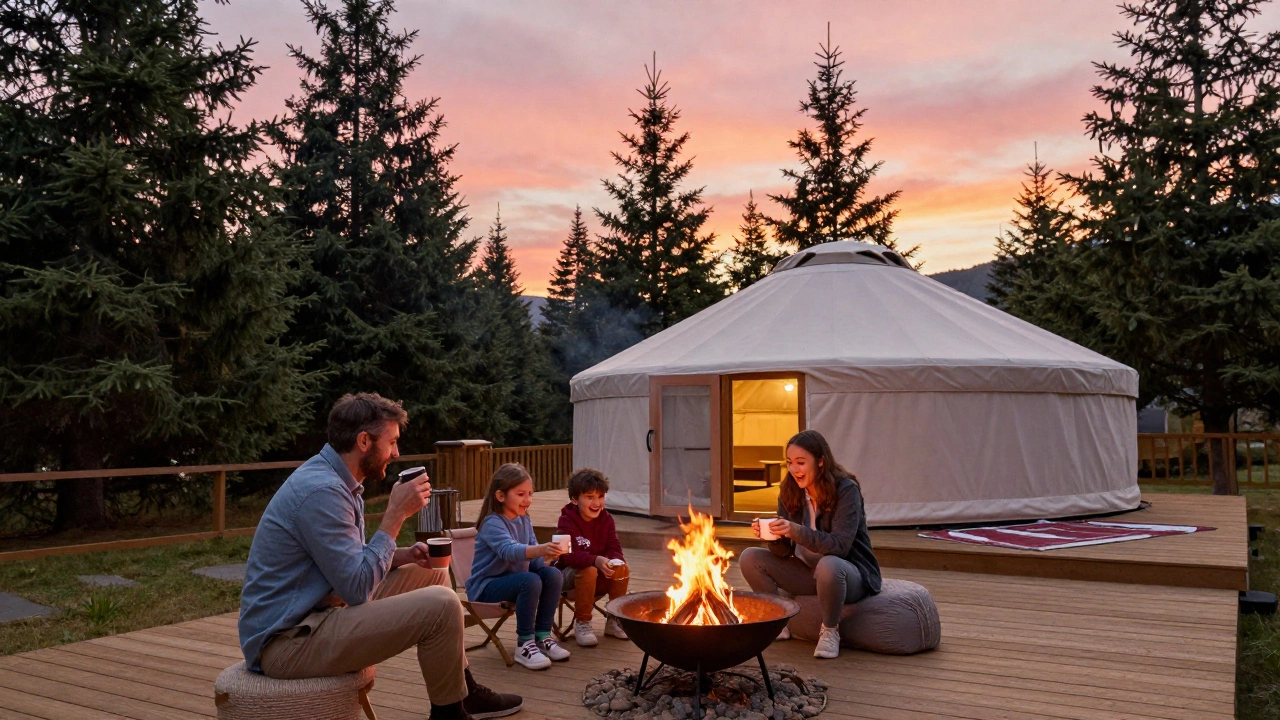
Take a family trip. With regular camping, you spend half your time setting up, fixing leaks, and hunting for lost tent pegs. With glamping, you spend that time making s’mores by a firepit, reading in a hammock, or watching the sunset from a deck with a glass of wine.
One survey from 2024 found that 68% of glampers said they chose it because they wanted to "enjoy nature without the hassle." Another 41% said they’d never go back to traditional camping after trying glamping-even if it cost twice as much.
Who Uses the Term "Glamping"?
You’ll see "glamping" on booking sites like Airbnb, Booking.com, and Glamping Hub. It’s used by national parks in the U.S., the UK, and Canada when they offer upgraded sites. Travel magazines like National Geographic and Condé Nast Traveler use it. Even the BBC and The Guardian write about "glamping holidays" as a growing trend.
Resorts don’t call it "luxury camping." They call it glamping. Why? Because "luxury camping" sounds like a marketing phrase someone made up. "Glamping" is the term people actually search for. Google Trends shows "glamping" gets 12 times more searches than "luxury camping" globally.
Is Glamping Just for the Rich?
No. While some glamping sites cost $500 a night, many start at $80-$150. You can find glamping options in forests, by lakes, and even on working farms. In the UK, places like Glamping in the Lake District or Pembrokeshire offer basic but well-appointed pods for under £100 a night. Some even include breakfast.
It’s not about being rich. It’s about valuing your time and comfort. If you’ve ever spent a night shivering in a damp tent because the rain seeped in, you know the value of dry sheets and a warm room.
Glamping Isn’t Just a Trend-It’s a Shift
Post-pandemic, people started thinking differently about travel. No one wants to spend their vacation stressing over logistics. Glamping meets the demand for meaningful, low-stress getaways. It’s not about showing off. It’s about resting well, being present, and feeling connected to nature without the physical toll.
Even younger travelers-those who grew up with Instagram-are choosing glamping. Why? Because it’s photogenic, yes, but also because it’s sustainable. Many glamping sites use solar power, composting toilets, and locally sourced food. It’s eco-friendly luxury.
It’s also becoming a gateway. People who try glamping often go on to explore more remote camping later. But they don’t start with a tent and a gas stove. They start with comfort-and that’s how they fall in love with the outdoors.
What to Look For When Booking Glamping
Not every site labeled "glamping" delivers. Here’s how to spot the real deal:
- Check photos-real beds, not air mattresses
- Read reviews for mentions of bathrooms, heating, and cleanliness
- Look for amenities listed clearly: "en suite," "kitchenette," "firepit," "hot tub"
- Call or message the host. Ask if they provide towels, toiletries, or bedding
- Avoid places that say "luxury camping" without showing any actual upgrades
Good glamping sites don’t just sell a tent. They sell an experience. And the experience starts the moment you walk in and see a real bed waiting for you.
Glamping Is the Word. Everything Else Is Just Camping.
If you’re searching for a cozy, stylish, comfortable way to sleep under the stars, stop looking for "luxury camping." Type in "glamping" instead. That’s the term used by the industry, the travelers, and the resorts. It’s the word that actually works.
And if you’ve never tried it? Give it a shot. One night in a real bed, with a view of the moon and no bugs crawling on your skin, might just change how you think about the outdoors forever.
Is glamping the same as luxury camping?
Yes, glamping is the actual term used for luxury camping. "Luxury camping" is a descriptive phrase people sometimes use, but the industry, booking platforms, and travelers all refer to it as glamping. It’s the accepted, standardized word.
Do glamping sites have bathrooms?
Most do. True glamping sites include private or shared bathrooms with running water, flush toilets, and hot showers. If a site says "camping" and mentions a shared block bathroom, it’s probably not glamping. Look for "en suite" or "private bathroom" in the listing.
Is glamping more expensive than regular camping?
Usually, yes-but not always. A basic glamping pod might cost $100-$150 a night, while a high-end safari tent can be $500+. Compare that to a standard campsite, which might be $20-$50. But remember: glamping includes bedding, towels, and often meals or breakfast. You’re paying for convenience, comfort, and time saved.
Can families go glamping?
Absolutely. Many glamping sites are designed for families, with multiple bedrooms, play areas, and kid-friendly activities. Parents love it because kids sleep well, and there’s no midnight tent collapse. Some even offer board games, fire pits with roasting sticks, and guided nature walks.
Is glamping eco-friendly?
Many glamping sites are designed with sustainability in mind. They use solar power, rainwater collection, composting toilets, and locally sourced materials. Unlike traditional RVs or cabins, glamping structures often have a small footprint and blend into the landscape. Always check the site’s sustainability page to confirm their practices.