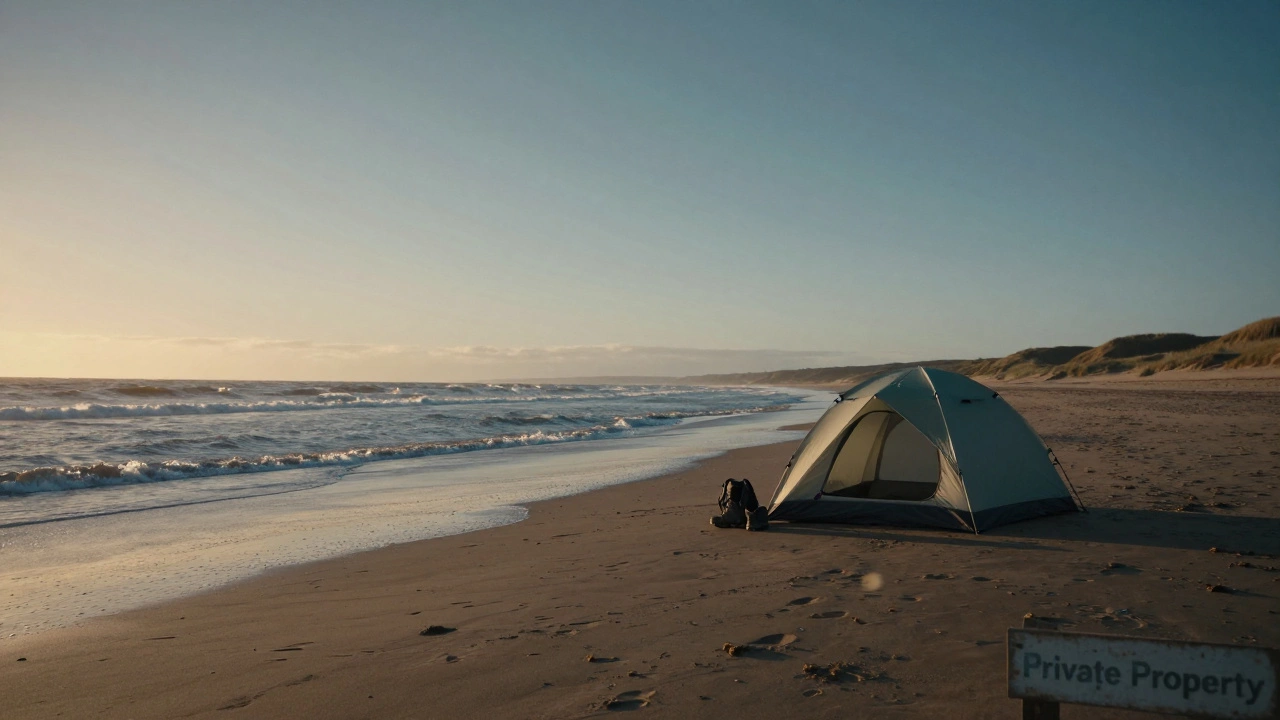
Beach Camping Rights: Where You Can and Can't Sleep by the Sea
When it comes to beach camping rights, the legal permission to set up a tent or sleep overnight on a beach. Also known as beach camping laws, it varies wildly depending on where you are—what’s allowed in one state or country is a fine-worthy offense in another. This isn’t just about where you pitch your tent. It’s about protecting fragile ecosystems, respecting local communities, and avoiding costly mistakes. Many people assume beaches are public land and therefore open for camping. That’s a dangerous myth.
Wild camping UK, the practice of sleeping outdoors without permission on land that isn’t a licensed campsite. Also known as wild camping, it’s a gray area in England and Wales, but mostly legal in Scotland under The Countryside Code. But when you add sand, tides, and coastal protection zones to the mix, things get even trickier. Some beaches in the UK ban overnight stays outright, even if you’re not building a fire or leaving trash. Others allow it quietly—until someone complains. In places like North Carolina, taking even a handful of sand is illegal. In Michigan, bringing alcohol to the beach might get you fined. These aren’t random rules—they’re tied to environmental protection, public safety, and local ordinances. And while glamping and luxury campsites are booming, they’re usually on private land with permits. That’s not the same as showing up with a sleeping bag and calling it a night.
So where do you stand? If you’re dreaming of waking up to waves, you need to know the difference between public access and public use. Just because you can walk on a beach doesn’t mean you can camp there. In the UK, Scotland is your best bet for legal wild camping near the coast—but even there, you must leave no trace, avoid private property, and never camp near homes or protected areas. In the US, rules change by state, sometimes by county. Some beaches in California let you sleep in your car if you’re not setting up a tent. Others fine you on the spot. And in places like Ocean Lakes, you’re paying for a day pass just to get in, let alone stay overnight.
Beach camping rights aren’t about freedom—they’re about responsibility. The same posts that tell you how to upgrade your campsite with cozy lighting or portable toilets also warn you about legal risks. You’ll find real stories here: what happens when you ignore beach sand laws in North Carolina, why sleeping in your car in California is riskier than it looks, and how to find legal, safe spots without paying for a full campsite. This isn’t a list of loopholes. It’s a practical guide to camping where you’re allowed, without getting fined, banned, or worse.
Below, you’ll find real advice from people who’ve been there—whether it’s knowing where to pitch a tent in the UK, how to handle a toilet on a remote shore, or why renting a motorhome might be smarter than risking a fine. No fluff. No guesswork. Just what works, what’s legal, and what could cost you.