Barking Cause Calculator
Identify your dog's barking cause and get targeted solutions based on the article "How to Stop a Dog from Barking While Camping"
Your Dog's Likely Cause
Recommended Solutions
Nothing ruins a peaceful night under the stars like a dog that won’t stop barking at every rustle in the bushes. If you’ve ever sat in your tent listening to your dog howl at a distant owl-or worse, at the neighbor’s tent-you know how frustrating it can be. The good news? It’s not your dog being ‘bad.’ It’s usually fear, boredom, or overstimulation. And with the right approach, you can teach your dog to stay calm while camping.
Understand Why Dogs Bark at Campsites
Dogs bark for reasons you might not expect. At home, they’re used to familiar sounds: the fridge humming, the cat walking by, the mailman’s footsteps. At a campsite, everything is new. Wind in the trees sounds like footsteps. A raccoon rustling in the trash sounds like an intruder. A distant car horn? To your dog, it’s a wolf calling from the next valley. A 2023 study from the University of Edinburgh found that 68% of dogs that bark excessively during camping trips were reacting to unfamiliar sounds, not aggression. That means your dog isn’t trying to annoy you-he’s trying to warn you. And if he’s never been exposed to outdoor noises before, he doesn’t know how to filter them out.Pre-Camping Training: Build Calmness Before You Leave
Don’t wait until you’re at the campsite to fix this. Start training at least two weeks before your trip. The goal isn’t to silence your dog completely-it’s to teach him that noise doesn’t mean danger. Start by playing recordings of campsite sounds: crickets chirping, wind blowing, distant footsteps, crackling fire. Keep the volume low at first. Reward your dog with treats when he stays quiet. Gradually increase the volume over several days. If he barks, pause the sound. Wait for silence-even a second-and then reward him. Do this for 10 minutes a day. By the time you pack the car, your dog should be able to sit quietly while a recording of a howling coyote plays. That’s not magic. That’s conditioning.Pack the Right Gear
Your dog doesn’t need a fancy bed or a designer leash. But he does need a few essentials to feel safe.- A familiar blanket or toy-something that smells like home. The scent reduces anxiety.
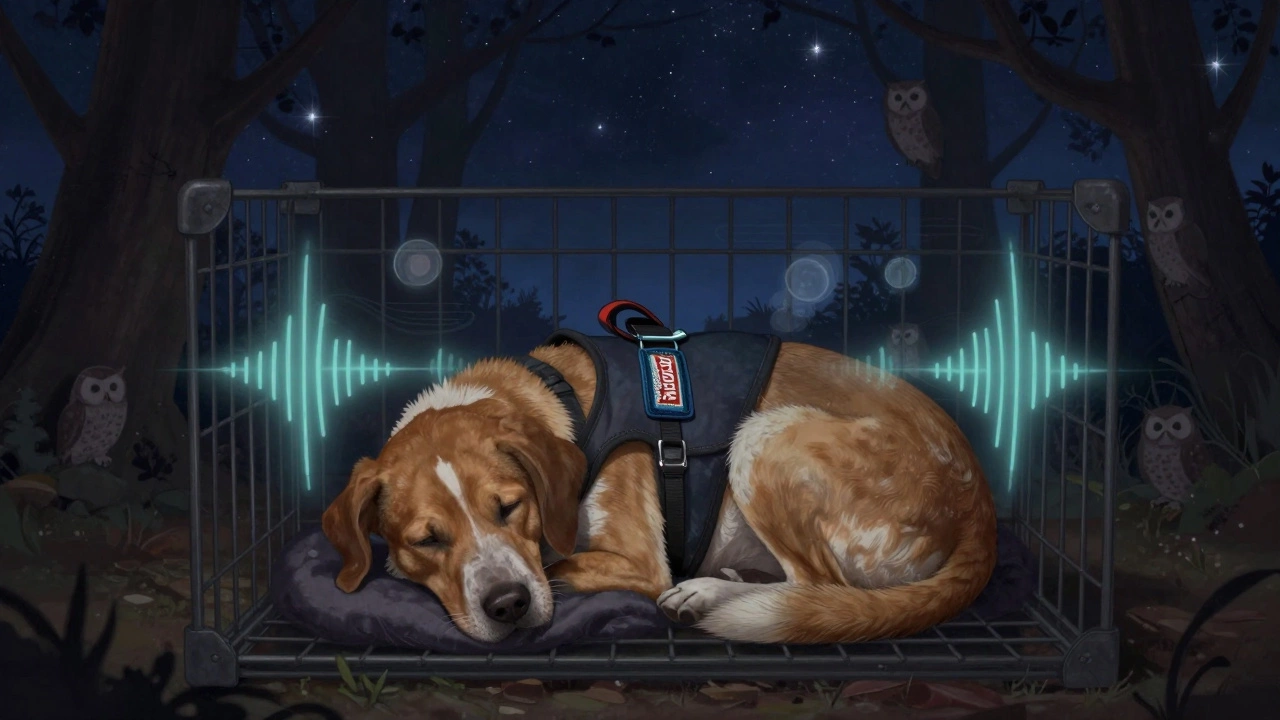
- A crate or designated space-even if he’s not crate-trained, a small, enclosed area with his blanket gives him a safe zone. Dogs feel safer when they’re not exposed on all sides.
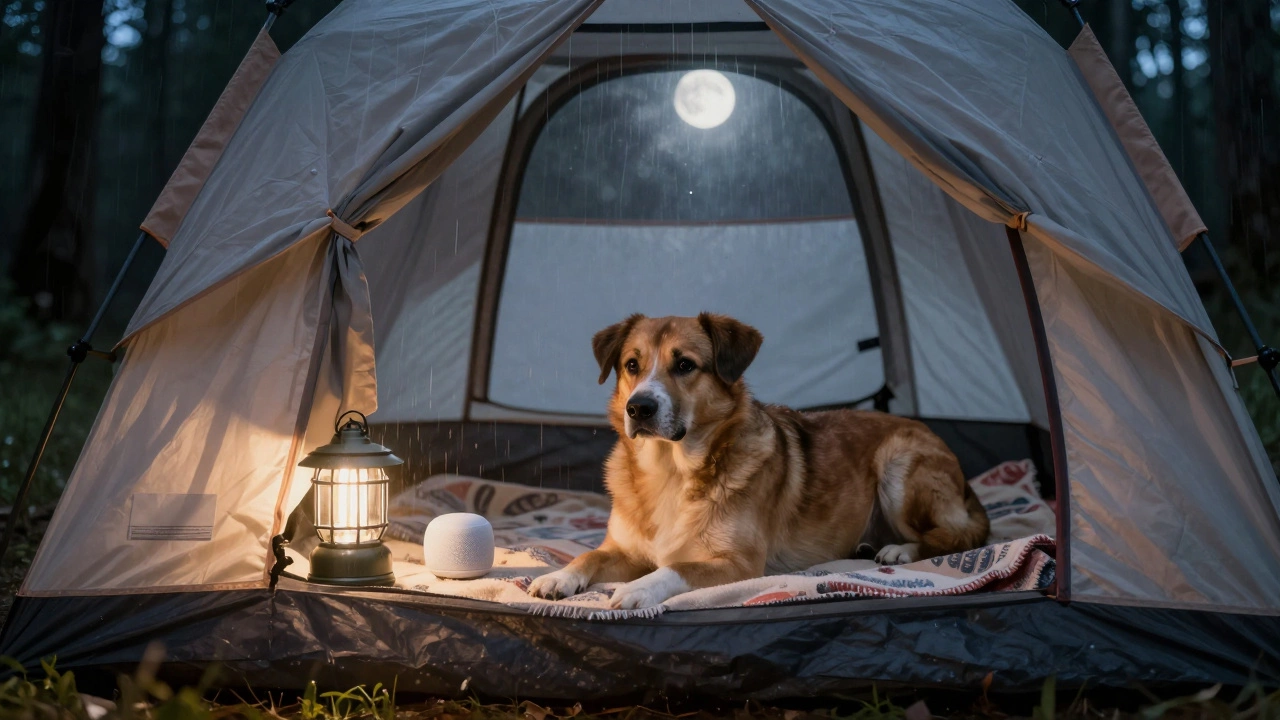
- A white noise app or small speaker-play gentle rain or low-volume nature sounds to mask sudden noises.
- A long leash or tether-if your dog is prone to pacing or barking at passing hikers, a 10-foot lead lets him explore without feeling trapped.
Choose the Right Campsite
Not all dog-friendly campsites are created equal. A site packed with kids, loud music, and dogs running free is a recipe for barking chaos. Look for campsites that are quiet, wooded, and have clear rules about noise. Check reviews on sites like The Dyrt or BringFido. Look for comments like: “Great for quiet dogs,” “No one complains about barking,” or “Very peaceful at night.” Avoid campsites with “dog park” areas if your dog isn’t socialized. A dog that barks at other dogs will only get more worked up. In Ireland, places like Glenveagh National Park (with its designated dog-friendly zones) or the Quiet Camping area at Lough Key Forest Park are known for calm, nature-focused stays. Even in busy areas, the back sites away from the entrance tend to be quieter.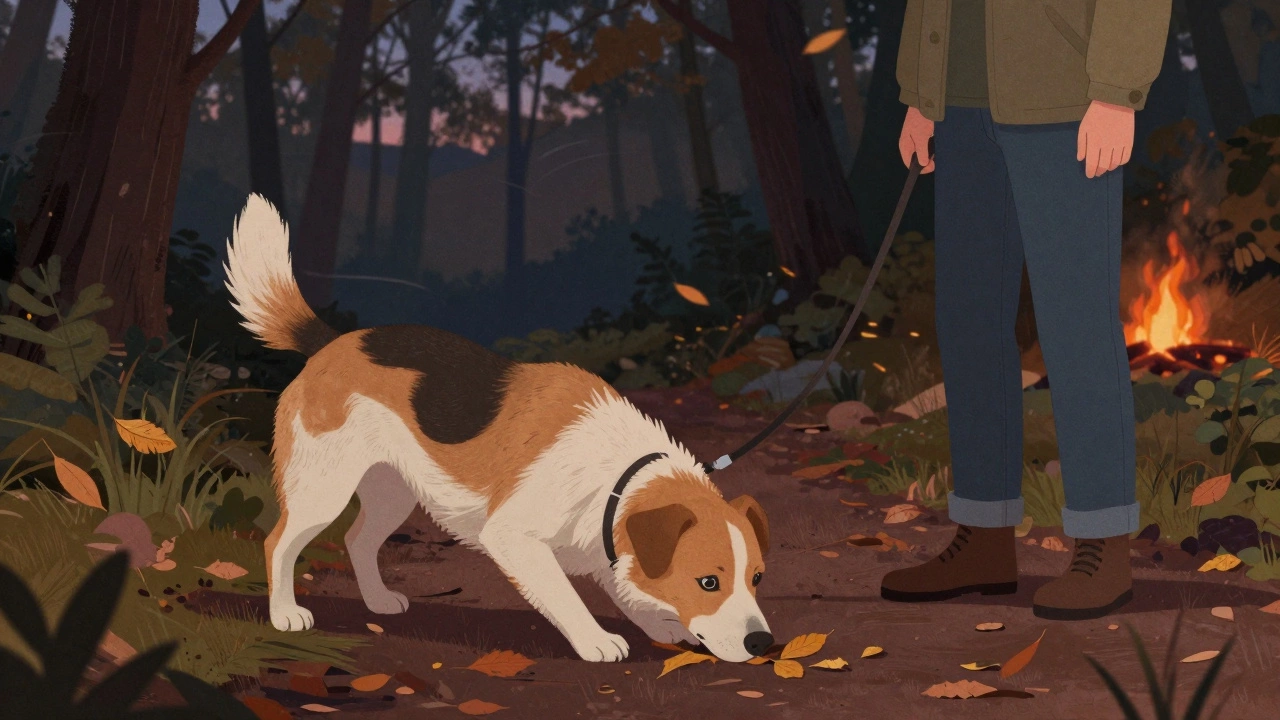
Manage Your Dog’s Energy Before Bed
A tired dog is a quiet dog. But “tired” doesn’t mean “exhausted.” Over-exercising can make dogs anxious. Instead, focus on mental stimulation. Before sunset, take your dog on a 30-minute walk where he can sniff, explore, and track scents. Let him follow trails. Let him stop and investigate every bush. That’s not just exercise-it’s mental work. Dogs burn more energy sniffing than running. After the walk, play a quiet game: hide a treat under a log or inside a puzzle toy. Let him work for it. That kind of focused activity calms their nervous system better than a 2-hour run.What to Do When He Barks at Night
If your dog starts barking after dark, don’t yell. Don’t pull him inside. Don’t ignore him completely. First, stay calm. Your energy affects his. If you’re tense, he’ll think something’s wrong. Go outside with him. Stand quietly for a few seconds. Look around. Point at the source-maybe it’s a branch moving. Say, “It’s okay.” Then turn and walk back to your tent. Don’t reward the barking with attention. But don’t punish it either. If he barks again, wait 30 seconds. Then go out again. Repeat. Most dogs learn within two nights that barking doesn’t get them what they want-and that you’re not scared.Use Calming Tools-Safely
There are products that help, but not all are created equal.- Adaptil diffusers-these release dog-appeasing pheromones. Plug one into a battery-powered outlet near your dog’s sleeping area. Studies show they reduce anxiety in 70% of cases.
- Pressure wraps-like the ThunderShirt. They apply gentle, constant pressure, which calms the nervous system. Many owners report results within minutes.
- Calming supplements-only use vet-approved ones like L-theanine or melatonin. Never give human sleep aids. A 2024 veterinary survey found that 1 in 5 dogs had adverse reactions to unregulated supplements.