UK Campsite Cost Estimator
Calculate Your Camping Budget
Estimate costs for your UK camping trip based on location, season, site type, and duration.
Enter your details to see the estimated cost range.
Most people think camping in the UK is just pitching a tent and calling it a day. But if you’ve never done it before, or you’ve tried and got turned away, fined, or stuck in the rain with no toilet, you know it’s not that simple. The UK doesn’t have open public land for camping like some countries. It’s a patchwork of rules, private landowners, national parks, and strict local laws. Get it right, and you’ll sleep under stars with a coffee in hand. Get it wrong, and you could be asked to leave-or worse, fined.
Where Can You Actually Camp in the UK?
You can’t just camp anywhere. England, Wales, Scotland, and Northern Ireland all have different rules. In England and Wales, camping on private land without permission is trespassing. That means no random fields, forests, or beaches unless the owner says yes. Most people use official campsites. These are run by private companies, charities like the Camping and Caravanning Club, or local councils. They have toilets, showers, waste disposal, and sometimes even shops and playgrounds.
Scotland is different. Thanks to the Land Reform (Scotland) Act 2003, you can camp wild in most rural areas as long as you follow the Scottish Outdoor Access Code. That means staying small groups, leaving no trace, avoiding farmland and buildings, and not staying more than a few nights in one spot. This is why the Highlands are packed with tenters in summer-you’re legally allowed to be there.
Wales has limited wild camping rights. You can camp on some national park land if you’re far from roads and buildings, but it’s not guaranteed. In England, wild camping is almost always illegal unless you have landowner permission. Dartmoor is the big exception: you can camp on the moor as long as you’re over 100m from roads and not in a designated conservation area.
How to Book a Campsite in the UK
Most campsites in the UK take bookings. You can’t just show up and expect a spot, especially in summer or near popular spots like Lake District, Snowdonia, or the South Coast. Sites fill up weeks ahead. Use trusted platforms like Pitchup.com, CAMPSITE, or the official websites of the Camping and Caravanning Club or The Caravan Club. These let you filter by facilities: electric hookups, dog-friendly, showers, Wi-Fi, laundry, and accessibility.
Prices vary. A basic tent pitch without electric might cost £15-£25 a night in shoulder season. In peak summer (July-August), it’s £30-£50. Luxury sites with hot tubs and glamping pods can hit £80-£120. Motorhome spots usually cost more-expect £25-£60 depending on hookups and location.
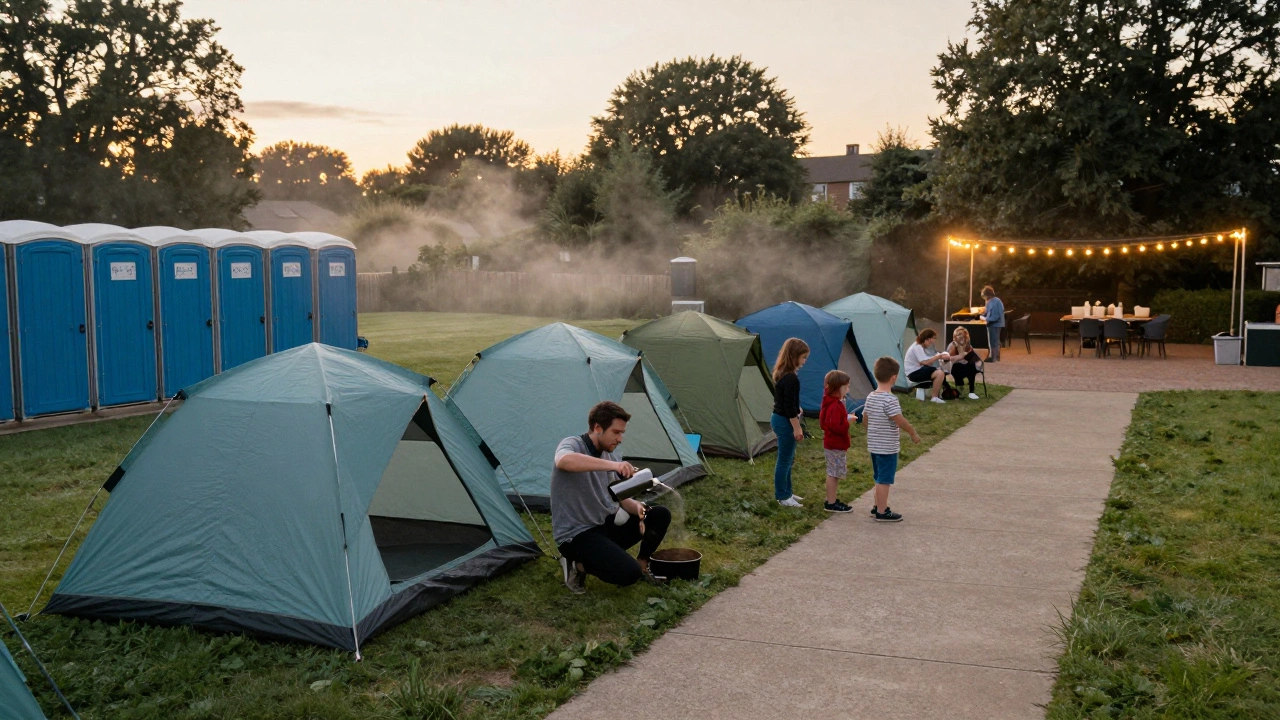
Always check the cancellation policy. Many sites charge up to 50% if you cancel within 7 days. Some don’t refund at all. Book early, read the fine print, and know what’s included. Not all sites have showers. Some only have portable toilets. Some are quiet after 10 PM. Others let you play music until midnight.
What to Expect at a UK Campsite
Don’t assume every site is like a resort. Many are simple, functional, and quiet. You’ll usually get a marked pitch-often with a concrete slab or gravel base. Some have electric hookups (10A or 16A), water taps nearby, and shared toilet blocks. Showers are often coin-operated or timed (5-7 minutes). You’ll need to bring your own toilet paper, cleaning supplies, and trash bags.
Most sites have a reception or office where you check in. They’ll give you a site map and rules sheet. Rules are strict: no open fires unless in a designated fire pit, no loud music after 10 PM, no glass bottles near pools or play areas, and dogs must be leashed. Some sites ban barbecues on grass. Others require you to use provided fire pits only.
Quiet hours are taken seriously. If you’re camping with kids, don’t expect them to run around at 11 PM. Neighbors complain. Staff enforce rules. One loud group can ruin the vibe for everyone.
Wild Camping: Is It Really Allowed?
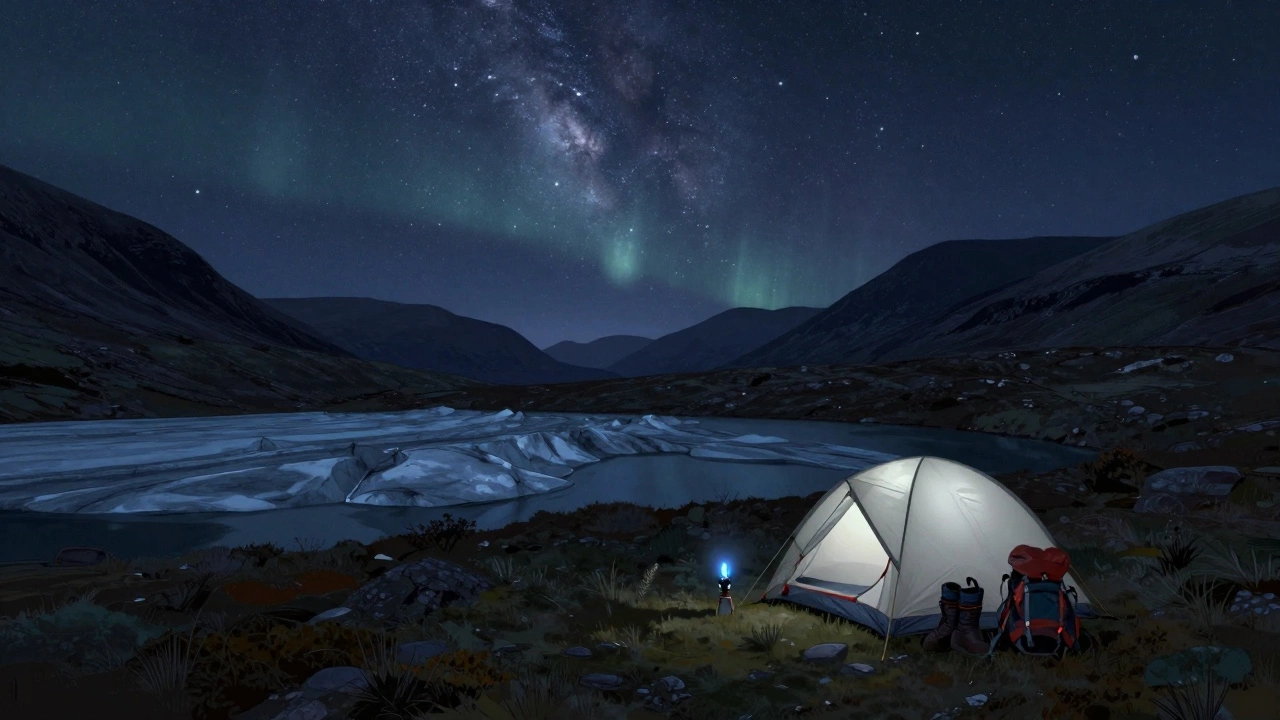
Wild camping means setting up camp away from official sites-on moorland, beside a lake, in a forest. In Scotland, it’s legal and common. In Dartmoor, it’s tolerated if done responsibly. Elsewhere? It’s risky.
People do it in the Lake District, Peak District, and Snowdonia anyway. But landowners and rangers can ask you to leave. In 2024, the Lake District National Park Authority fined three campers £200 each for setting up tents near a popular waterfall without permission. They had left no trace, but still broke the law.
If you want to try wild camping, follow these rules: camp alone or in small groups (max 3 tents), leave no trace (pack out all trash, use a portable toilet if possible), avoid livestock areas, don’t camp near houses or roads, and move on after one or two nights. Use apps like Park4Night or ukwildcamping.co.uk to find where others have camped legally.
What Gear Do You Actually Need?
You don’t need fancy gear. But you do need the basics: a weatherproof tent, sleeping bag rated for 5°C or lower, sleeping mat, headlamp, stove, cooking pots, and food. The UK weather changes fast. Even in June, rain and wind are common. A good waterproof outer layer and warm layers are non-negotiable.
Many campers bring a tarp or groundsheet under their tent. It protects against moisture and sharp stones. A foldable chair, collapsible table, and a small cooler for drinks make life easier. Don’t forget batteries, power banks, and a first-aid kit.
For motorhomes and campervans, you need a water tank, waste disposal point, and sometimes a sewage hook-up. Most campsites have designated areas for this. Emptying stations are free at most sites, but some charge £2-£5.

Common Mistakes and How to Avoid Them
Here’s what goes wrong for first-timers:
- Showing up without a booking in summer-no spot, no refund.
- Bringing a gas stove and trying to use it inside a tent-fire hazard, banned at most sites.
- Leaving food out-bears aren’t the problem. Rats and seagulls are. Always store food in sealed containers or your vehicle.
- Not checking the site’s pet policy-many sites charge extra or ban dogs entirely.
- Assuming Wi-Fi is reliable-most sites have spotty or no signal. Download maps and info offline.
- Forgetting to bring cash-some sites still don’t take cards for extras like showers or firewood.
One pro tip: arrive before 4 PM. That’s when sites assign the best pitches-flat, sheltered, near facilities. Late arrivals get the muddy corner by the toilet block.
Is Camping in the UK Worth It?
Yes-if you plan ahead. The UK has some of the most beautiful landscapes in Europe: the Scottish Highlands, the Brecon Beacons, the Northumberland coast, the Lake District. You can wake up to mist over a mountain, hear birds at dawn, and fall asleep to the sound of rain on your tent. It’s cheap, flexible, and connects you to nature in a way hotels never can.
It’s not about luxury. It’s about being outside, moving at your own pace, and sleeping under real skies. The rules exist to protect the land and keep the experience peaceful for everyone. Follow them, and you’ll keep getting invited back.
Can you wild camp anywhere in the UK?
No. Wild camping is only legal in Scotland and parts of Dartmoor. In England and Wales, you need landowner permission. Camping on public land like national parks without permission is trespassing and can lead to fines or being asked to leave.
How much does camping cost in the UK?
Basic tent pitches cost £15-£25 per night in shoulder season and £30-£50 in summer. Luxury sites or motorhome spots with electric hookups can be £50-£120. Some campsites offer discounts for longer stays or club members.
Do you need to book a campsite in advance?
Always. Especially between May and September. Popular sites like Lake District or Cornwall fill up months ahead. Even midweek spots can be full. Booking ahead saves stress and guarantees a good pitch.
Are dogs allowed on UK campsites?
Many are, but not all. Always check the site’s pet policy before booking. Some charge extra (£3-£8 per night), some restrict dogs to certain areas, and others ban them entirely. Always keep your dog on a leash and clean up after them.
What’s the best time to camp in the UK?
Late May to early September offers the best weather. June and July are busiest. April and October are quieter, with cooler nights but fewer crowds and lower prices. Winter camping is possible with proper gear but not recommended for beginners.
Can you use a gas stove on a UK campsite?
Yes, but only outside and in designated cooking areas. Never use a gas stove inside a tent or near flammable materials. Most sites have communal cooking areas or fire pits. Some ban open flames entirely-always check the rules.
Is there Wi-Fi at UK campsites?
Some offer free Wi-Fi, but it’s often slow or limited to the reception area. Don’t rely on it. Many sites have no signal at all. Download maps, weather apps, and entertainment before you arrive.
What to Do Next
Start by picking a region you want to explore. Look at Pitchup.com and filter for campsites with your must-haves: showers, dog-friendly, electric hookups. Book at least 6 weeks ahead for summer. Pack light, but pack smart-rain gear and warm layers matter more than extra snacks. And when you’re out there, remember: you’re a guest on someone else’s land. Leave it better than you found it.