Beach Camping Readiness Checker
Before you pitch your tent on the sand, use this checklist to ensure you are legally compliant, environmentally responsible, and physically prepared for the coastal environment.
Pre-Camp Assessment
1. Legal & Location
2. Essential Gear
3. Safety & Environment
Your Readiness Score
Fill out the checklist on the left to generate your personalized beach camping assessment.
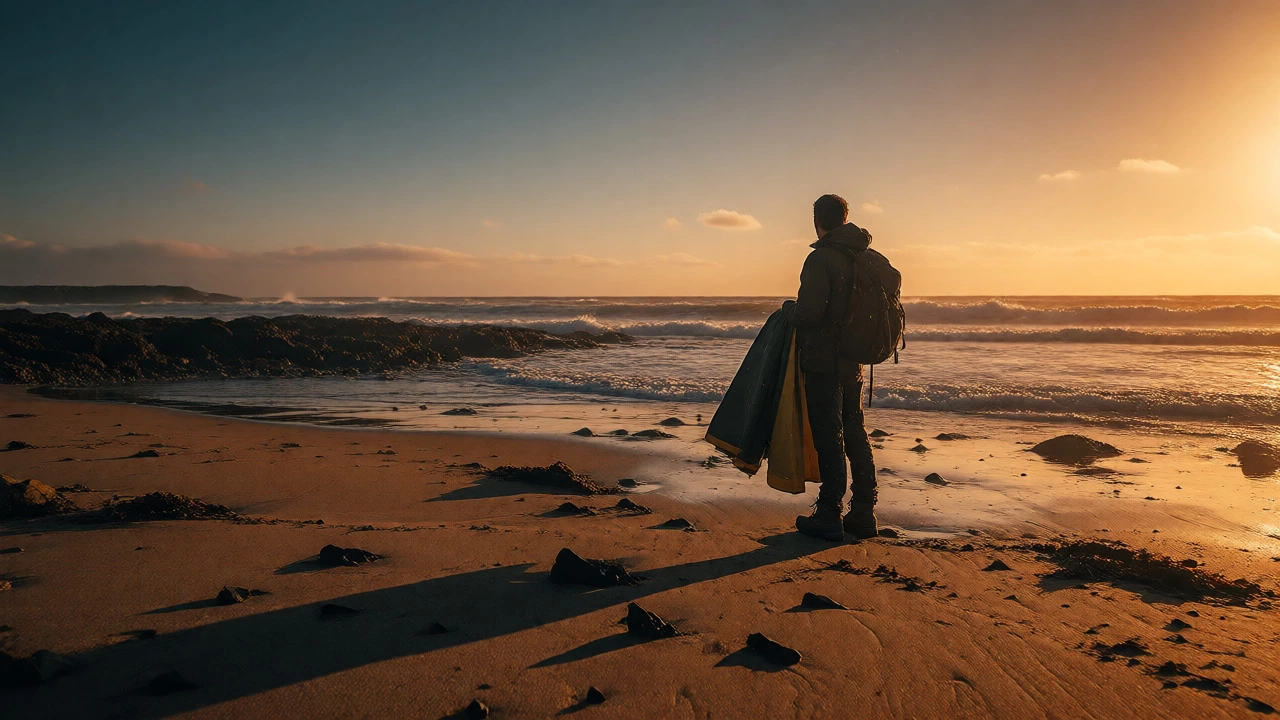
You’re standing at the edge of the water, watching the sun dip below the horizon. The waves are crashing gently, and the sand is warm under your boots. You have a tent in your pack. It feels like the perfect spot for a night under the stars. But before you start hammering pegs into the sand, there’s a crucial question you need to answer: Can I put my tent on the beach?
The short answer is: it depends. And that "depends" is doing a lot of heavy lifting. In some places, it’s perfectly legal and encouraged. In others, you might get fined or asked to leave by a ranger who isn’t happy about seeing canvas on their pristine coastline. As someone who has spent years exploring the rugged coastlines around Dublin and beyond, I’ve learned that knowing the rules is just as important as having the right gear.
Understanding the Legal Landscape
Camping on beaches falls under a complex web of local ordinances, national park regulations, and private land ownership. There is no single global rule. If you are in Ireland, for instance, wild camping laws are stricter than in many other parts of Europe. While you can often pitch a tent in remote areas, specific beaches may be designated as "no camping zones" to protect dune systems or wildlife.
In the United States, the situation varies wildly between states and even counties. Some public beaches allow overnight stays with a permit, while others strictly prohibit any form of lodging after sunset. Always check with the local Parks and Recreation department or the specific beach management authority before you go. Assuming you can camp because you saw footprints from the previous night is a risky game.
Why Rules Exist: Environmental Impact
You might wonder why authorities are so picky about where you sleep. It’s not just bureaucracy; it’s ecology. Beaches are dynamic ecosystems. Sand dunes, which often sit just behind the shoreline, are fragile habitats held together by marram grass and other native plants. These plants stabilize the sand and prevent erosion.
When you pitch a tent, you trample vegetation. When you walk back and forth to the water, you compact the soil. Over time, this leads to dune instability. If the dunes collapse, the beach loses its natural barrier against storm surges. Furthermore, human waste and litter pose significant threats to marine life. Sea turtles, shorebirds, and nesting seabirds can be disturbed by lights and noise. Leaving food scraps behind attracts scavengers like raccoons or seagulls, which can disrupt the natural food chain.
Essential Gear for Beach Camping
If you’ve checked the rules and found a spot where camping is allowed, you still need to prepare differently than you would for a forest campsite. The environment here is harsher on your equipment. Salt air corrodes zippers and poles faster than you think. Wind is constant and unpredictable. Sand gets everywhere.
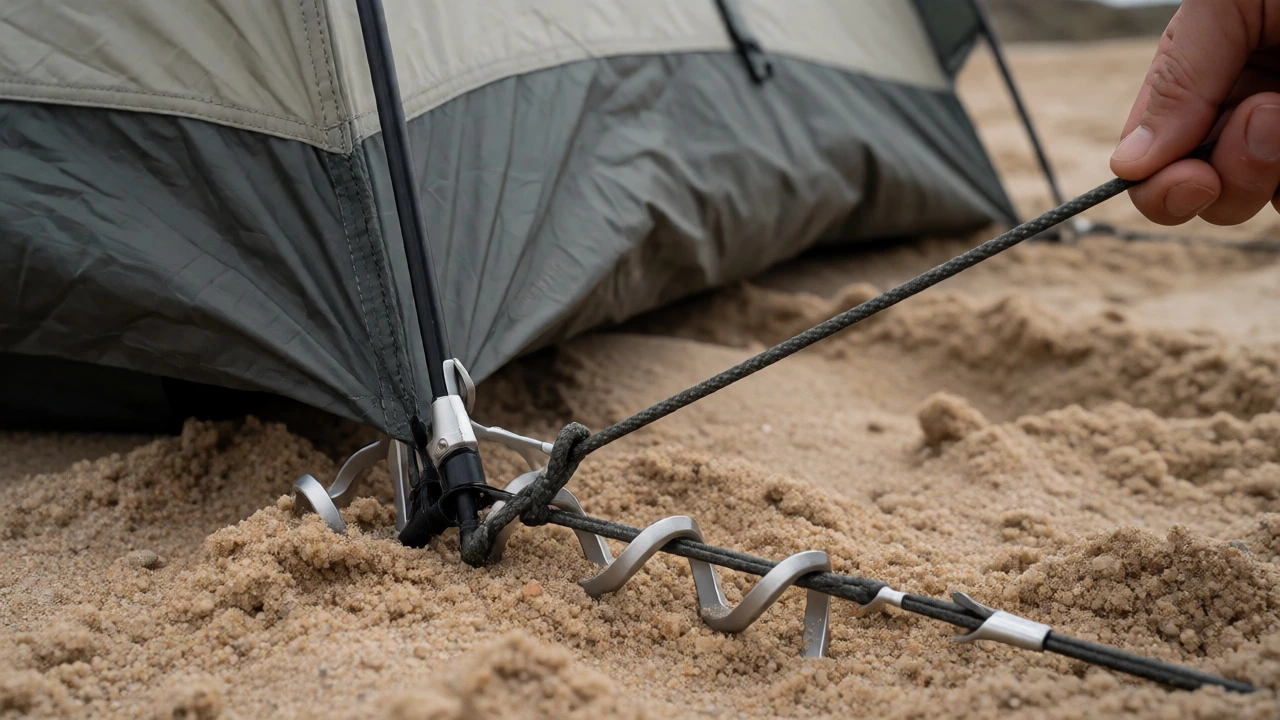
- Sand Pegs: Standard metal or plastic tent pegs will pull out instantly in loose sand. You need wide, spiral-shaped sand stakes or large flat plates designed specifically for soft ground.
- Tent Type: A freestanding dome tent is usually best. Avoid tunnel tents unless they are extremely robust, as side winds can twist them. Ensure your rainfly covers the entire structure, including the vestibule, to keep blowing sand out.
- Footwear: Bring sturdy sandals or water shoes. Walking barefoot on hot sand during the day or cold, wet sand at night is uncomfortable and potentially dangerous if there are hidden shells or rocks.
- Rope Lines: Use guy lines extensively. Tie them off to buried anchors (like filled water bottles) rather than relying solely on pegs.
Dealing with Tides and Weather
The biggest physical danger on a beach is the tide. It’s easy to misjudge how high the water will come in, especially if you arrive at low tide. A tent pitched too close to the waterline can end up flooded in the middle of the night. Always consult a tide chart for your location before setting up.
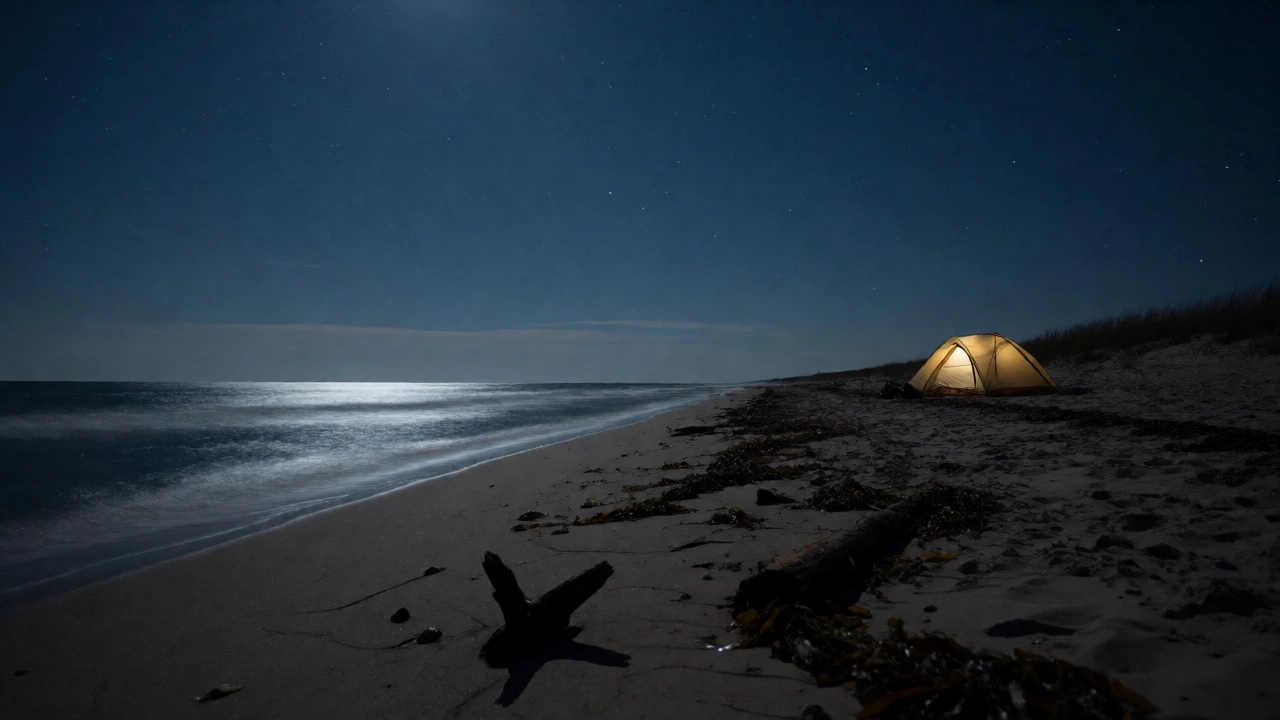
Aim to pitch your tent well above the high tide line. Look for signs like seaweed accumulation or driftwood piles-these mark the highest point the water regularly reaches. Add a safety margin of at least 10-15 meters (30-50 feet) if possible. Weather on the coast changes rapidly. Fog can roll in unexpectedly, dropping visibility to zero. Rain combined with wind can turn a pleasant evening into a miserable one. Check the forecast multiple times before you head out.
Leave No Trace Principles on the Coast
When you camp in nature, you are a guest. On beaches, this principle is critical. The "Pack it in, Pack it out" rule is non-negotiable. Do not bury trash in the sand; animals dig it up, and tides wash it into the ocean. Microplastics from packaging break down but never disappear.
Bathrooms are another major concern. Most beaches do not have toilets. You must carry out all solid waste using portable toilet kits (WAG bags). Urinating directly on the sand is generally acceptable if done away from swimming areas, but always check local guidelines. Never use soap or shampoo in the sea; these chemicals harm marine organisms. Rinse yourself with bottled water or biodegradable soap used far from the water source.
Comparison: Designated vs. Wild Beach Camping
To help you decide what kind of experience you want, let’s look at the differences between official beach campsites and wild spots.
| Feature | Designated Campsite | Wild Beach Camping |
|---|---|---|
| Legality | Guaranteed and permitted | Varies; requires research |
| Facilities | Toilets, showers, fire pits | None or basic pit toilets |
| Cost | $10-$50 per night | Free or small permit fee |
| Privacy | Low; neighbors nearby | High; solitude possible |
| Effort | Low; amenities provided | High; self-sufficient |
Frequently Asked Questions
Is it illegal to sleep on the beach?
Not necessarily. Many public beaches allow sleeping if you are camping legally. However, some municipalities ban overnight stays entirely to prevent homelessness issues or partying. Always check local signage or contact the beach authority.
Do I need a permit for beach camping?
In many national parks and protected coastal areas, yes. Permits help manage visitor numbers and fund maintenance. Even if a permit isn't required, registering your presence with rangers is a good safety practice.
How do I secure my tent in sand?
Use specialized sand pegs or deadman anchors. Burying a filled water bottle or rock tied to a guy line deep in the sand provides excellent stability against strong coastal winds.
Can I build a fire on the beach?
Rules vary significantly. Some beaches allow fires only in provided concrete rings. Others ban open flames completely due to wildfire risk or carbon monoxide buildup in tents. Never assume wood is available; bring your own fuel.
What is the best time of year for beach camping?
Shoulder seasons (late spring or early autumn) often offer fewer crowds and milder temperatures. Summer weekends can be noisy and crowded. Winter offers solitude but requires gear capable of handling cold, damp conditions.
Final Thoughts and Next Steps
Camping on the beach is a unique experience that connects you directly with the rhythm of the tides and the vastness of the sky. But it demands respect. Respect for the law, respect for the environment, and respect for your own safety. Before you pack your bag, spend ten minutes online checking the specific rules for your chosen stretch of coastline. That small effort ensures your trip remains a memorable adventure rather than a costly mistake.
If you are new to this, consider starting at a designated Beach Campsite. They offer a safe introduction to the environment, providing facilities and guidance while still letting you wake up to the sound of waves. Once you feel confident managing your waste, securing your shelter, and navigating the tides, you can venture further into wilder stretches of coast.