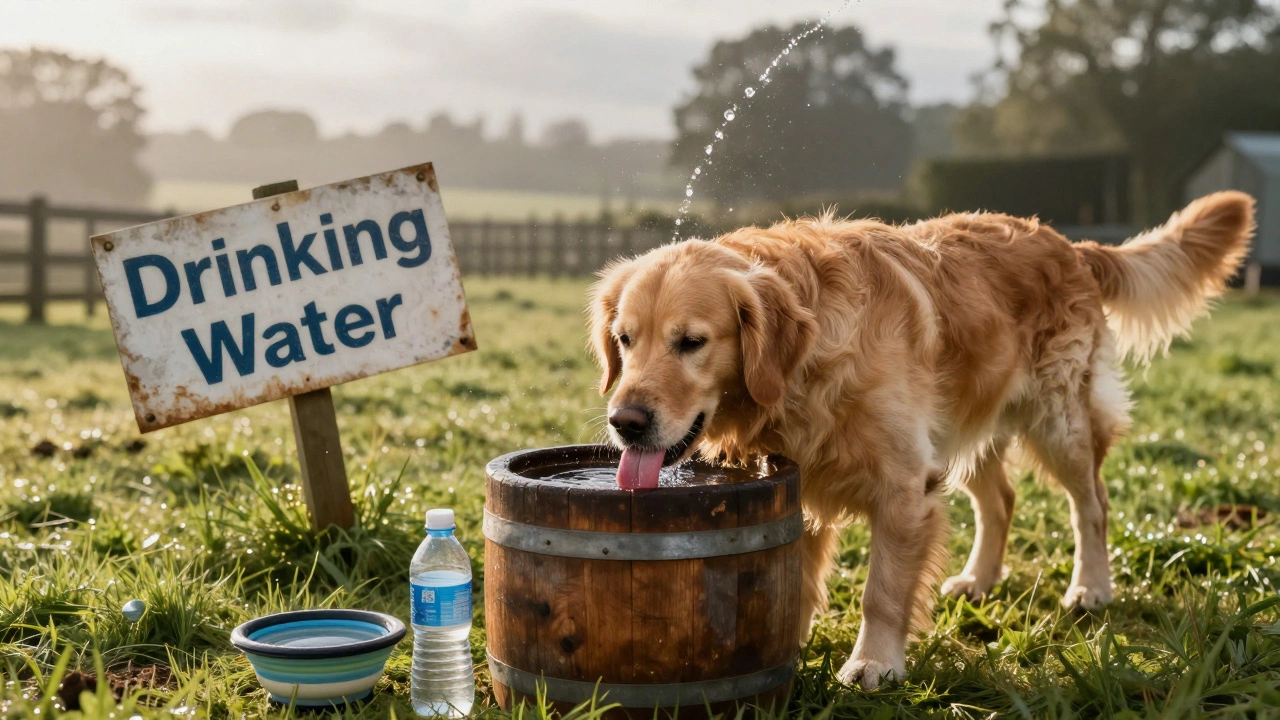
Campsite Water Safety Checker
Is Your Campsite Water Safe for Your Dog?
Determine if campsite water is safe for your dog based on the water source, treatment method, and your dog's health status. Never guess—your dog's health could be at risk.
When you’re packing up for a weekend at the campsite with your dog, you think about leashes, food, poop bags, and maybe a favorite toy. But one question that often gets overlooked is: can dogs drink campsite water? The answer isn’t as simple as yes or no. It depends on where you’re camping, what’s in the water, and how your dog’s body reacts. And skipping this check could mean a trip to the vet instead of a hike through the woods.
Not All Campsite Water Is Created Equal
Many campsites in the UK have running water taps, communal sinks, or even filtered water stations. Sounds safe, right? Not always. Some sites draw water from shallow wells, mountain streams, or rain collection systems. These sources might look clean, but they can carry bacteria like Giardia or Leptospira-both common in outdoor water and both dangerous to dogs.Giardia causes severe diarrhea, vomiting, and weight loss. Leptospira, spread through animal urine, can lead to kidney and liver failure. A 2023 study from the UK’s Small Animal Veterinary Association found that 18% of dogs hospitalized for acute gastrointestinal illness had been exposed to untreated outdoor water during camping trips. Most of those owners thought the water was "just fine" because it was flowing.
What Happens When Dogs Drink from Natural Sources?
Think about a stream near your pitch. It might look crystal clear, but upstream, a deer might have urinated. A fox might have dug near the bank. Rain runoff from nearby fields could carry pesticides or fertilizers. Even if it’s not visible, microscopic contaminants are there.Dogs don’t have the same stomach acid strength as wolves. While wild canines evolved to handle dirty water, domestic dogs have been bred for gentler digestive systems. Their tolerance for bacteria is lower. A healthy adult dog might shrug off a sip of stream water. A puppy, senior dog, or one with a weak immune system? That one sip could trigger 48 hours of misery.
How to Tell if Campsite Water Is Safe
Don’t guess. Ask. Most reputable campsites in the UK now list their water source on their website or at the reception. Look for signs like:- "Filtered and tested monthly"
- "Mains water supply"
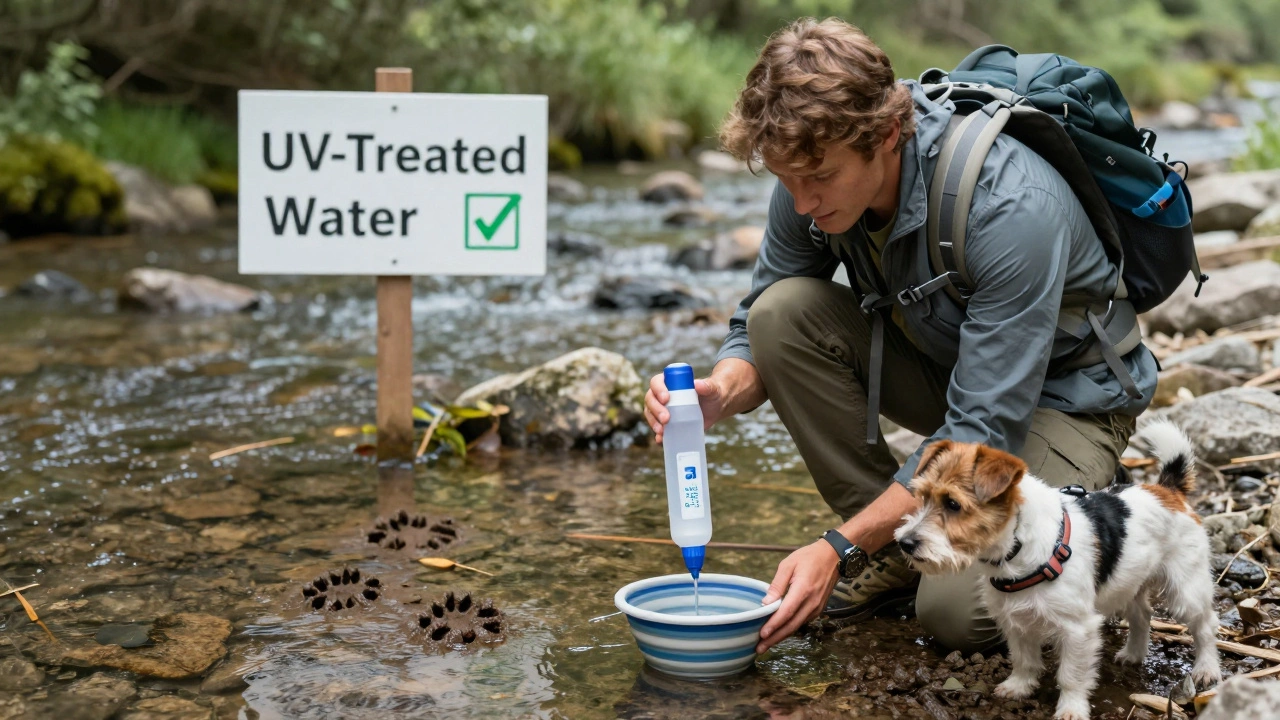
- "UV-treated water"
If you see none of these, assume it’s not safe. Even if the site says "drinking water available," that doesn’t always mean it’s safe for pets. Some signs only apply to humans. Always double-check.
Another trick: Look at the water tap. Is it connected to a large metal pipe? That’s likely mains water. Is it a plastic hose snaking from a pond or a wooden barrel? That’s a red flag. Also, check the flow. A strong, steady stream usually means pressurized mains. A weak, intermittent drip often means gravity-fed rainwater or well water-both riskier.
What Should You Bring Instead?
The safest solution? Bring your own. Pack a collapsible water bowl and enough bottled water for your dog’s daily needs. A 10kg dog drinks about 500ml of water per day. For a three-night trip, that’s 1.5 liters. Easy to carry in a reusable bottle.Some owners use portable water filters designed for hiking. The LifeStraw Pet and Grayl Geopress are two popular options that remove bacteria, protozoa, and even some chemicals. They’re lightweight and work fast. But they’re not foolproof. They won’t remove heavy metals or pesticides. So if you’re camping near farmland or old mining areas, stick to bottled water.
What If Your Dog Already Drank the Water?
If you catch them mid-sip, don’t panic. Most dogs won’t get sick from one accidental drink. But watch closely for the next 24-72 hours. Signs to watch for:- Loss of appetite
- Diarrhea (especially watery or bloody)
- Vomiting
- Lethargy or excessive panting
- Yellowing of the gums or eyes (sign of liver stress)
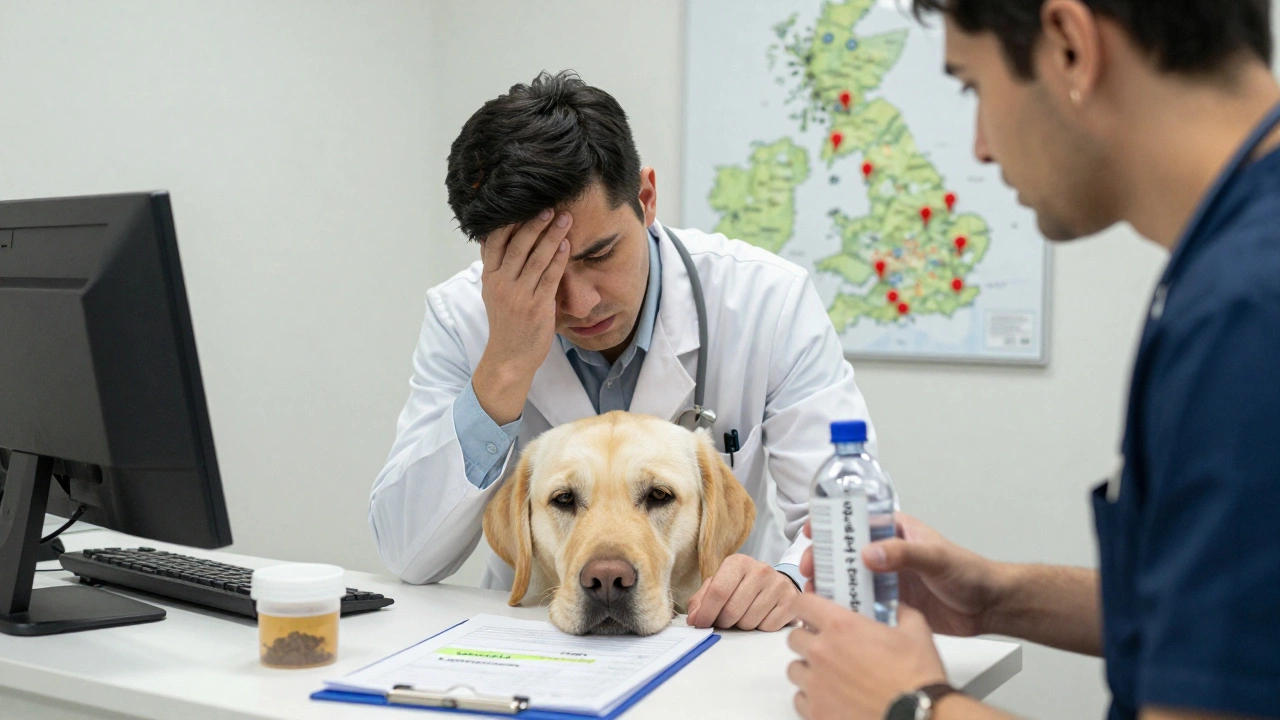
If any of these show up, call your vet. Don’t wait. Leptospirosis can progress fast. Early treatment with antibiotics and fluids makes all the difference. Some vets even recommend a leptospirosis vaccine for dogs who camp often. Ask about it at your next checkup.
What About Water from Lakes or Rivers?
Avoid it. Even if the water looks perfect. Lakes and rivers are open systems. They collect runoff from miles around. A dog drinking from a lake near a busy campsite is also drinking water that passed through someone else’s dog, a cow, or a deer. It’s not worth the risk.Some campsites offer designated dog swimming areas. That’s fine-swimming isn’t the same as drinking. But if your dog loves to splash and then gulp down mouthfuls of lake water, keep a close eye. Bring fresh water nearby so they can rinse their mouth out after.
Special Cases: Puppies, Seniors, and Sick Dogs
If your dog is under a year old, over eight, or recovering from illness, their immune system is fragile. They should never drink anything but bottled or filtered water while camping. Even a small amount of contaminated water can cause serious illness. For these dogs, err on the side of caution. Pack extra water. Bring a small portable water purifier. Or better yet, plan your trip around campsites with confirmed safe water sources.Top 3 Campsites in the UK With Safe Water for Dogs
Based on recent inspections and owner reports:- YHA Lake District (Borrowdale) - Uses mains water, tested weekly, clear signage for pet safety.
- Caravan Club Green Tag Site near Bala, Wales - All water filtered through UV system, dog water bowls provided.
- National Trust Camping at West Wittering - Water supplied by local authority, no open streams on site.
These sites don’t just allow dogs-they plan for them. If you’re unsure about a site, call ahead. Ask: "Is the water safe for dogs to drink?" Most will tell you honestly.
Final Rule: When in Doubt, Bring Your Own
You wouldn’t let your dog drink from a puddle in the backyard. Don’t let them drink from a puddle in the woods either. Camping with your dog should be about joy, not risk. A little extra prep-packing a few liters of water, checking the site’s water policy, or carrying a filter-makes all the difference.Remember: Dogs don’t know what’s safe. You do. So be their filter.
Can dogs drink water from a campsite tap?
It depends. If the tap is labeled as mains water, filtered, or UV-treated, it’s usually safe. But many campsite taps draw from wells, streams, or rain tanks-which can carry harmful bacteria. Always confirm the source before letting your dog drink.
Is bottled water necessary for dogs when camping?
For most dogs, yes. Bottled water is the safest option. It’s free from bacteria, chemicals, and parasites found in natural water sources. Even healthy dogs can get sick from a single sip of contaminated water. Bringing your own eliminates guesswork.
What are the signs my dog got sick from campsite water?
Watch for diarrhea, vomiting, loss of appetite, lethargy, or yellowing of the gums. These can appear within 24 to 72 hours. Leptospirosis and Giardia are common culprits. If symptoms appear, contact your vet immediately-early treatment saves lives.
Can a water filter make campsite water safe for dogs?
Yes, but only if it’s designed for outdoor use and removes bacteria and protozoa. Filters like LifeStraw Pet or Grayl Geopress work well. However, they won’t remove heavy metals or pesticides. For safety, combine a filter with bottled water if you’re camping near farmland or industrial areas.
Should I vaccinate my dog against leptospirosis before camping?
If your dog camps often, especially near water sources or farmland, yes. The leptospirosis vaccine is not always part of routine shots, but it’s highly recommended for outdoor dogs. Talk to your vet-it’s a two-shot series given 2-4 weeks apart, with yearly boosters.