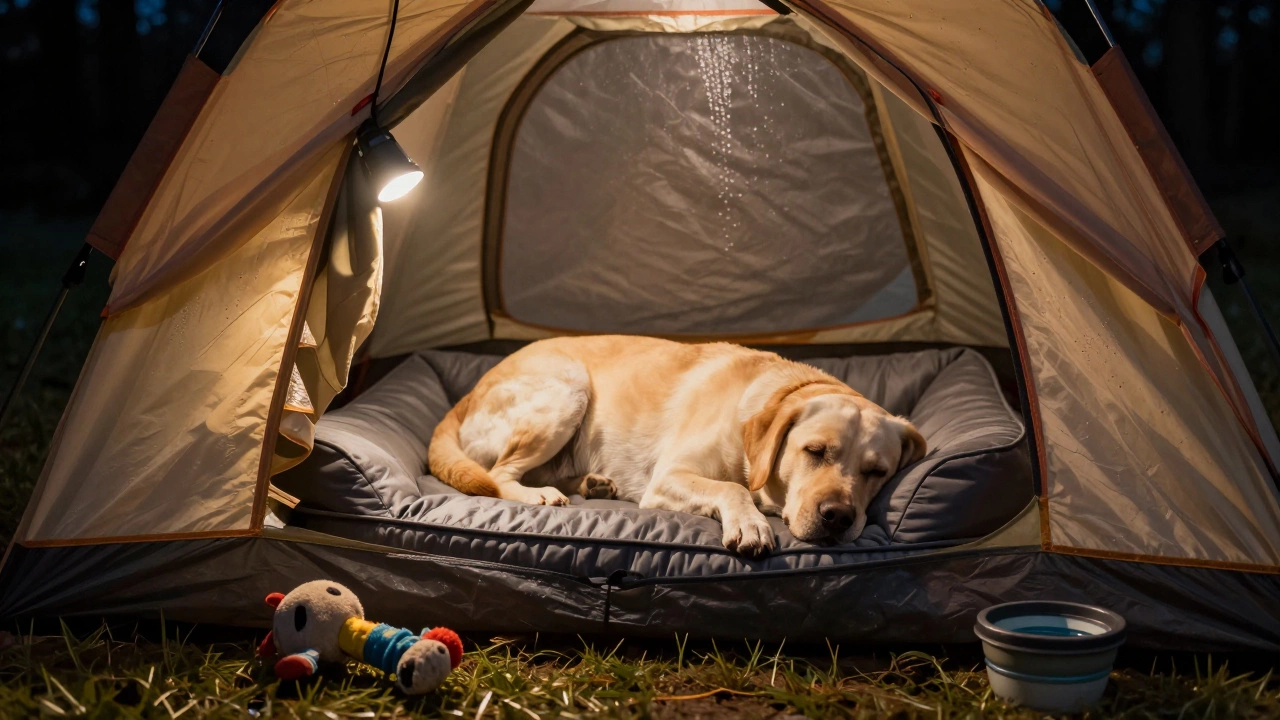
When you’re camping with your dog, one of the biggest questions isn’t where you sleep-it’s where your dog sleeps. It’s not just about comfort. It’s about safety, warmth, and keeping both of you rested so you can enjoy the trail, the fire, and the quiet morning air. Dogs don’t just curl up anywhere. They need space, security, and protection from the elements. Here’s how real campers handle it-no fluff, just what works.
Inside the Tent: The Most Common Choice
Most dog owners sleep with their dogs inside the tent. It’s simple, safe, and keeps your pup close. A medium-sized dog (like a Labrador or Border Collie) needs about 2 to 3 square feet of floor space. That’s not much when you’re sharing a 4-person tent. But here’s the trick: don’t let your dog sleep right in the middle. Place their bed or blanket near the foot of your sleeping pad. That way, you both get room to move, and your dog won’t get kicked when you shift in your sleep.
Use a washable, waterproof pad under their bedding. Condensation builds up inside tents at night, even in dry weather. A damp floor can make your dog shiver, and that’s not just uncomfortable-it’s unhealthy. A foam pad or a specialized dog sleeping mat (like the K9 Ballistics Dog Bed a rugged, waterproof, insulated bed designed for outdoor use) lifts them off the ground and holds in body heat.
Some dogs panic if they’re too far from you. If your dog has separation anxiety, sleeping inside the tent is the best option. Keep their favorite toy nearby. A familiar scent helps them settle faster than any training trick.
Outside the Tent: Only If You’re Sure
Some campers swear by letting their dogs sleep outside. Maybe you have a big tent and don’t want fur everywhere. Or maybe your dog is a snorer. But here’s the reality: outside sleeping is risky unless you’re prepared.
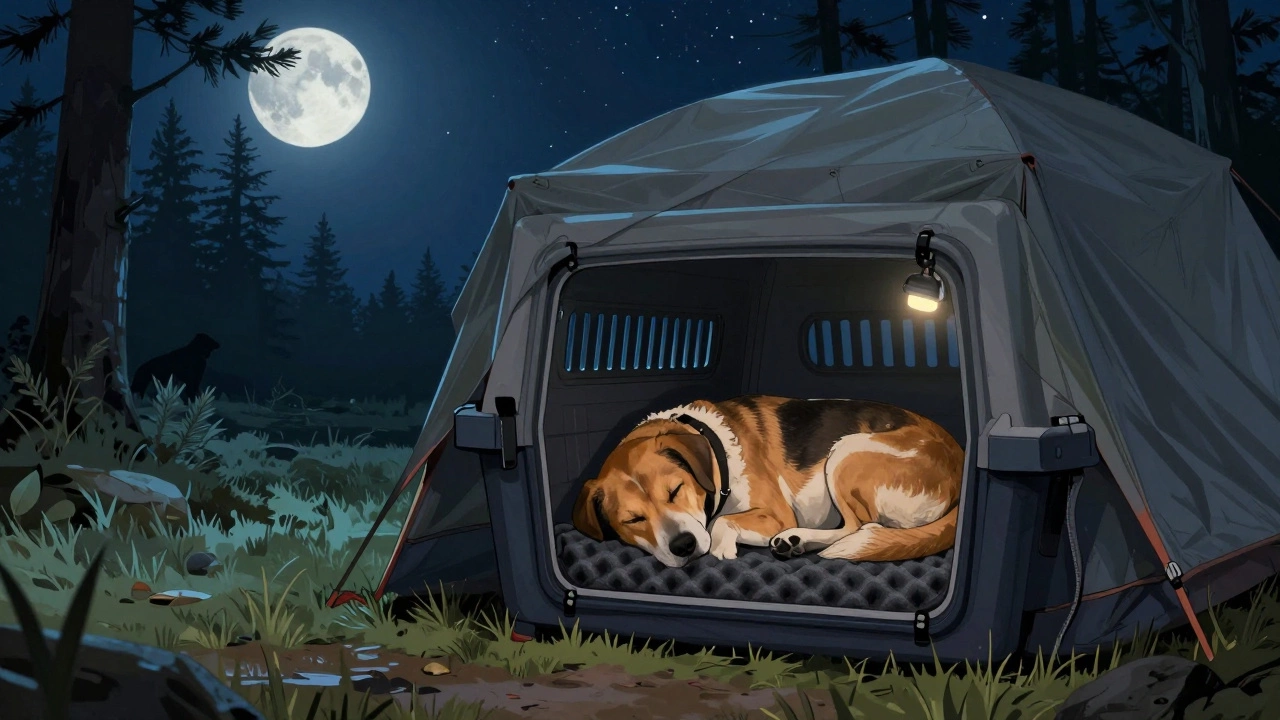
Temperatures drop fast after sunset-even in summer. A dog’s body temperature drops faster than a human’s. A 50-pound dog with short fur (like a Greyhound) can get hypothermic in 30 minutes if it’s 40°F (4°C) and windy. Even breeds with thick coats, like Huskies, need shelter. A tarp over a dog crate or a heavy-duty kennel (like the MidWest Homes for Pets Dog Crate a sturdy, ventilated crate with a removable floor panel for insulation) works better than an open bed.
Never leave your dog unattended outside overnight. Bigger animals aren’t the only threat. Raccoons, foxes, or even curious deer can startle your dog into running off. And if your dog barks, you’ll be woken up by park rangers or annoyed neighbors.
Only consider outside sleeping if: you’ve camped there before, the weather is stable and above 50°F (10°C), your dog is calm and trained, and you have a secure, enclosed area. Otherwise, bring them in.
Special Gear That Makes a Difference
You don’t need fancy gear, but a few smart tools make nights way easier.
- Insulated dog bed: Look for ones with reflective lining or foam cores. The Thermo-Pet Mat a self-warming pad that uses your dog’s body heat to generate warmth is popular among winter campers.
- Weatherproof blanket: A wool or fleece blanket draped over the sleeping area adds extra warmth without bulk.
- Collar light: If your dog moves around at night, a small LED collar light helps you spot them if they wander near the tent entrance.
- Portable water bowl: Hydration matters. A collapsible bowl near their sleeping spot means they can sip without needing you to get up.
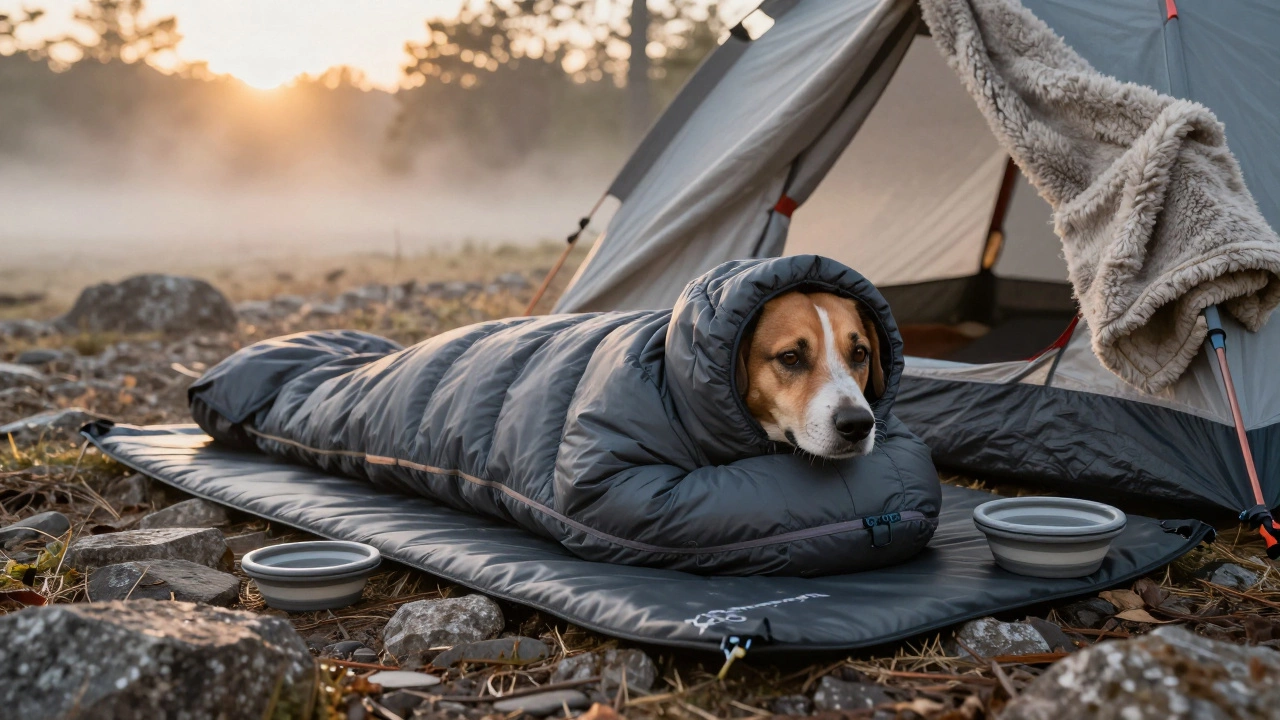
Some people use dog sleeping bags. They’re not as common, but they work well for small breeds or dogs that curl tightly. Brands like Outward Hound Grenadier a zip-up, insulated sleeping bag with a hood for warmth and security have been tested in sub-freezing conditions.
What Not to Do
There are bad habits that seem harmless but cause real problems.
- Don’t use a regular human sleeping bag. Your dog’s claws will tear the fabric. And they’ll overheat. Dog bodies don’t regulate temperature the same way humans do.
- Don’t tie them to a tree. That’s dangerous. They can get tangled, scared, or injured. And it’s illegal at most dog-friendly campsites.
- Don’t assume your dog will be fine in the cold. Even breeds from snowy climates can suffer if they’re wet or exposed to wind.
- Don’t skip the vet check. If your dog has arthritis, heart issues, or is elderly, talk to your vet before camping. Cold and uneven ground can worsen conditions.
How to Train Your Dog for Camping Sleep
Not all dogs adapt instantly. Some panic at new sounds-the crackling fire, the rustling leaves, the distant howl of a coyote. Others get too excited and won’t settle.
Start at home. Set up a small tent in your backyard or living room. Let your dog explore it during the day. Then, spend one night inside with them. Use their usual bed, their favorite blanket, and the same bedtime routine you use at home. Reward calm behavior with quiet praise, not treats. You want them to associate the tent with peace, not snacks.
Practice quiet commands. "Settle," "Stay," and "Bed" are more useful than "Sit" when it’s time to sleep. Use them consistently. If your dog jumps up at night, calmly say "Bed," and guide them back. Repeat until they understand: this is where they rest.
Where to Find Dog-Friendly Campsites
Not every campsite allows dogs-or allows them to sleep inside tents. Some require dogs to stay in crates outside. Others have quiet zones or leash rules after 9 PM.
Look for sites listed on BringFido a trusted platform that verifies dog policies at over 100,000 campsites across the UK and Europe or Dog Friendly UK a community-run directory with user-submitted reviews on pet policies. Filter by "dogs allowed in tent" and check recent reviews. One camper wrote: "We stayed at Glenmore Lodge last July. They let us bring our dog inside. Even gave us a free water bowl. Best spot we’ve found."
Public forests, national parks, and private campgrounds in Scotland and Wales are generally more dog-friendly than those in England’s crowded south. Always call ahead. Policies change. What was allowed last year might not be this season.
Final Thought: It’s Not About Space-It’s About Trust
When you’re camping, your dog doesn’t care if you have a fancy tent or a solar-powered lantern. They care that you’re there. That you’re calm. That you’ve made space for them-not just on the ground, but in your routine.
So whether they sleep curled against your leg or in their own little bed at the tent’s edge, the right setup isn’t about gear. It’s about knowing your dog. Watching them. Listening to them. And making sure, no matter how wild the night gets, they feel safe.
Can my dog sleep in my sleeping bag?
No. Sleeping bags are designed for humans and can easily tear from claws. They also trap too much heat for dogs, leading to overheating. Use a dedicated dog bed or insulated mat instead.
What temperature is too cold for a dog to sleep outside while camping?
Below 45°F (7°C) is risky for most dogs, especially short-haired, small, or senior ones. Even thick-coated breeds need shelter from wind and damp. If it’s below 40°F (4°C), bring your dog inside the tent.
Should I bring my dog’s regular bed from home?
Yes, if it’s portable. Familiar scents help dogs relax. A lightweight, washable version works best. If your dog’s bed is bulky, bring a blanket or towel they’ve slept on before.
Do I need to pack food and water for my dog at night?
Water, yes. Food, no. Don’t feed your dog right before bedtime-it can cause upset stomachs or need for nighttime bathroom breaks. Offer water near their sleeping spot, but avoid meals within 2 hours of sleep.
What if my dog barks all night?
Barking at night usually means fear, boredom, or lack of training. Try a white noise app on your phone to mask outdoor sounds. Practice quiet commands during training. If it persists, consider a dog crate inside the tent with a favorite toy. Never punish barking-it only increases anxiety.
For more tips on camping with pets, check out resources from the RSPCA a UK-based animal welfare organization that provides guidelines for outdoor pet safety or the Canine Care Network a coalition of veterinarians and outdoor enthusiasts focused on safe pet travel.