US Motorhome Trip Cost Estimator
Estimated Total
Quick Price Summary
- Class A (Luxury): $300 - $600+ per day
- Class B (Camper Vans): $150 - $300 per day
- Class C (Standard): $200 - $400 per day
- Average Daily Total: Expect $250 - $450 when including basics.
Breaking Down the Different Types of Motorhomes
Before you look at the price, you need to know what you're actually renting. In the US, motorhomes are categorized by 'Classes', and the price difference between them is massive because the amenities vary so much.
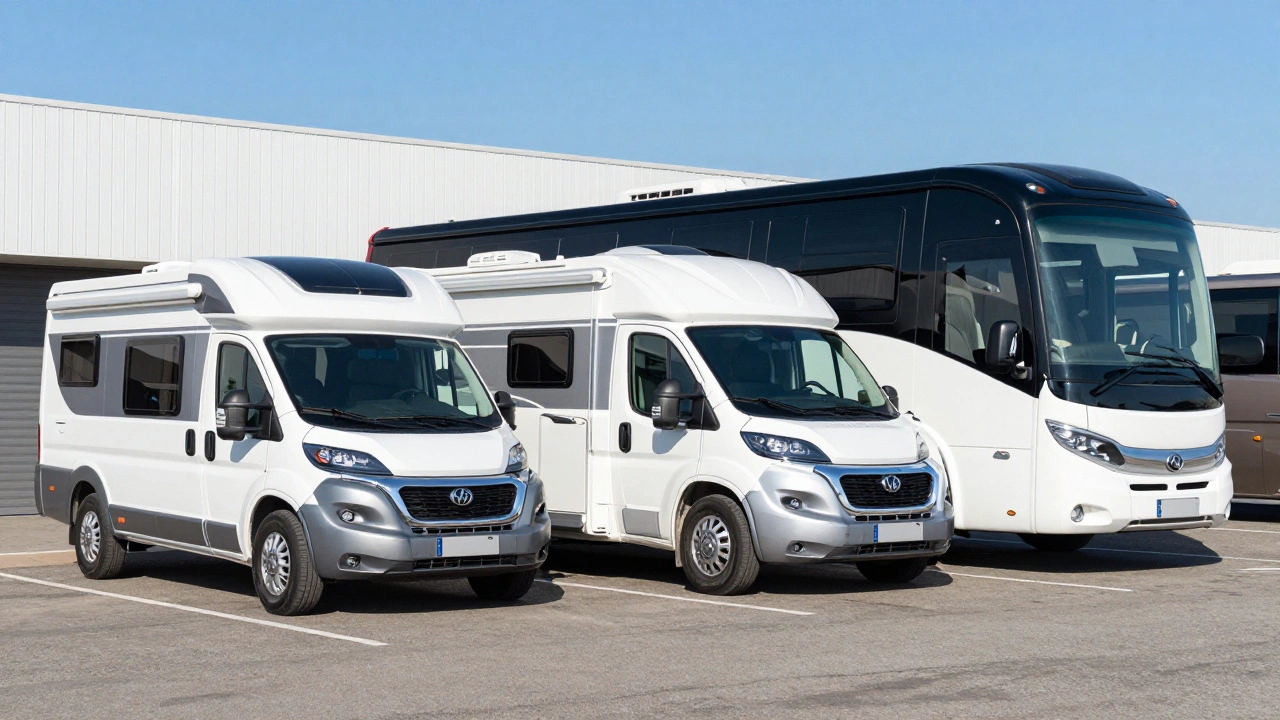
Class A Motorhomes is the largest and most expensive type of RV, typically built on a heavy-duty chassis and resembling a large bus. These are the luxury liners of the road. They often come with slide-outs (sections that expand the living space), full kitchens, and sometimes even a washer and dryer. Because they are costly to maintain and fuel, the rental price is the highest. If you're traveling with a large family or want a living room on wheels, this is your bet, but be prepared for a price jump.
Class B Motorhomes is smaller, van-based campers often referred to as camper vans. These are perfect for couples or solo travelers. They are much easier to drive and park in cities, and they get better gas mileage. While they lack the space of a Class A, they are significantly cheaper to rent. These are currently the most popular choice for the "van life" aesthetic and quick weekend trips to national parks.
Class C Motorhomes is a mid-sized RV built on a truck or van chassis with a distinctive over-cab sleeping area. This is the "Goldilocks" of RVs. It's more spacious than a Class B but more manageable than a Class A. Most families choose this option because it offers a good balance of beds, a bathroom, and a kitchen without costing a fortune.
| RV Class | Average Daily Rate | Best For | Fuel Efficiency |
|---|---|---|---|
| Class A | $300 - $600 | Large Families / Luxury | Very Low (6-10 mpg) |
| Class B | $150 - $300 | Couples / Solo / City Driving | Moderate (15-22 mpg) |
| Class C | $200 - $400 | Small Families / First-timers | Low (10-14 mpg) |
The Hidden Costs You Won't See in the Initial Quote
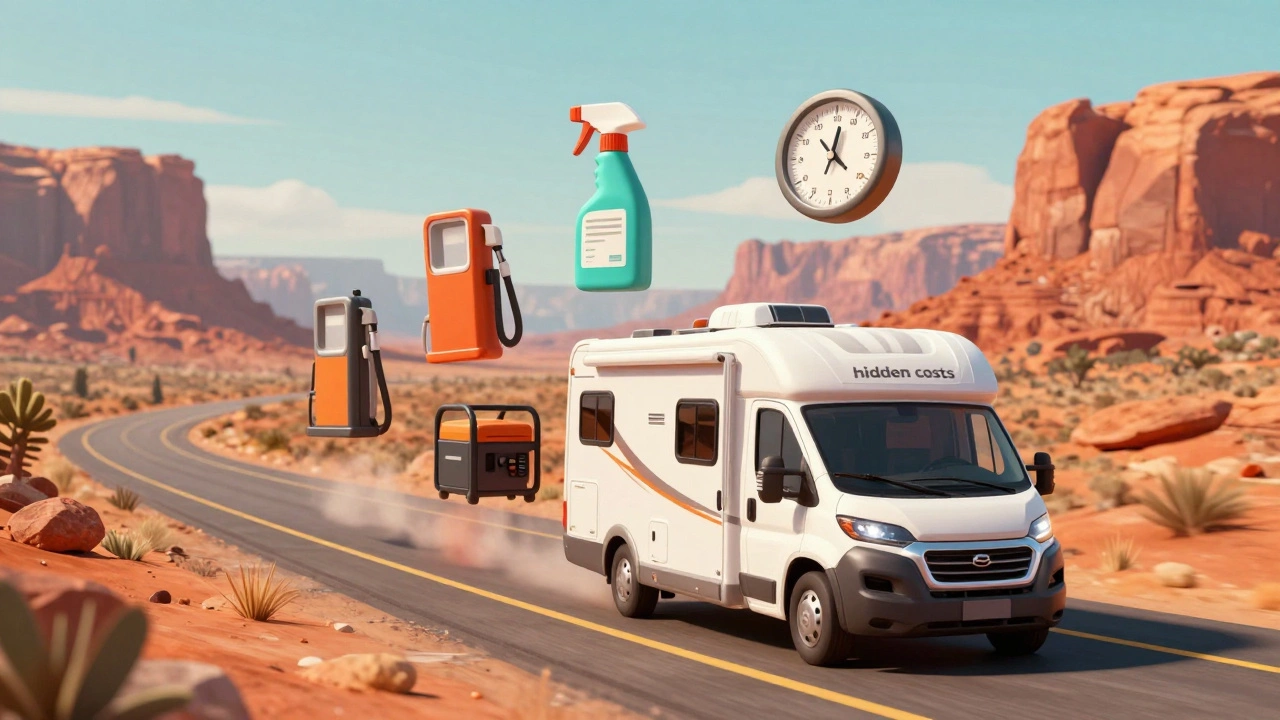
If you only budget for the daily rental rate, you're going to run out of money by the second week. motorhome rental cost US totals are heavily influenced by additive fees that companies often tuck away in the fine print.
First, let's talk about the Mileage Limit. Many rental companies offer a set number of free miles (e.g., 100 miles per day). If you're driving from Los Angeles to the Grand Canyon and back, you'll likely blow through that limit. Extra miles can cost anywhere from $0.35 to $0.75 per mile. Over a 14-day trip, an extra 1,000 miles could add $500 to your bill.
Then there is the generator fee. Most RVs have a Generator (a portable engine that provides electricity when you aren't plugged into a campsite). Some companies charge a flat fee for the generator, while others charge per hour of use. If you're "boondocking" (camping in the wild without hookups), this cost adds up fast.
Cleaning and preparation fees are almost universal. You'll see a "prep fee" or "cleaning fee" ranging from $150 to $300. This covers the company sanitizing the vehicle and stocking it with basic linens. Pro tip: leave the RV spotless when you return it, or they'll hit you with a "deep clean" surcharge that can exceed $200.
How Seasonality Swings the Price
Timing is everything. If you try to rent an RV in July for a trip to Yellowstone, you're paying a premium. Demand spikes during summer break and the fall foliage season in New England. During these peak windows, prices can double. A Class C that costs $200 a day in November might jump to $450 in July.
Conversely, the "shoulder seasons" (spring and autumn) offer the best value. In April or October, you can often find huge discounts or even promotional deals where the company offers a lower daily rate to keep their fleet moving. If your schedule is flexible, avoid the July 4th window at all costs; it's the most expensive time to be on the road in America.
Peer-to-Peer vs. Commercial Agencies
You have two main paths for renting: the big corporate agencies or peer-to-peer marketplaces like Outdoorsy or RVshare. These are essentially the "Airbnb of RVs," where private owners rent out their personal motorhomes.
Commercial agencies offer consistency. You know exactly what the vehicle looks like, and they usually have a larger network of drop-off locations. However, they are often more expensive and have stricter rules regarding where you can drive.
Peer-to-peer rentals are often cheaper because owners are looking for a way to offset the cost of owning the vehicle. You can find unique, customized vans or older, more affordable models. The trade-off is that the quality varies. One person's "luxury van" is another person's "cramped closet." Always check the reviews and the owner's communication style before booking.
Fuel and Energy: The Budget Killer
Gas is the most unpredictable part of your budget. A large Class A motorhome is basically a house made of brick and glass pushing through the wind. You'll likely get 6 to 10 miles per gallon. If you're traveling 2,000 miles and gas is $4.50 per gallon, you're looking at $900 to $1,500 just in fuel.
To keep costs down, plan your route carefully. Using apps to find the cheapest fuel stations along your highway can save you a few hundred dollars. Also, remember that idling the engine to keep the AC running while parked burns fuel faster than you'd think. Using the shore power at a campground is always the cheaper option.
Insurance and Safety Nets
Don't assume your personal car insurance covers a 30-foot motorhome. It almost certainly doesn't. You'll need specialized RV insurance. Rental companies offer basic coverage, but it often has a very high deductible (sometimes $1,000 to $2,500). For an extra $20 to $50 a day, you can upgrade to a lower deductible or full coverage.
Consider the Roadside Assistance package. Changing a tire on a motorhome isn't like changing one on a Honda Civic. It requires heavy-duty jacks and professional equipment. Paying for a premium roadside plan is a small price to pay to avoid being stranded in the middle of the Mojave Desert.
| Expense Item | Estimated Cost | Frequency |
|---|---|---|
| Insurance Upgrade | $20 - $50 | Per Day |
| Cleaning Fee | $150 - $300 | One-time |
| Extra Mileage | $0.35 - $0.75 | Per Mile |
| Campground Site | $40 - $100 | Per Night |
Strategic Tips to Lower Your Bill
If the numbers above look daunting, there are ways to trim the fat. First, look for "one-way rentals." While some companies charge a "drop-off fee," others offer discounts if you're moving a vehicle from a high-supply city (like Las Vegas) to a high-demand city (like Seattle).
Second, consider a Towable RV or travel trailer. If you already own a truck with a tow hitch, renting a trailer is significantly cheaper than renting a motorized motorhome. You save on the vehicle rental and the fuel efficiency of your own truck is usually better than a massive RV engine.
Finally, book early. For a summer trip, booking 6 to 9 months in advance can save you 20% or more. Last-minute deals exist, but they are rare for the most popular and reliable models. You're more likely to find a "deal" on a vehicle that is old or has a quirky layout that nobody else wanted.
Is it cheaper to rent an RV or stay in hotels during a US road trip?
It depends on the group size. For a couple, hotels are often cheaper because RV fuel and rental costs are high. However, for a family of five, an RV is usually much cheaper because it combines transportation and lodging into one cost, and you save significantly on dining out by cooking in the kitchen.
Do I need a special license to rent a motorhome in the US?
In most US states, a standard driver's license is sufficient for renting Class A, B, and C motorhomes, provided they are under a certain weight limit (usually 26,000 lbs). However, always check with the rental agency, as some insurance providers may require a specific endorsement or a clean driving record for larger vehicles.
What is the most affordable month to rent a motorhome?
November through March (excluding the Christmas/New Year's peak) are typically the cheapest months. While it's colder, many RVs are equipped with heaters, and rental companies often slash prices by 30-50% to keep their fleets active during the off-season.
How much should I budget for campsites?
Expect to pay $30 to $60 for basic state park sites and $70 to $120 for luxury RV resorts with full hookups (water, sewer, and electricity). If you choose "boondocking" on free public lands (BLM land), your cost is $0, but you'll have no amenities.
Can I rent a motorhome and drive it across the border to Canada or Mexico?
Some commercial companies allow this, but many forbid it due to insurance complications. You will usually need a special "cross-border permit" and a higher insurance premium. Always verify this in the rental agreement before you book.
What to do next?
If you're still in the dreaming phase, start by mapping out your route on a tool like Google Maps to estimate your total mileage. This will tell you if the "free miles" package is enough or if you need to budget for extra mileage. Once you have your distance, decide on your "comfort level"-do you need a full bathroom and a king bed (Class A), or are you happy with a cozy bed and a small sink (Class B)?
For first-timers, I recommend a short 3-day "test run" within 100 miles of your home before committing to a 30-day cross-country trek. This lets you figure out the quirks of the vehicle, the timing of the brakes, and the logistics of dumping the waste tanks without the stress of being in an unfamiliar state.