Car Sleeping Legality Checker
Check Your Legal Status
Many people wonder if they can legally sleep in their car in the UK. Whether you’re on a road trip, waiting for a ferry, or just trying to save money on accommodation, sleeping in your vehicle sounds simple-until you realize the rules aren’t clear. The truth? It’s not a simple yes or no. The legality depends on where you are, why you’re there, and how you’re doing it.
There’s No National Law Against It
The UK doesn’t have a single law that says you can’t sleep in your car. That’s important. Unlike some countries where vehicle sleeping is outright banned, the UK leaves this up to local authorities, landowners, and police discretion. So while you won’t be arrested just for being in your car at night, you can still be asked to move-or even fined-if you’re in the wrong place.
Think of it like this: sleeping in your car isn’t illegal by default. But where you choose to park can turn it into a problem.
Where You Can Sleep in Your Car
Not all parking spots are created equal. Here’s where you’re generally safe:
- Designated overnight parking areas - Some motorway service stations, like those on the M6 or M1, allow drivers to park overnight for rest. Look for signs that say "Driver Rest Area" or "Overnight Parking". These are your safest bet.
- Public car parks - Many town and city car parks permit overnight stays, especially if they’re not monitored or have no time restrictions. Always check posted rules.
- Permitted lay-bys - Rural lay-bys on A-roads are often used by truckers and travelers. If it’s clearly meant for stopping and there’s no "No Overnight Parking" sign, you’re usually fine.
- Land with permission - If a farmer, pub owner, or private landowner says it’s okay, you’re legal. Many campers use apps like StopsOnTheGo or Park4Night to find these spots.
Some people assume they can sleep anywhere they can legally park. That’s a mistake. Even if you’re parked legally during the day, sleeping in it overnight can change the rules.
Where You Definitely Can’t Sleep in Your Car
These places are off-limits-and you’ll likely get moved on quickly:
- Private property without permission - Driveways, shopping center lots, hospital parking, or business car parks are private land. Even if the gate is open, you’re trespassing if you stay overnight.
- Protected natural areas - National parks like the Lake District or Snowdonia don’t allow wild camping, and that includes sleeping in vehicles. Rangers patrol these areas, and fines can reach £100 or more.
- Residential streets - If you’re parked outside someone’s house for hours, especially in a quiet neighborhood, you’ll attract attention. Police may treat it as anti-social behavior.
- Beaches and coastal areas - Many beaches in England and Wales have bylaws banning overnight stays. Scotland is more lenient under the Land Reform Act, but even there, coastal areas like the Isle of Skye restrict vehicle camping near popular spots.
Scotland Is Different
Scotland has unique rules thanks to the Land Reform (Scotland) Act 2003. It gives the public the right to access most land for recreation, including overnight stays-so long as you act responsibly.
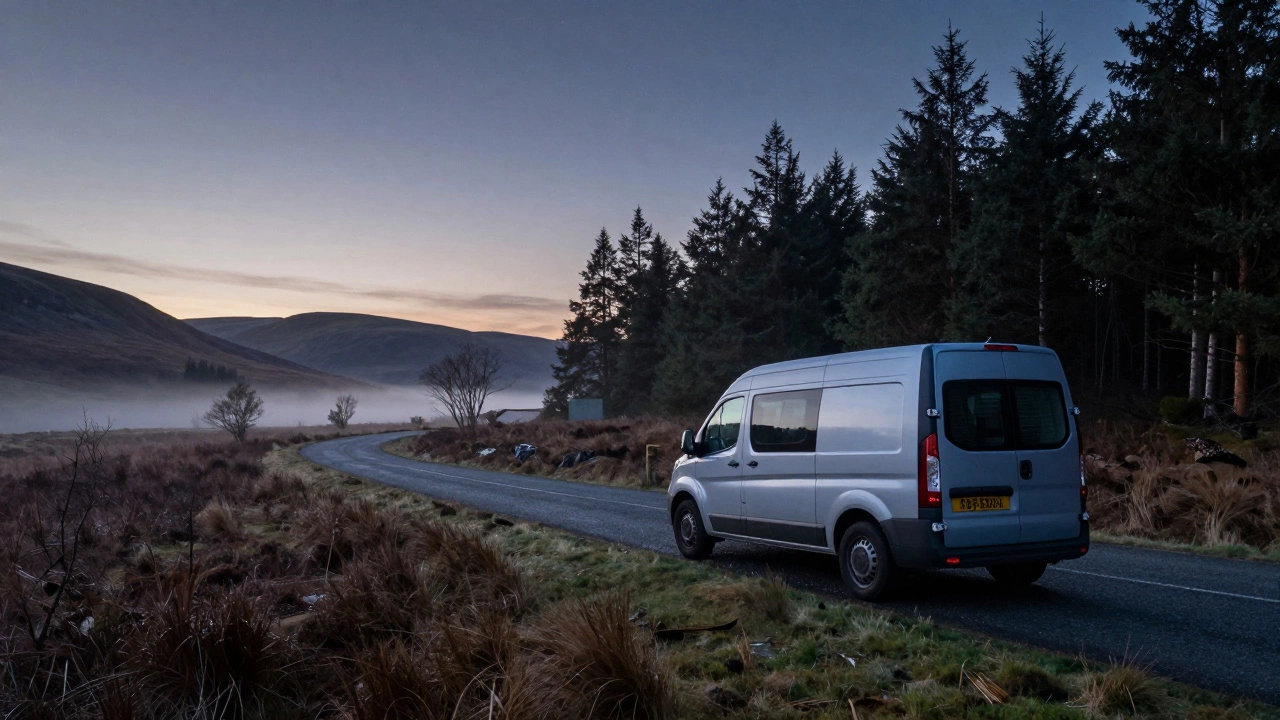
This means you can legally sleep in your car in many rural and remote areas of Scotland: forest roads, quiet lay-bys, and even some scenic pull-offs near Loch Ness or the Cairngorms. But there are still limits:
- You can’t stay in one spot for more than a couple of nights.
- You must leave no trace-no litter, no fires, no flushing toilets onto the ground.
- You can’t block access to private land, gates, or farm tracks.
- Some areas like Loch Lomond & The Trossachs National Park have specific restrictions, especially near popular viewpoints.
Many travelers say Scotland is the only part of the UK where sleeping in your car feels truly legal and accepted. But even there, common sense matters more than the law.
What Happens If You Get Caught?
Most of the time, you’ll get a polite request to move on. Police and landowners usually don’t want to escalate things. But if you’re in a restricted area, being loud, or leaving trash, you could face:
- A warning from police or council officers
- A fixed penalty notice (usually £50-£100) for trespassing or anti-social behavior
- Being asked to leave immediately, with no second chance
- In rare cases, vehicle impoundment if you’re blocking traffic or causing a public nuisance
There’s no record of anyone being jailed for sleeping in their car in the UK. But repeated offenses or disruptive behavior can lead to court action under the Public Order Act 1986.
How to Stay Safe and Legal
If you plan to sleep in your car, follow these simple rules:
- Check local rules - Use apps like Park4Night or iOverlander. They show real-time reports from other travelers on where it’s safe.
- Don’t advertise you’re sleeping - Keep curtains closed, avoid setting up chairs or tables outside. The less you look like a campsite, the less attention you draw.
- Keep it clean - Take all trash with you. Empty your toilet cassette properly. Don’t leave food wrappers or bottles.
- Be quiet - No loud music, no shouting, no late-night parties. Silence is your best defense.
- Don’t stay too long - One night is fine. Two nights might raise eyebrows. Three nights in the same spot? You’re asking for trouble.
- Use rest areas - Motorway service stations are designed for this. They’re lit, safe, and often have toilets and water.
Why People Get Into Trouble
Most legal issues come down to perception. If you park at a popular tourist spot-like the top of a mountain or near a castle-and start cooking, setting up a table, or leaving gear outside, people assume you’re camping. And camping without permission is often illegal.
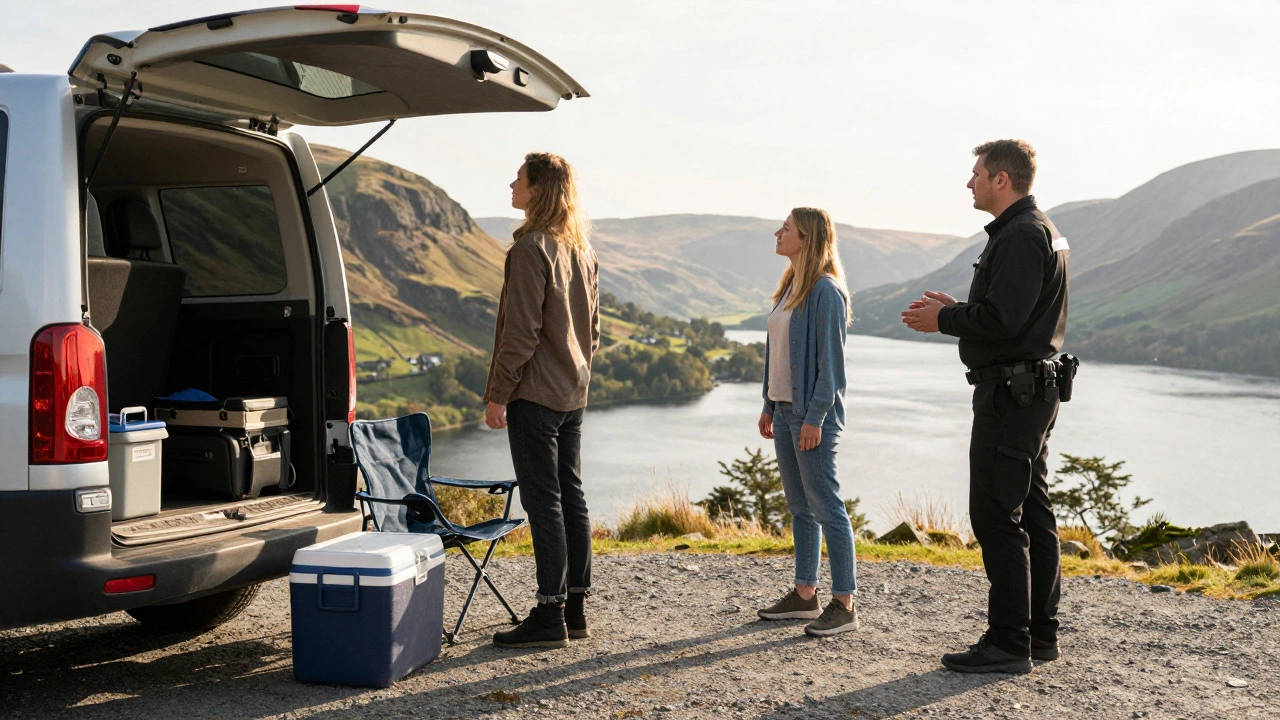
One traveler in the Peak District was asked to leave after spending two nights at a scenic overlook. He thought he was just resting. But he’d left a fold-out chair, a lantern, and a cooler outside. That looked like camping. The local council fined him £75 for unauthorized use of public land.
Another case in Cornwall involved a couple who slept in their van for three nights on a beach. They didn’t cause any damage, but they were told to leave because the beach had a bylaw banning overnight stays. They didn’t know the law existed.
Knowledge matters. Ignorance doesn’t protect you.
What About Motorhomes?
Motorhomes are treated the same as cars under UK law. There’s no special rule that says "motorhomes can sleep anywhere." Even if you’ve got a toilet and kitchen, you still need permission to park overnight on private land or in protected areas.
Some motorhome owners assume their vehicle gives them more rights. It doesn’t. In fact, because motorhomes are larger and more visible, they often attract more attention from police and landowners.
What’s the Future?
There’s growing pressure to create legal overnight parking zones for travelers, especially after the rise in remote work and van life. Some councils in Wales and Scotland are testing pilot zones where drivers can park safely for up to 48 hours.
But for now, the system stays patchy. The UK has no national network of rest stops for travelers like Germany or France. That means responsibility falls on you.
Final Advice
Sleeping in your car in the UK is possible-but only if you’re smart about it. Don’t assume it’s allowed just because no one stops you. Don’t assume it’s illegal just because you heard a rumor. Do your homework. Use trusted apps. Respect the land. Stay quiet and clean.
If you follow the rules, you’ll rarely have a problem. Break them, and even a small town council can make your life difficult.
The goal isn’t to push boundaries-it’s to respect them so you can keep enjoying the freedom of the open road.
Is it legal to sleep in your car at motorway service stations in the UK?
Yes, most motorway service stations in the UK allow overnight parking for drivers. Many have designated "Driver Rest Areas" with lighting, CCTV, and toilet access. These are among the safest and most legal places to sleep in your car. Always check for posted signs-some may restrict stays to 4-6 hours, but overnight rest is generally accepted.
Can you sleep in your car in a national park?
In England and Wales, sleeping in your car within a national park is usually illegal unless you’re in a designated campsite. Rangers actively patrol areas like the Lake District, Snowdonia, and the Peak District. In Scotland, it’s allowed under the Land Reform Act as long as you follow responsible access rules-but even there, popular spots like Glencoe or Fort William have local restrictions. Always check the park’s official website before parking overnight.
Do you need special insurance to sleep in your car?
No, you don’t need special insurance just to sleep in your car. Your standard vehicle insurance covers you for overnight parking. However, if you’re using your vehicle as a residence (e.g., living in it full-time), your insurer may require notification. Some policies exclude claims if the vehicle is used for living purposes. Check your policy wording or call your provider if you plan to sleep in your car regularly.
Can police ask you to leave if you’re sleeping in your car?
Yes. Police don’t need a specific law to ask you to move-they can do so under public order powers or if you’re causing a nuisance, blocking access, or trespassing on private land. Even if you haven’t broken a law, they can still request you leave for "the public interest." Refusing could lead to a formal warning or fine.
Is it legal to sleep in your car if you’re drunk?
No. If you’re in control of a vehicle while over the legal alcohol limit-even if you’re just sleeping-you can be charged with being "in charge" of a vehicle while drunk. This applies even if the engine is off and the keys are not in the ignition. Courts have ruled that simply being in the driver’s seat with intent to drive later can count as being "in charge." Always sleep in the back seat if you’ve been drinking, and never keep the keys in the ignition.