UK Camping Days Calculator
The UK has a 28-day annual limit for temporary camping on your own land without planning permission. This calculator helps you track your camping days across the calendar year.
Your Camping Status
Enter your camping nights to see your status.
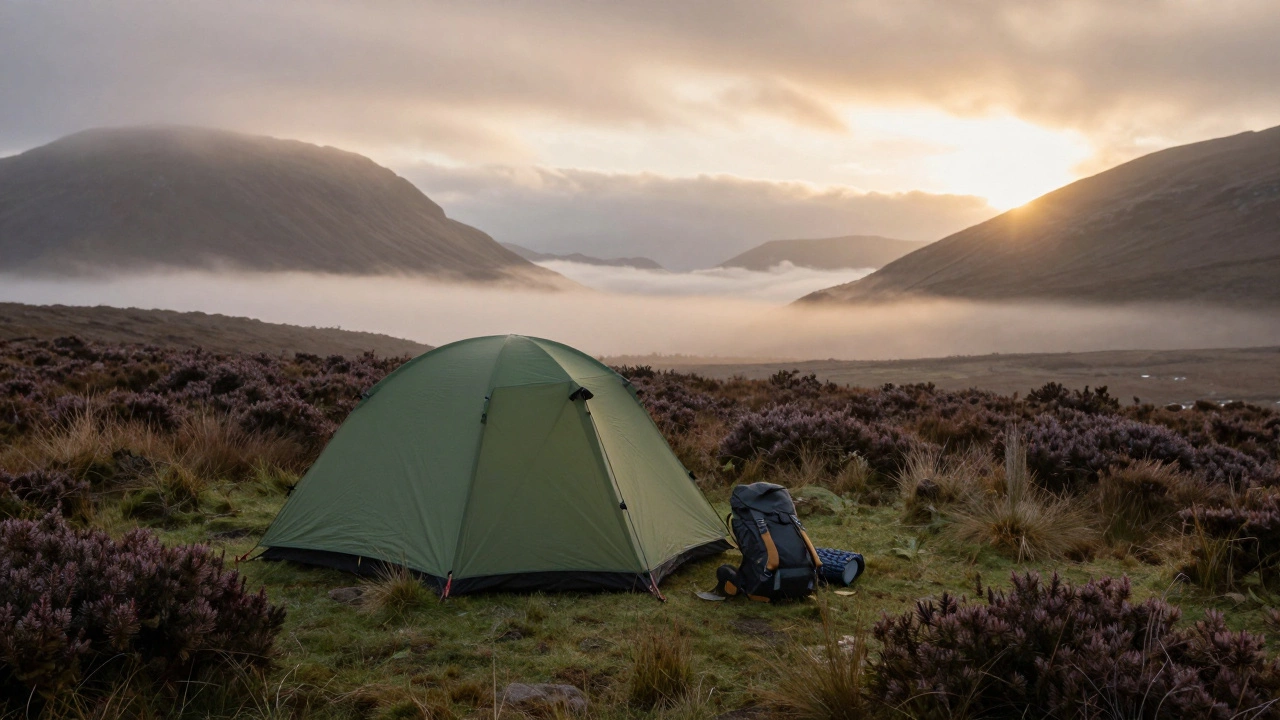
You own a patch of land in the Scottish Highlands, a quiet corner of Wales, or maybe a field tucked behind your cottage in the Lake District. You look out your window and think: Can I just pitch a tent here tonight? It’s your land. No one else is around. Why shouldn’t you be allowed to sleep under the stars?
The short answer? In most of the UK, no - you can’t legally camp on your own land without permission from the local council, even if you own it. And that’s not because of some random rule. It’s because of how land use, planning laws, and environmental protection are woven together.
Ownership Doesn’t Mean Unlimited Use
Just because you bought a piece of land doesn’t mean you can do whatever you want on it. The UK doesn’t recognize absolute private ownership the way some other countries do. Your rights are limited by planning regulations, environmental protections, and local authority control. Even if you’re not disturbing neighbors or polluting rivers, the law still sees camping - especially overnight - as a change of use of the land.
Think of it this way: your land is zoned for agricultural use, or maybe just as a garden. Pitching a tent for a night or two might seem harmless. But if you do it regularly - say, every weekend - the council could argue you’re turning it into a campsite. And that requires planning permission.
What Counts as Camping?
The law doesn’t define "camping" with a single line in a statute. Instead, it’s judged case by case. A single person sleeping in a tent for one night? Usually ignored. But if you start leaving gear out for days, bringing in a caravan, hosting friends, or doing it more than a few times a year? That’s when the council takes notice.
Local authorities look at several things:
- Duration: Is it one night or multiple nights?
- Frequency: How often are you doing it? Once a month? Weekly?
- Scale: Are you using a tent, a hammock, or a motorhome?
- Impact: Are you generating noise, waste, or traffic?
- Intent: Are you using it as a permanent or semi-permanent base?
There’s no official "magic number" of nights you can camp before it becomes illegal. But in practice, if you camp more than 28 days in a year on your own land, you’re likely to trigger a planning enforcement notice.
The 28-Day Rule - What It Really Means
You’ve probably heard about the "28-day rule." It’s one of the most misunderstood parts of UK camping law. Here’s how it actually works:
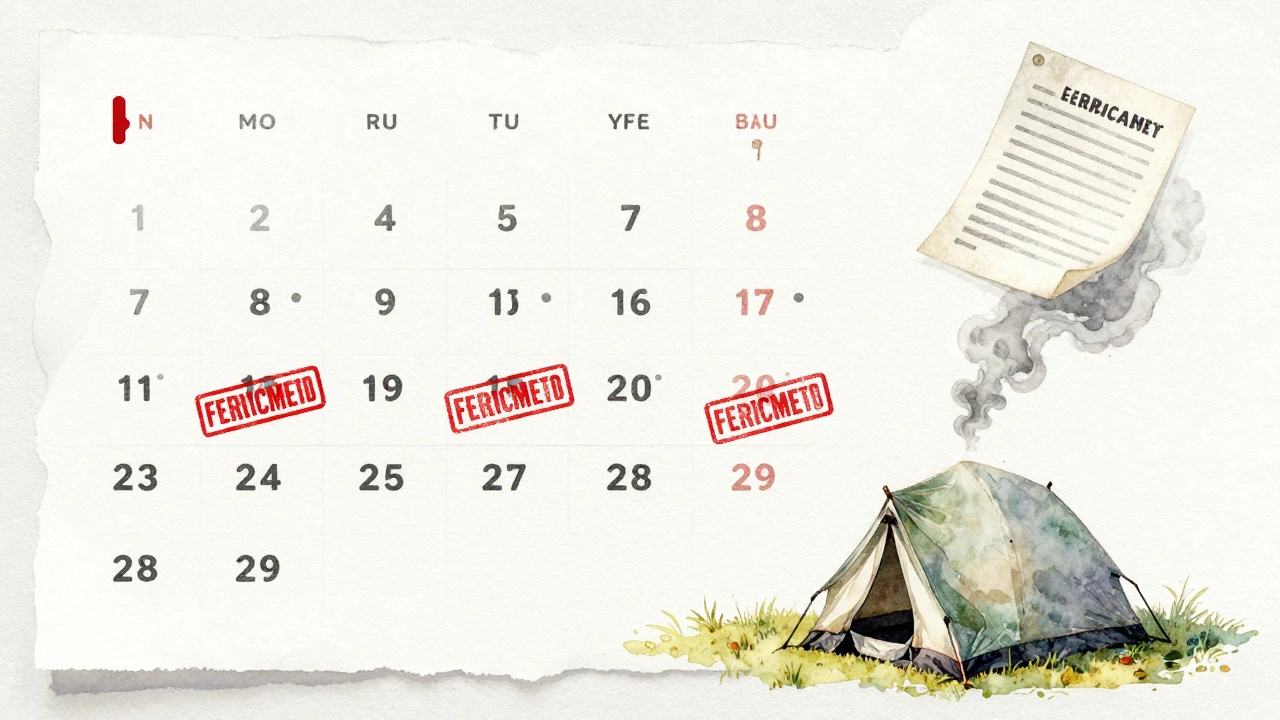
Under the General Permitted Development Order (GPDO), you can use land for temporary camping - including on your own property - for up to 28 days in a calendar year without needing planning permission. That’s not a free pass to camp every weekend. It’s a total limit for the entire year, across all types of temporary use.
That 28 days includes:
- Family visiting and staying overnight
- Friends pitching tents
- Your own camping trips
- Even if you’re not charging anyone
So if you camp for 7 nights in May, your cousin stays for 5 in June, and you host a small group for 10 nights in August, you’ve already used up 22 days. Two more trips and you’re over.
Break that limit? The local council can issue an enforcement notice. You’ll be told to stop. If you ignore it, you could face fines or even be forced to remove structures.
Scotland Is Different - But Not a Free-for-All
Scotland has the Land Reform (Scotland) Act 2003, which gives people the right to access most land for recreation - including wild camping. That sounds like a green light, right?
But here’s the catch: that right applies to unenclosed land. If your land is fenced, cultivated, or near a house, it doesn’t count. And even in the Highlands, you can’t camp right outside your own back door if it’s part of a private estate or close to a dwelling.
Plus, the Scottish Outdoor Access Code is clear: you must camp responsibly. No fires near trees, no littering, no disturbing livestock, and no staying more than two or three nights in the same spot. That’s about respect - not legality.
So if your land is in a populated area or surrounded by other properties, you still need permission. The access rights don’t override your own land’s planning status.

What If You’re Just Doing It Once?
Let’s say you want to sleep under the stars one night after a long hike. You’re not planning to do it again. You pack up everything by morning. No trace left.
In reality, most councils won’t chase you for that. They don’t have the staff to patrol every field. But that doesn’t make it legal. It just means enforcement is rare for one-off, low-impact trips.
Still, if you’re on land with a history of complaints - maybe near a nature reserve, a protected river, or a residential area - even one night can trigger a response. Neighbors might call. Rangers might show up.
Best practice? If you’re unsure, assume you need permission. A quick call to your local council’s planning department costs nothing. They’ll tell you if you’re okay.
What About Caravan or Motorhome Camping?
It’s even stricter. Parking a caravan or motorhome on your own land for more than a few days is almost always considered a change of use - even if it’s just sitting there.
The law treats a caravan as a "structure" if it’s used for habitation. That means you need planning permission to keep it on your land for more than 28 days a year. And if you’re living in it full-time? That’s a whole different legal battle.
There are stories of people who bought land thinking they could live in their van. They didn’t realize they needed full planning permission for residential use. A year later, they got a notice to remove it. The council doesn’t care if you’re "self-sufficient" or "off-grid." If it’s a dwelling, you need permission.
How to Legally Camp on Your Own Land
You want to camp on your land? Here’s how to do it right:
- Check your land’s zoning. Look at your property’s planning history on your local council’s website.
- Apply for a change of use if you want to camp regularly. It costs £200-£500 and takes 8-12 weeks.
- Apply for a temporary event notice if you’re hosting a group for a weekend. That’s cheaper and faster.
- Use the 28-day limit wisely. Spread out your nights. Don’t cluster them.
- Keep it small. One tent. No generators. No toilets. No running water.
- Document everything. Keep receipts, photos, and records of your camping days.
Some landowners get creative. They set up a "wilderness retreat" with a small, removable shelter and offer it as a paid experience. That’s a business - and that requires full planning permission and licensing. But it’s legal if done right.
What Happens If You Get Caught?
If a council officer shows up and tells you to stop, don’t argue. Don’t ignore them. They’re not trying to ruin your fun - they’re enforcing the law.
Here’s what usually happens:
- First contact: A letter or visit asking you to stop.
- Second contact: A formal enforcement notice with a deadline to comply.
- Third step: Fines up to £5,000 for ignoring the notice.
- Last resort: Forced removal of structures, legal action.
Most people who get caught don’t realize they’re breaking the law until it’s too late. The penalties are harsh, but they’re avoidable.
Alternatives to Camping on Your Own Land
If you can’t legally camp on your land, here are better options:
- Book a pitch at a nearby campsite - many offer discounts for long stays.
- Join a camping club like the Camping and Caravanning Club. They have exclusive sites.
- Look for landowners who rent out space for wild camping. Sites like Pitchup.com list private land with permission.
- Apply for a landowner permit through local trusts or conservation groups.
- Use the Scottish access rights legally - camp on open moorland, not your backyard.
There are thousands of legal, low-cost, and even free places to camp across the UK. You don’t need to risk your property to enjoy the outdoors.
Final Reality Check
Yes, you own the land. But you don’t own the right to use it however you want. The UK’s system is built to protect public resources, prevent overuse, and keep rural areas livable for everyone.
Wild camping is a beautiful tradition. But it’s not a loophole. It’s a privilege - and one that comes with responsibility.
If you want to camp on your land, do it legally. Talk to your council. Plan ahead. Respect the rules. The peace of mind you’ll get from knowing you’re not breaking the law is worth more than any night spent in a tent on the edge of a legal gray area.