Camping Power Calculator
Power Capacity Selector
Select your campsite's electrical capacity
Appliance Selection
Select the appliances you plan to use
Power Usage Summary
Current total usage: 0W
Ever pulled into a campsite, plugged in your van or tent, and wondered how the heck electricity actually gets to your phone charger or coffee maker? It’s not magic. It’s not complicated. But if you’ve never done it before, it can feel like you’re wiring a bomb. Let’s cut through the confusion.
What’s Actually Plugged In?
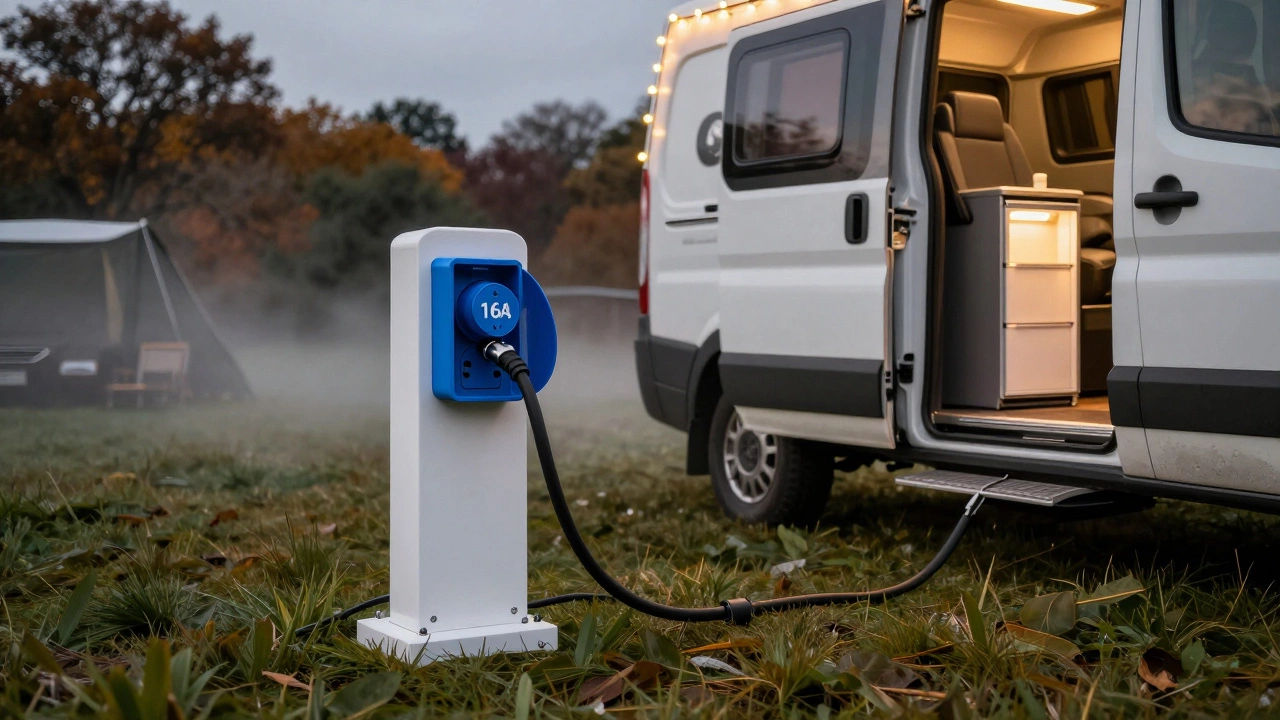
At most campsites in the UK, you’re not connecting to the national grid directly. You’re plugging into a campsite electric hookup - a dedicated, safe outlet designed for temporary use. These are usually mounted on a post, pole, or pedestal near your pitch. They look like thick, weatherproof sockets, often with a cover flap. You’ll see one or two round pins (like a kettle plug) or sometimes a blue 16A socket. That’s your lifeline.
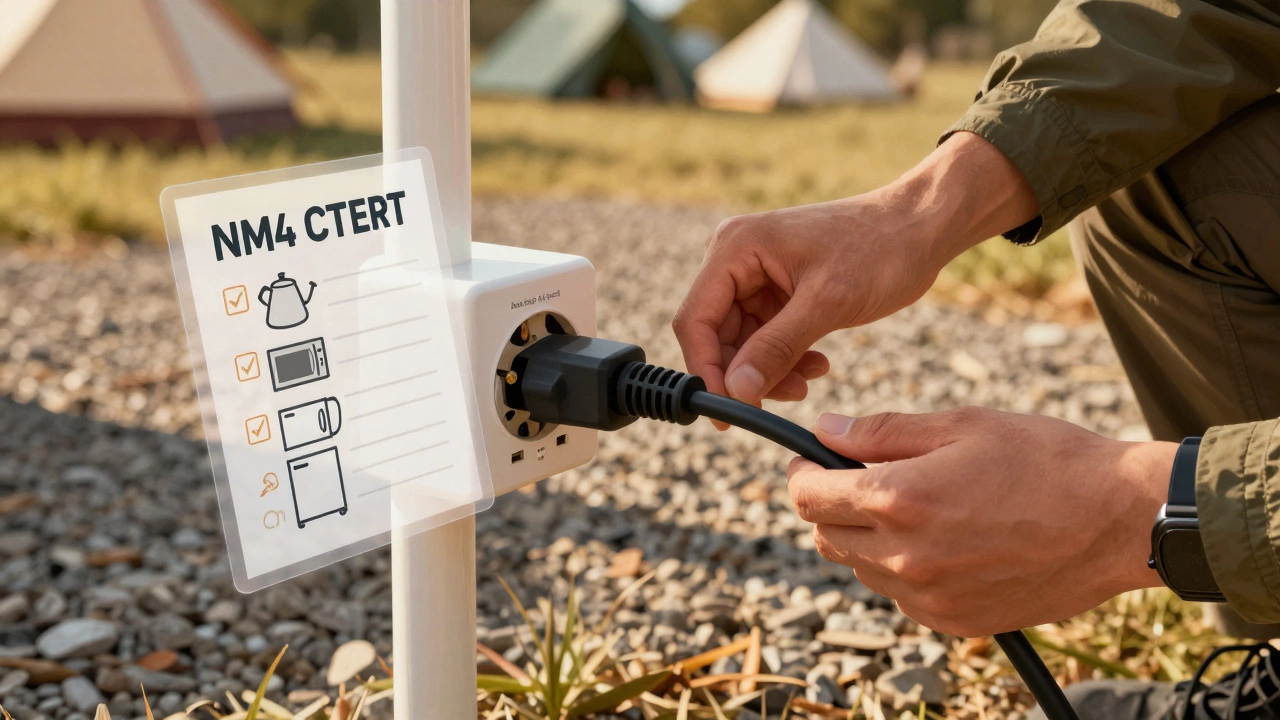
Don’t try to use a standard household extension lead. Those aren’t built for outdoor, damp, or rough conditions. You need a proper camping lead - a heavy-duty cable with a male plug on one end (to fit the campsite socket) and multiple sockets on the other. These are sold at camping stores, hardware shops, and online. Look for one rated at 10A or 16A, with an IP44 rating (splash-proof). If it feels flimsy, it’s not safe.
How Much Power Do You Get?
Most UK campsites offer either 10A or 16A power. That’s the maximum current your socket can safely deliver. Here’s what that means in real terms:
- 10A = up to 2,300 watts (2.3 kW)
- 16A = up to 3,680 watts (3.7 kW)
That sounds like a lot - until you start adding things up. A kettle uses 2,000W. A microwave uses 1,000W. A fridge uses 100W. A hairdryer? 1,500W. If you plug in your kettle and microwave at the same time on a 10A hookup, you’ll blow the circuit. No drama, no fire - just a trip. The site’s breaker will cut power. You reset it, and you’re back on.
Most motorhomes and caravans come with a 10A hook-up as standard. If you’ve got a larger RV or need to run multiple appliances, check ahead. Some premium sites offer 16A, especially in luxury or long-stay pitches.
What Can You Actually Run?
Here’s a quick cheat sheet for what runs safely on a 10A campsite hookup:
- Phone and tablet chargers - no problem
- Laptop - fine
- LED lights - barely any draw
- Small fridge (100-150W) - yes
- Electric kettle - yes, but only one at a time
- Mini microwave (700W) - okay, but watch your total
- Hairdryer - risky on 10A, better on 16A
- Electric heater - not recommended unless you have 16A and no other loads
Pro tip: Don’t run your kettle while the fridge is cycling on. Fridge motors pull a surge when they start. That extra 300-500W can push you over the limit. Wait 30 seconds after turning off the kettle before switching on the microwave. Simple habits keep the power on.
Why Is It So Important to Use the Right Cable?
Household extension leads are designed for indoor, dry use. Campsite leads are built to handle rain, dirt, dragging over gravel, and temperature swings. The insulation is thicker. The plugs are locked. The sockets are covered. Using the wrong cable isn’t just a bad idea - it’s dangerous.
There are stories. Not many, thank goodness. But one guy in Devon plugged his van into a 16A socket with a cheap 13A extension. The cable overheated. Smelled like burning plastic. No fire, but the socket melted. The site had to shut down that whole row for repairs. He paid £300 in damages. A proper camping lead costs £25. That’s insurance.
Look for these features:
- IP44 or higher (splash-proof)
- 10A or 16A rating (match your site)
- Thick, flexible cable (not thin and stiff)
- Socket covers that snap shut
- Reinforced strain relief where the plug meets the cable
What About Battery Charging and Solar?
You don’t need electricity to charge your van’s leisure battery - but it sure helps. Most motorhomes have a built-in charger that converts 230V AC from the campsite into 12V DC to top up your battery. That’s why you can run your fridge on battery power even when you’re not plugged in - you charged it overnight.
Solar panels are great for off-grid camping, but they’re not magic. On a dull December day in Ireland, a 100W panel might only give you 20-30W. That’s enough to keep a fridge going slowly, but not to run a kettle. Plug in when you can. Use solar when you can’t.
How Do Sites Manage Power Across Many Pitches?
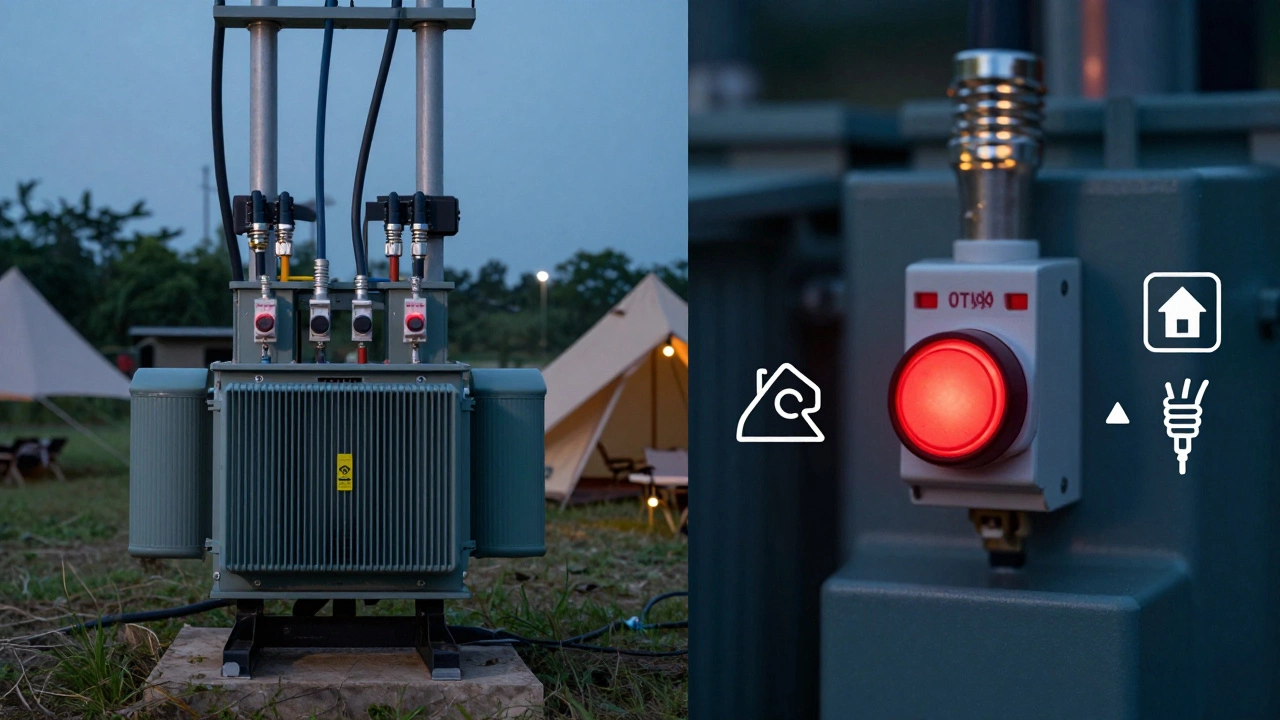
Think of a campsite like a mini power grid. Each pitch has its own circuit, but they’re all fed from a central transformer. The site manager sets limits so no single pitch overloads the system. That’s why you might see signs saying “Maximum 10A per pitch.”
Some sites use smart meters. You pay per kWh used - like your home bill. Others include power in the pitch price. A few still use coin-operated timers (yes, really). Always check the site’s rules before you plug in. If there’s a meter, write down the starting number. If you’re unsure, ask the site owner. They’ve seen it all.
What If the Power Goes Out?
It happens. A kettle blows the circuit. A storm trips the main breaker. A faulty cable causes a fault. First, don’t panic. Unplug everything. Wait five minutes. Then reset the breaker - usually a big red button on the power pedestal. If it trips again, you’ve got a problem.
Test your lead. Plug it into a different socket if available. If it works there, your original socket might be faulty. If it still trips, your lead or appliance is the issue. Try unplugging everything from your lead, then plug in one item at a time. That’s how you find the culprit. A faulty hairdryer? A cracked charger? It’s usually something small.
If you can’t fix it, call the site office. They’ll check the main supply. Don’t try to fix the pedestal yourself. That’s not your job - and it’s dangerous.
Do All Campsites Have Electric Hookups?
No. In fact, most don’t. Even in the UK, only about 40% of campsites offer electric hookups. The rest rely on solar, battery power, or gas. If you need electricity, always check before you book. Look for the “electric hook-up” symbol on booking sites - it’s usually a plug icon. Sites that cater to motorhomes and caravans are far more likely to have them. Wild camping? Forget it. You’re on your own.
Don’t assume a site has power just because it’s busy or expensive. Some luxury glamping sites use only solar and candles. Others have full power but charge extra. Always confirm the details.
What’s the Difference Between a Campsite Hookup and Home Electricity?
It’s the same voltage - 230V in the UK. But the system is simpler. Home wiring has three wires: live, neutral, and earth. Campsite hookups are the same - but they’re designed for safety over complexity. There’s no circuit breaker panel in your tent. The site handles all the protection. You just plug in and use.
One big difference: no grounding in older sites. Some rural or historic campsites still have two-pin sockets without earth. That’s a red flag. If your appliance has a three-pin plug, don’t use an adapter. It’s unsafe. Look for a site with proper earthed sockets. Modern UK sites all have them.
Final Tip: Keep It Simple
Electricity at a campsite isn’t about running your home. It’s about making life easier. You don’t need to boil water, dry your hair, and run the heater at the same time. Pick your priorities. Charge your devices. Keep the fridge cold. Maybe make a cup of tea. That’s enough.
Plan ahead. Bring the right lead. Know your limits. And if in doubt - don’t plug it in. Wait. Ask. Double-check. The best campers aren’t the ones with the most gadgets. They’re the ones who stay safe, stay powered, and enjoy the quiet.
Can I use a normal extension lead at a campsite?
No. Standard household extension leads aren’t designed for outdoor use. They can overheat, melt, or cause electric shocks in wet conditions. Always use a camping-specific lead with IP44 rating or higher. They’re built to handle rain, dirt, and rough handling.
How many amps do I need for my motorhome?
Most motorhomes are designed for 10A hookups, which is enough for a fridge, lights, and phone charging. If you plan to use a kettle, microwave, or heater at the same time, you’ll need 16A. Check your vehicle’s manual - it will say what it’s rated for. If you’re unsure, 10A is safe for most people.
Do I need to pay extra for electricity at campsites?
Some campsites include electricity in the pitch price. Others charge per kWh or use a meter you pay for with coins or cards. Always check before you book. Sites that charge extra often list it clearly on their website or booking page. If it’s not mentioned, call them.
Why does my power keep tripping at the campsite?
You’re probably overloading the circuit. Try unplugging everything, then plug in one appliance at a time. If it trips when you turn on the kettle, you’re likely running something else too - like a microwave or heater. Stick to one high-wattage device at a time. If it still trips, your lead or appliance might be faulty.
Can I use a generator instead of a campsite hookup?
Yes, but check the site’s rules first. Many campsites ban generators because of noise and fumes. If allowed, use a quiet inverter generator and only run it during designated hours. Generators are great for wild camping, but at a powered site, the hookup is simpler, cheaper, and quieter.