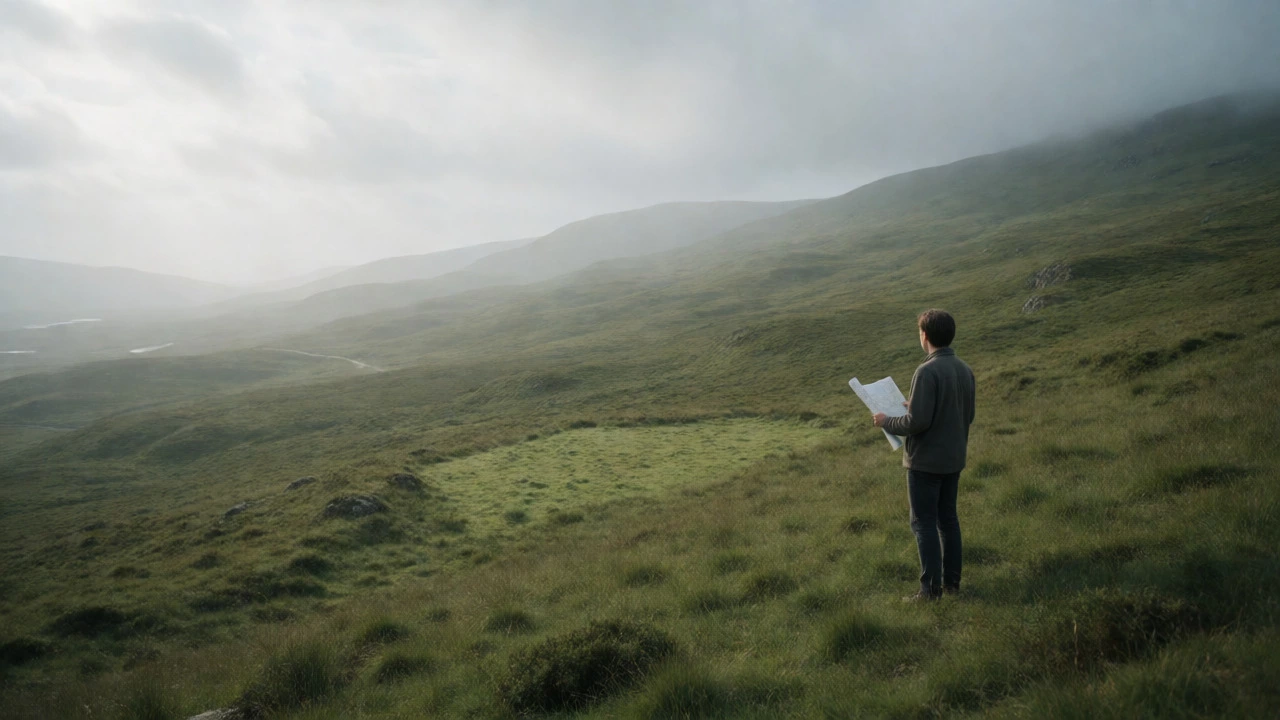
UK Land Habitation Rights Checker
Answer the questions below to estimate your legal standing for living on your land. This is a guide, not legal advice.
Key Considerations
So, you’ve found it. A patch of green in the Scottish Highlands or a quiet corner of Wales that feels like home. You’re thinking: Buy land and build a life there, away from the noise of city centers. But here’s the hard truth most estate agents won’t shout about at open houses: owning the dirt doesn’t automatically mean you can sleep on it. In the UK, land ownership and residential rights are two very different legal beasts.
If you’re coming from a wild camping background, you might assume that because you can pitch a tent for a night, you can park a caravan for a year. That’s not how it works. The difference between "temporary recreation" and "permanent habitation" is where most dreams get tangled in red tape. Let’s break down exactly what you need to know before you hand over your deposit.
The Big Myth: Ownership vs. Habitation
Here is the core concept you need to grasp: Land ownership gives you title deeds, but local councils control what happens on top of them. Just because you bought the plot doesn’t mean you have the right to live there. If you put up a static caravan or a yurt without asking, the council can serve you an enforcement notice. This forces you to remove the structure and restore the land, often at your own expense.
Think of it this way. Buying land is like buying a blank canvas. Planning permission is the license to paint on it. Without that license, you can look at the canvas all day, but you can’t create art (or a bedroom) on it. This distinction trips up many buyers who see cheap plots online and assume they can just move in tomorrow.
Planning Permission: The Gatekeeper
To legally live on your land long-term, you usually need full planning permission from your local planning authority (LPA). This process is slow, expensive, and highly subjective. Success depends heavily on whether the land is inside or outside a settlement boundary.
- Inside Settlement Boundaries: These are areas defined by the council as suitable for development. Getting permission here is easier, though still not guaranteed. You’ll likely face strict design codes to match existing housing stock.
- Outside Settlement Boundaries: This is rural land. Getting permission for a new dwelling here is notoriously difficult. You generally need to prove a "functional need"-meaning you must work on the land or provide a service to the local community that requires you to live there.
Don’t underestimate the cost. Professional fees for architects, planners, and surveys can easily hit £5,000-£10,000 before you even lay a brick. And if you say no, you lose that money and potentially the land itself if you can’t resell it with a caveat.
The Temporary Use Right Hack
Is there a workaround? Yes, but it comes with strings attached. Under the Town and Country Planning Act, you may be able to claim a "temporary use right" for recreational purposes. This allows you to place a mobile home or caravan on land for up to 28 days per year without formal planning permission.
However, this is designed for holiday use, not permanent residence. If you stay longer than 28 days, or if you start using it as your primary address for voting and tax, the council will likely intervene. Some clever owners try to rotate stays, but inspectors are getting smarter. They check utility usage and vehicle registrations. If your car is there every weekend, it looks less like a holiday and more like a hidden home.
| Option | Legal Status | Cost Implication | Risk Level |
|---|---|---|---|
| Full Planning Permission | Permanent residence allowed | High upfront costs (£5k+ fees) | Low (if approved) |
| Temporary Use (28 Days) | Holiday/recreational only | Low (no application fee) | Medium (strict time limits) |
| Agricultural Tie | Residence tied to farming job | Variable (depends on employment) | High (job loss = eviction) |
| Enforcement Notice | Illegal occupation | Fines + removal costs | Critical |

Buying Agricultural Land: The "Tie" Trap
Many people looking to buy land and live on it target agricultural plots because they are cheaper. But beware the "agricultural tie." This is a legal condition attached to the property deed stating that only someone working in agriculture can live there.
You might think, "I’ll just grow some vegetables." That rarely cuts it. Councils define "agriculture" strictly. It usually means commercial farming, not hobby gardening. If you lose your farm job, you lose your right to live there. You might be forced to sell the house back to another farmer. Always check the title deeds for restrictive covenants before signing anything.
Utilities and Infrastructure: The Hidden Costs
Even if you win the planning battle, you still need water, electricity, and sewage. On raw land, these don’t exist. Connecting to mains services can cost tens of thousands of pounds depending on distance. Many off-grid enthusiasts opt for solar panels and rainwater harvesting, but you need approval for drainage systems too.
Consider the Environment Agency regulations. If you install a septic tank, you need to ensure it meets current standards (like the General Binding Rules updated in 2020). Non-compliant systems can lead to heavy fines. Also, check for flood risks. A beautiful riverside plot might become a swimming pool during winter storms. Check the flood map on the government website-it’s free and saves heartbreak later.
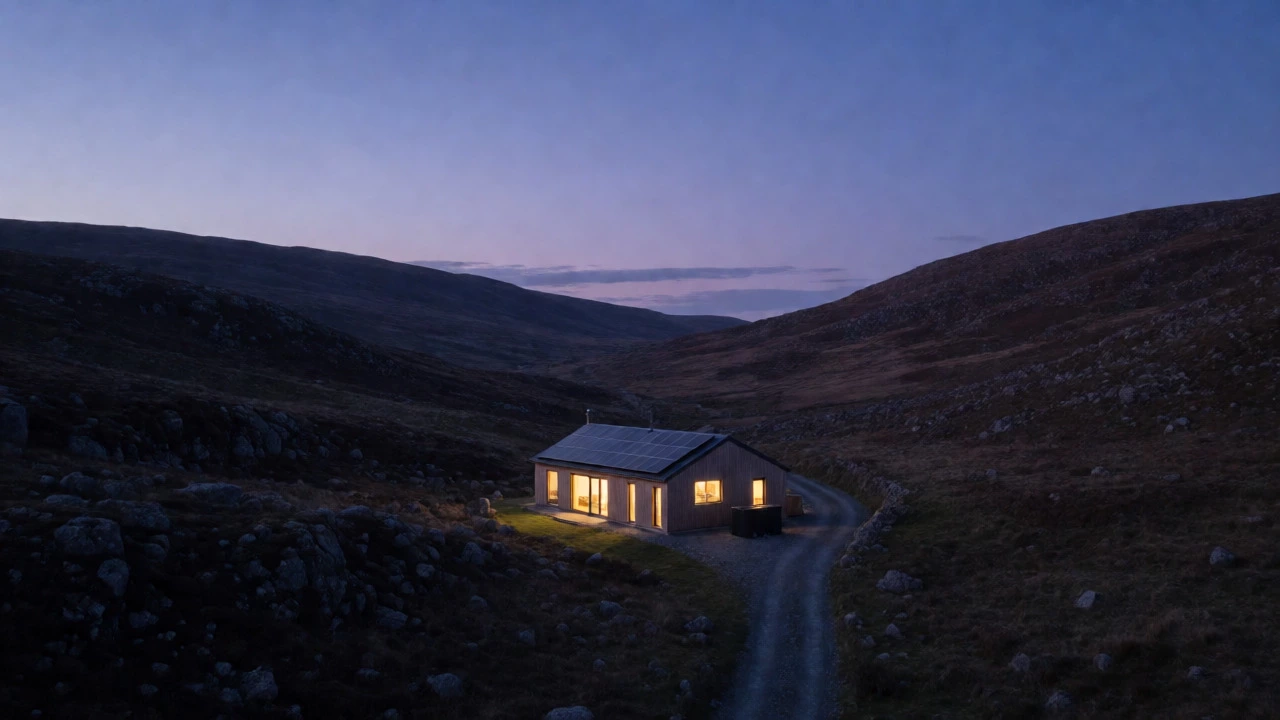
Where Can You Actually Do This?
Not all regions are equal. Scotland is famously more liberal regarding access rights and crofting tenancies. In England, National Parks and Areas of Outstanding Natural Beauty (AONBs) are incredibly strict. Building a modern eco-home in the Lake District is harder than building one in the Midlands.
Wales has its own set of rules, often leaning towards supporting rural communities. If you’re serious, consider looking at former barn conversions or sites with existing "prior notification" approvals. These are structures that already have some form of consent, making the path to full residential status smoother.
Practical Steps Before You Buy
Ready to make a move? Don’t skip these steps:
- Pre-application Advice: Pay for a formal pre-application discussion with the local council. It costs a few hundred pounds but tells you their stance before you commit.
- Check Title Deeds: Look for restrictive covenants. Do they ban caravans? Do they require specific materials?
- Survey the Ground: Test soil stability and drainage. Rocky ground makes digging foundations expensive.
- Visit Neighbors: Ask them about local attitudes. Are they pro-development or NIMBY (Not In My Back Yard)? Their opinion influences council decisions.
Living on land is a dream worth pursuing, but it requires treating it like a business project, not just a lifestyle choice. The romance fades quickly when you’re facing a £2,000 fine for sleeping in your van. Do the homework, respect the law, and you might just find your freedom.
Can I live in a caravan on my own land without planning permission?
Generally, no, not permanently. You can usually keep a caravan on your land for temporary recreational use (often limited to 28 days per year) without permission. However, if it becomes your main residence, used year-round, or occupied by family members regularly, the council will likely require planning permission.
How much does planning permission cost in the UK?
The government application fee for a single dwelling is currently around £462 (as of 2024/2025 rates, subject to change). However, total costs including architectural drawings, site surveys, ecological reports, and planning consultant fees typically range from £5,000 to £15,000.
What is a 'settlement boundary'?
A settlement boundary is a line drawn on maps by local councils showing where urban development is acceptable. Land inside the boundary is expected to accommodate growth, making planning permission easier to obtain. Land outside the boundary is considered countryside, where new buildings are restricted to protect rural character.
Can I buy land and camp on it indefinitely?
No. While you own the land, indefinite camping usually constitutes a change of use requiring permission. Local authorities monitor this closely. If you are there every weekend for months, it is viewed as residential use, not temporary recreation, and you risk enforcement action.
Do I need planning permission for a garden office?
Often, yes, if it is used for living accommodation. Permitted Development Rights allow outbuildings for incidental use (like storage or hobbies), but if you sleep in it or use it as a separate dwelling unit, it falls under planning control.